Rural poverty and social indifference
The PeasantsRural poverty and social indifference in Lipce are not a single crisis but a recurring system of want: debts come due before harvest, households run short of food and cash, and illness or imprisonment can strip a family of the labor it needs to survive. The novel sets this hardship against the village’s abundant demands for work and its capacity for collective action. Poverty becomes most devastating when people who might help treat suffering as ordinary or inevitable; mutual aid offers a counterforce, but only when neighbors act rather than wait for rescue.
Poverty in the seasonal economy
The village’s precarious finances are visible in its preparations for the fair on St Kordula’s Day, the last major market before Yuletide. With winter approaching, households need clothing, tools, and farm supplies, while taxes, commune contributions, debts, and payments to servants all press at once. Even farmers with fifteen morgen must reckon with selling a horse or cow; poorer households have fewer options. Some owners clean and feed a poor cow in hopes of making her saleable, while others try to make a blind, bony horse appear fit for market. The fair is both a means of meeting winter needs and a public reckoning with the animals and goods a household can no longer afford to keep.
That pressure recurs in the winter hardship of Antek Boryna’s household after it has been expelled from the paternal homestead. The family lives on potatoes and salt, has no money, and cannot obtain credit from Jankiel. Antek refuses hired work, which he considers beneath him, while Hanka the Farmstead Keeper imagines working until her hands are worn through if that could keep the family’s cow and carry them to spring. Her desperation is sharpened by the contrast between her strenuous household tasks and Antek’s idleness and brooding. The poverty is material, but it also deepens the couple’s resentment: three weeks after their expulsion, neither has forgotten the injury, and their silence at home preserves the feud rather than easing their circumstances.
The suffering of the poor extends beyond one household. Jagustynka describes a girl near death from hunger in a freezing cottage whose windows are stuffed with straw. The family has no potatoes left and has sold its quilt; it must beg the miller for groats. In another household, Florka gives birth while ill and destitute, with no money set aside and no milk to feed her newborn. Her husband is in prison, the fields are standing fallow, and the cow has only just calved. These are not isolated misfortunes: imprisoned men, exhausted households, and the absence of money make hunger and sickness harder to withstand across the village.
Indifference and the limits of help
The novel makes social indifference part of the poverty itself. Jagustynka objects that farmers worry about what to eat or whom to lend money to at the highest interest, yet remain unmoved by poor neighbors living only a baulk away. They entrust the needy to Jesus and invoke divine order while keeping themselves warm beside a full bowl. Her accusation is not that every household can relieve every other one; Hanka points out that no one has enough to end the poverty. Jagustynka answers that resources and willingness are different matters: the miller, the priest, the organist, and others could help, but those who know of the suffering do not need to be summoned from a pulpit before they respond.
Credit can sustain a household for a time while also deepening its dependence. At harvest time, although reaping in the fields is still far off, people queue for flour and groats with their last grosz, accept credit or labor-in-kind arrangements, or borrow at interest. Some must sell a quilt to obtain food. The immediate exchange keeps hunger at bay, but it puts the burden of survival onto people who have little to pledge and no assurance of a timely harvest. In this village, poverty is consequently not just a shortage of food: it is exposure to debt, unequal bargaining, and other people’s refusal to take responsibility for foreseeable need.
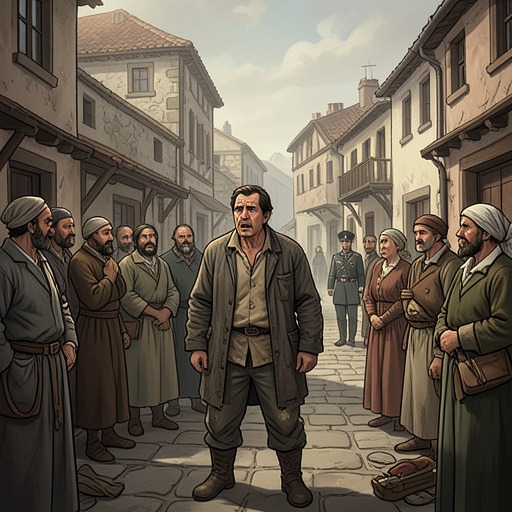
The contrast is also present in the village’s public disputes. Hired workers face a winter without wages after The Squire refuses to employ men from Lipce for the felling at Wolf’s Hollow. Some have already lost potatoes to frost; others eat a hot meal only once a day and go to bed hungry. The expected logging work had seemed a way to earn money before spring, but the refusal turns a conflict over the forest into an immediate livelihood crisis. At the crowded gathering outside the inn, the villagers’ grievance joins the loss of work to a longer history of injuries, confiscations, failed court cases, and unanswered complaints. Their protest is therefore both a defense of claimed forest rights and a response to the economic harm borne by households with no alternative income.
Labor crisis and mutual aid
When the men are imprisoned after the forest conflict, seasonal poverty becomes a crisis of labor as well as food. Spring has arrived, the fields are drying, and the ground is ready for ploughing, manure, and seed, but the working men are in jail. Women are left to manage the fields along with calving cows, hatching poultry, farrowing pigs, gardens, drainage, manure, firewood, livestock, and children. Some are due to give birth themselves. The work exceeds their strength and time; even after exhausting days, the most important task, fieldwork, remains. The spring landscape is ready for cultivation, while the village’s capacity to cultivate it has been taken away.
Rocho’s visits from cottage to cottage reveal how far the damage has spread. Lipce has more than fifty cottages, extensive land to work, livestock to tend, and many mouths to feed. Fields lie unploughed and unsown, but neglect also shows in collapsing fences, torn thatch, broken gates, and cottages leaning without repair. He can help and encourage individual people, yet for a whole village his effort amounts to little more than a drop of dew on parched lips. The account places household distress within a collective breakdown: the loss of labor threatens not only immediate meals but also the work on which future food depends.
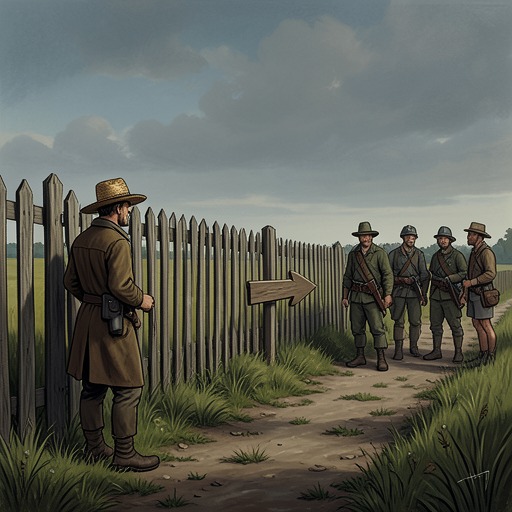
Neighboring villagers’ arrival to help with urgent farmwork supplies a rare answer to this isolation. The men come for two days without pay, and Rocho presents their assistance as a duty of Christian and Polish neighbors who must help one another because no one else will. Their labor gives the women a reason to prepare for the visitors and brings carts, horses, ploughs, and people back into the idle fields. The first furrows press into the earth; the workers cross themselves and sow seed in a hush that resembles a service. The scene does not erase poverty, but it shows how shared labor can restore the possibility of a harvest where individual households cannot manage alone.
Poverty as recurring structure
The village’s hardship is treated as familiar enough to be normalized: hunger, disease, quarrels, and death have occurred in previous years too. What makes the imprisoned men’s absence especially alarming is the fallow ground. Poverty therefore moves through linked pressures rather than remaining a static condition: debts and winter scarcity weaken households, lost work removes income, illness and imprisonment remove labor, and neglected fields threaten what might feed people later. A dying cow, a newborn without milk, or a household selling its quilt gives that cycle a distinct human consequence.
The contrast between neglect and cooperation is equally important. When no one acts, the poor are left to suffer in the name of divine order, even as those with resources carry on nearby. When neighbors arrive to work without payment, the village briefly turns mutual obligation into practical relief. The episode gives poverty a social and moral dimension without suggesting that goodwill alone solves it: the need is larger than Rocho’s individual efforts, and one short period of assistance cannot reverse every loss. It does, however, distinguish unavoidable scarcity from suffering prolonged by indifference, and shows the shared labor on which survival in Lipce depends.