Spring
The PeasantsSpring gives the novel’s third volume its name and its governing rhythm. It is at once a return of light and growth, a summons to labor, and a force that stirs desires the village cannot easily contain. The season renews the land, but it does not suspend poverty or conflict: the fields must be worked, crops remain vulnerable to weather, and human lives do not recover as reliably as the earth.
Seasonal Time and Anticipation
The novel establishes spring through contrast with the work and weariness that precede it. During the last autumn tillage, villagers finish their furrows in darkness and look back at the fields as they leave, sighing at the prospect of waiting until spring. The gesture makes the season more than a calendar marker: it is the imagined interval before work can begin again, a promise carried through the cold months.
That promise has intimate urgency for Agata. Ill and coughing blood, she hopes to last until spring so she can return to her village and die among her own people. Her prayer makes the season a measure of time she may not have, and gives its arrival a human meaning distinct from the agricultural cycle. Spring can signify return and belonging even when it cannot promise recovery.
The novel’s seasonal pattern also reaches into its account of desire. Jagna’s soul is likened to the earth in its winter sleep: immense and powerful, yet without conscious will, until the sun wakes it in spring and fills it with love and desire. The comparison presents spring as an awakening rather than a moral decision. In a separate moment of longing, Jasio sees Jagna’s face in a vision; the fury in his heart melts like ice under spring sunshine, and love returns with painful force. In both passages, seasonal change makes inward feeling newly active, though neither awakening guarantees a peaceful outcome.
The Arrival of Spring
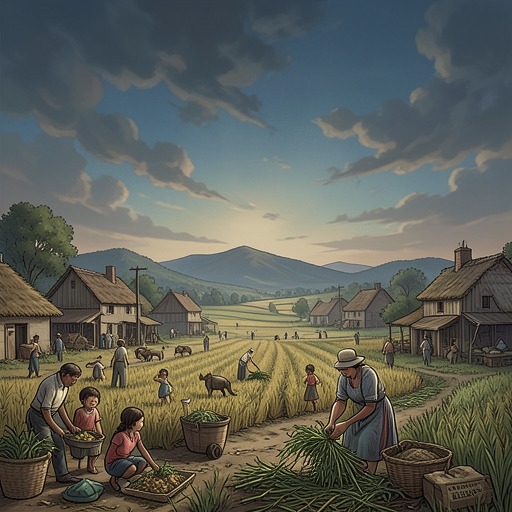
Spring first enters the volume as an atmosphere of expectation. At first light, it is already in the air; the skylarks announce its advance across the plains. Sun and warm wind accompany the land’s waiting for plough and seed, while the air seems charged with the promise of green growth, blossom, and full ears of grain. The imagery makes the season feel almost ceremonial, but its promise is specifically agricultural: the earth is waiting to be worked.
The landscape’s transformation is described on a wider scale after Easter. Mornings begin in mist, noon brings gentle warmth, and sunsets burn across lengthening days. Dandelions brighten the ditches; daisies pattern the field boundaries; trees fill with green, and flowers spread across the floodplains. The abundance is so insistent that the earth seems to simmer. Yet the description of beauty sits beside a practical qualification: villagers have little time to attend to it. At daybreak they go out to work, and dusk sends them home, leaving scarcely enough time to eat and rest.
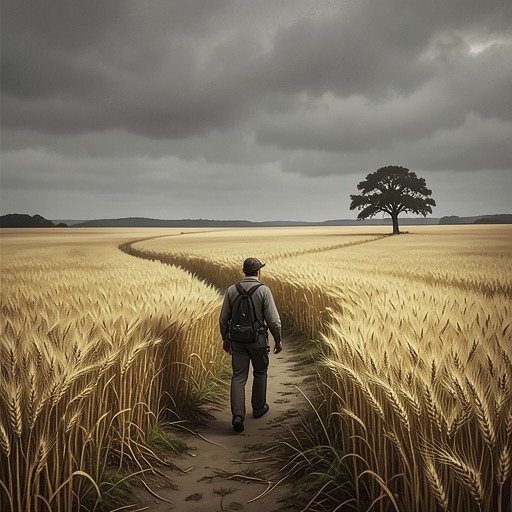
A further spring scene makes that closeness to the land almost devotional. Mists lie over the lowlands while sunlight draws them from the higher fields. Rimed ground still appears to sleep, but villagers move slowly onto their strips of land, entering the haze and cleaving to the soil in silence. Spring seems to pour through fields, trees, brooks, sky, and mist; its force is registered not only in landscape but in the people’s tears, sighs, or kneeling. The moment joins physical work to religious feeling without separating the villagers from the ground on which their lives depend.
Labor, Scarcity, and Weather
Spring’s beauty does not release the villagers from necessity. The same season that fills the landscape with green also compresses time: work begins with daylight and continues until dusk. The change of season is therefore both gift and demand. The land’s readiness calls for labor, and the community’s response is practical before it can be contemplative.
The volume’s seasonal cycle also carries forward the deprivation of winter. When the household’s last cow is to be sold and food is running out, Hanka’s anger is directed at the absence of work and income: even a day’s wages would help provide salt and lard when there is no milk. Her distress gives the agricultural calendar an economic edge. Spring may reopen the fields, but it arrives in a world where a household’s immediate survival depends on finding work and preserving the means to live.
Nor does the season’s promise ensure a successful harvest. Toward the end of May, heat arrives with the force of midsummer. Vegetables wilt, fallow grass is scorched, streams dry up, and potato plants barely cover the ground. Winter crops fare better, growing high enough to screen cottages from view, but that contrast only sharpens the unevenness of the damage. A warm rain later changes the sound of the fields and orchards, its steady patter spreading across the landscape. The weather thus moves from hopeful warmth to crop-threatening heat and then to rain: spring is a changing material condition, not a stable pastoral ideal.
Desire, Conflict, and the Season’s Meaning
Spring’s power to awaken life has an erotic as well as an agricultural dimension. The description of Jagna’s soul makes her responsive to forces that seize and carry her, and the image of spring sunlight restoring desire in Jasio gives seasonal renewal an intimate, destabilizing charge. These passages do not make desire merely a symbol of natural abundance; they show how the season’s force can trouble the settled expectations governing village life.
The same tension between renewal and conflict appears in the villagers’ relationship to land and resources. News spreads that the squire is felling the peasants’ forest. In the spring volume, the prospect of renewed growth therefore coexists with a dispute over who can use or control the land. Nature is not simply a backdrop to human affairs: woodland, fields, water, and crops shape work and livelihood, while decisions about their use expose competing claims.
Spring’s significance lies in this double movement. The season returns light, growth, and desire, and its recurring arrival gives the novel a structure of expectation after winter’s stillness. But its promises remain exposed to labor, poverty, conflict, and weather. The fields may be awakened, yet they must still be ploughed and sown; crops may flourish or fail; human longing may revive without finding a secure place to rest. Spring renews the conditions of life rather than resolving the struggles within it.