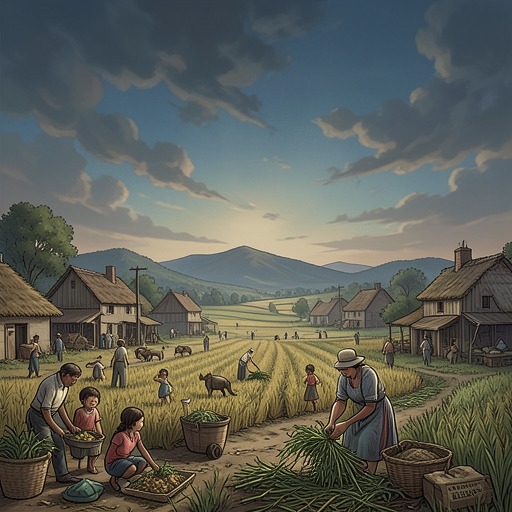
Spring as renewal and rebirth
The PeasantsSpring as renewal and rebirth is both a material change in the weather and a force that briefly alters how life in Lipce feels and proceeds. The movement from a sodden March to April dawn carries the village from confinement and anxious waiting toward light, fieldwork, and renewed hope. Spring does not erase hardship; rather, its arrival makes clear how much the villagers have endured and how urgently they need the land to become workable again.
From winter’s grip to expectation
In the closing stretch of winter, spring is already felt in the air, but the weather refuses to yield. March brings daily sleet, cold rain, fog, and a dimness that lasts from morning to evening. Meltwater runs out of the fields and fills the ruts; farmyards become muddy pools, and some cottages need planks or straw laid outside to make passage possible. The season’s first meaning is therefore not easy beauty but a prolonged obstruction: people remain hemmed in by wet, cold conditions while waiting for the ground to open to work.
That waiting is also economic and emotional. The villagers hope that snow will melt, the earth will thaw and dry, and the sun will permit them to take their ploughs into the fields; then, they believe, their worries might ease. Spring is imagined through the labor it will make possible, not as an escape from rural necessity. Its lateness sharpens that dependence. Rain continues, water drains slowly, and the cows show no sign of moulting, a familiar indication that winter will linger. The promise of renewal is real, but its timing remains beyond the villagers’ control.
A brief thaw in village life
When a dry hour comes and the sun appears, the response is immediate. People gather outside their cottages and look up at the sky, trying to judge whether the change will last. Older people sit against walls to warm themselves; children run along the lanes with the freedom of colts released onto grass. The landscape, still marked by streams in the fields and patches of lingering snow, catches the light: water glitters in the ditches and roads, the pond shines beneath its rain-rinsed ice, and damp trees shimmer.
The change in human relations is as striking as the change in the view. During the foul weather, distress feeds lamentation, gossip, quarrels, and feuds. In sunshine, quarrels fall quiet and old antagonisms subside; people speak kindly and even chat with enemies. Open doors and windows, women bringing their distaffs outside, and cradles placed in the sun make the household world seem to open with the weather. This is a temporary reprieve, not proof that the village’s conflicts have been settled. Its importance lies in showing how a shared encounter with spring can loosen, if only briefly, the hold of isolation and resentment.
Signs that the land is waking
Spring enters village life through reported signs as well as through weather. Neighbours pass on news of larks and wagtails; a skein of wild geese draws people onto the road to look, and someone reports storks on the marshes beyond the mill. Because it is only the middle of March, the report of the storks is questioned. A village boy carries a first sprig of liverwort from cottage to cottage, and the small white flower receives the concentrated wonder of something sacred. These details make renewal communal: the season is watched, discussed, and confirmed together, while its earliest signs remain uncertain enough to invite argument.
The April dawn develops those signs into a larger image of awakening. As the light gathers over the fields and the distant forest and poplar-lined road emerge from darkness, the song of a lark rises from the dim countryside. Other birds take flight and answer it. The sun then appears beyond the forest like a golden sacred vessel, spreading light over the living, the dead, the budding, and the decaying. The language gives the sunrise a devotional scale: daylight resembles a blessing, while the birds’ collective clamor becomes a prayer of thanksgiving. Renewal embraces more than fresh growth; it gathers different conditions of life into one illuminated world.
Agata and the promise of new life
The spring landscape is also experienced through Agata’s movement across it. In the April light, she sees dew on the black fields, water shining in the furrows, the last snow under stones, catkins trembling, young grass pushing through old vegetation, and marsh marigolds appearing in hollows. The land is not yet in full growth: it still bears winter’s remnants, while the earth waits for the plough and seed. That interval between what has endured and what is beginning gives the scene its particular force.
Agata responds with prayer and a desire to gather the world into her heart. As she limps slowly along, she looks eagerly at the land she loves; when the Angelus bell sounds from Lipce church, she comes to herself and kneels. Her response connects bodily movement, religious devotion, and attachment to place without separating the sacred from the visible earth. Spring’s warmth and the land’s promise are not abstract consolations: they are apprehended in fields, water, birds, and the bell that calls the village to prayer.
Renewal through labor and resurrection
The season’s promise remains closely tied to agricultural work. The soil waits for plough and seed, and the expectation of greenness, blossom, and full grain gives spring a future-facing direction. Its beauty matters, but so does what that beauty announces: renewed labor and the possibility of a more abundant harvest. The hope raised by spring is therefore practical as well as spiritual, grounded in the villagers’ dependence on the land.
At the same time, the imagery expands this agricultural renewal into a vision of life restored. The earth rings with life; sunlight awakens the fearful, and the human spirit rises to embrace the world. The contrast between the dark, waterlogged days of March and the bird-filled April morning gives that renewal a shape: first prolonged waiting, then an awakening perceived in both nature and human feeling. Spring does not promise that suffering or conflict has vanished. It offers a moment in which the earth seems newly alive, communal kindness becomes possible, and hope can again be directed toward the work and harvest ahead.