Summer
The PeasantsSummer is the season that frames Volume IV of The Peasants, a stretch of the story in which the land’s abundance and vulnerability become inseparable from the village’s unrest. Its movement is registered in practical signs—the heat over the fields, crops failing or holding, work beginning with the sickle, and harvest drawing near—while the narrative also tracks death, grief, and conflict in Lipce. Summer is not simply a backdrop: it is the time in which livelihood becomes precarious and the community’s tensions intensify.
A season that frames the narrative
Volume IV is explicitly titled Summer, and its opening chapter begins by confirming Maciej Boryna’s death. The placement gives the season a grave threshold: the new volume opens not with an uncomplicated celebration of growth, but with a death whose consequences remain part of the life of the farm and the village. At the same time, the narrative continues into a period when crops must be tended and the next harvest is approaching. Death and the demands of the living therefore occupy the same seasonal frame.
The volume’s repeated chapter headings keep Summer present as a broad temporal structure rather than a single episode. Across its thirteen chapters, the story moves through changing conditions: the first chapter follows the confirmation of Maciej Boryna’s death; later scenes mark the height of the heat, public gatherings, the growth of village troubles, and the preparations for harvest. The season provides continuity for events that otherwise pull the community in different directions. Weather and farm work continue to impose their rhythm even when conflict occupies people’s attention.
Heat, water, and the condition of the fields
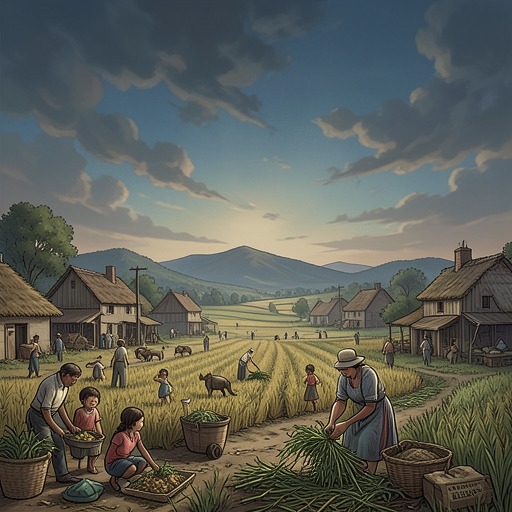
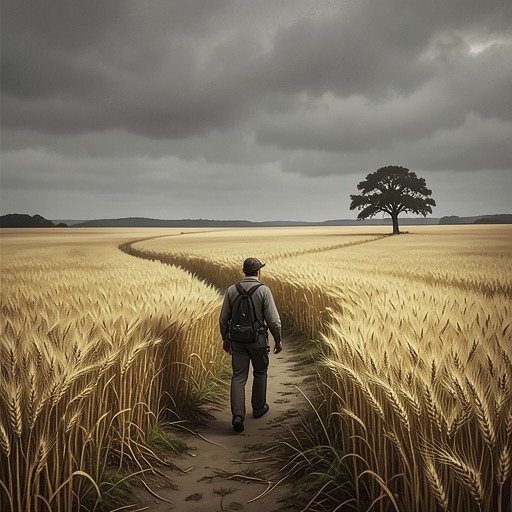
The summer landscape is not uniformly fertile. Near the end of May, heat arrives with the force of midsummer: vegetables wilt on higher, sandy ground, fallow grass is seared, streams run dry, and potato stalks that had begun well barely cover the soil. Winter crops fare better, growing tall and heavy-headed, while the cottages seem to crouch beneath them. This unevenness matters to a farming community. The same season that promises grain also exposes the differences between crops, soils, and the security of a household’s livelihood.
The heat reshapes daily life as well as the land. Nights become so close and humid that people sleep in the orchards because their rooms are unbearable. This is not distant scenery; it alters where villagers rest and accompanies a period described as more difficult before harvest than in previous years. Drought, damaged vegetables, and anxious waiting make the interval before the grain can be gathered especially exposed. Summer’s promise of plenty is present, but it has not yet become food or security.
A different summer scene sets the season’s brightness against that vulnerability. On a clear, increasingly hot day, the sun climbs above meadows where a chill still moves through the air and rocks the whitening rye. Oats rustle, young wheat ears quiver, and blue-tinged flax flows across the fields. The countryside is alive with growth, yet the heat is steadily overtaking the cooler traces of morning. This vivid abundance does not cancel the drought elsewhere in the season; together, the scenes show the crop year as uneven and contingent rather than reliably generous.
Work and the approach of harvest
Summer is organized by agricultural deadlines. As harvest nears, work begins unevenly according to the land: on lighter, sandy fields some people are already cutting with sickles, while scythes flash on higher ground; in villages with heavier soil, preparations are only beginning. The difference makes the seasonal calendar concrete. Harvest does not arrive everywhere at once, and the timing depends on local ground and the state of the crops.
The contrast between work and rest is also part of the novel’s seasonal understanding. In an autumn wedding passage, the narrator describes rest after summer toil as a deserved interval once the hay is in the ricks and wheat fills the barn, awaiting the flail. That reflection looks back on summer labor from the other side of the work. Read alongside the late-spring drought and the early cutting of crops, it clarifies what is at stake in the season: summer’s work is strenuous, and the promised autumn respite depends on a harvest that has not yet been secured.
A season of collective strain
The physical pressures of summer coincide with political and social strain in Lipce. The heat, accumulated troubles, Płoszka’s incitements against the Voyt, and the harder-than-usual preharvest days contribute to a quarrelsome and restless atmosphere. The season does not cause these disputes, but it intensifies their setting: people face the prospect of damaged crops and the need to work while questions of village authority continue to divide attention.
The narrative also gives summer a public, communal face. On a bright day, bells ring across Lipce as carts and foot travelers arrive along the dusty roads. Stalls, booths, and tables have been set up before the church, and the surrounding fields remain visible in the heat: green wheat, whitening rye, oats, and flowering flax. The gathering joins religious sound, trade, movement, and the agricultural landscape in a single scene. Summer can bring people together in shared observance, even as the same volume records growing apprehension and division.
Seasonal change as narrative meaning
Summer’s significance lies partly in its refusal to settle into one meaning. It brings growth and the approach of harvest, but also drought, exhausted crops, and uncertainty before the grain is gathered. A fine day can fill the roads with visitors and make the fields seem abundant; elsewhere, streams have dried and vegetables are wilting. The season is thus measured not only by warmth or light but by what people can expect to reap, and by how long they must endure before that expectation is tested.
The opening confirmation of Maciej Boryna’s death and the movement toward harvest place human mortality beside agricultural continuity. The season does not pause for grief: crops continue to grow, weather changes, and work must begin on time. Nor does nature guarantee relief. Summer holds both promise and risk, and its agricultural rhythm presses on a community already troubled by disputes and hardship. As Volume IV’s frame, it gives those events a shared measure: life in Lipce moves forward through the season, but what the fields will finally provide remains uncertain.