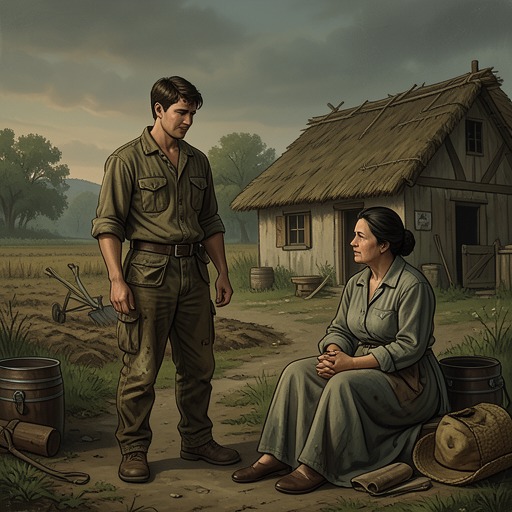
Szymek Pacześ
The PeasantsSzymek Pacześ is Dominikowa’s elder son, shown as a man intent on courting Nastka Gołębianka while his mother’s resistance to his marriage makes their attachment a subject of village scrutiny. His brief appearances trace a pointed contrast: the young couple move toward one another with evident delight, while Dominikowa watches anxiously and neighbors condemn the constraints placed on her son.
Identity and Position
Szymek is identified as Dominikowa’s elder son. Village gossip describes him as nearing thirty and says that his mother will not let him marry or leave the house, and berates him over small matters. These remarks come from neighbors speaking maliciously about the family, so they register both a reported domestic conflict and the community’s readiness to scrutinize it.
Courtship of Nastka
At one gathering, Szymek watches Nastka as she moves about with Jagna, never taking his eyes off her. He repeatedly approaches Nastka with vodka and tries to draw her into conversation. His attention is directed and persistent, though the scene does not establish how she responds to these particular overtures.
At another dance, Szymek and Nastka act on a plan they have made in advance: when the music starts, they pair off and dance with delight. They then walk around the room to catch their breath, arms around each other’s waists, chatting and laughing as they move hip to hip. Their ease together is unmistakable, but Dominikowa’s anxious glance at her son places that shared pleasure under the pressure of family opposition.
Maternal Conflict and Village Scrutiny
The neighbors’ account presents Szymek’s thwarted marriage as part of a wider household grievance. They complain that grown sons are doing women’s work and that Dominikowa will not allow Szymek to marry; their talk turns from his situation to a harsh judgment of the family, including the claim that Jagna is spared domestic labor. The gossip thus makes Szymek’s courtship more than a private attraction: it exposes how marriage, household authority, and expectations about work are watched and debated in the village.
The available scenes establish Szymek’s attachment to Nastka and the obstacle posed by his mother, but do not show whether he ultimately marries her. His narrative significance in these moments lies in the visible gap between the couple’s chosen intimacy and the family authority that threatens to keep it from becoming a settled union.