The summer drought in Lipce
The PeasantsThe summer drought in Lipce is a sustained agricultural threat rather than a single dramatic disaster: heat dries streams and soils, weakens crops, and makes the harvest less certain just as households must endure the preharvest stretch. Its force lies in the unevenness of its effects. Some cabbage plots are damaged or have to be replanted, while Antek Boryna finds his father’s wheat flourishing nearby. By setting drought within the village’s cycles of labor, scarcity, and changing weather, the narrative makes the land an active condition of communal life—not merely scenery behind it.
Heat and the Threat to Crops
By the end of May, heatwaves have become frequent, and the weather is described as July-like. Mornings are quiet and sultry; the sun bakes the higher ground and sandy soil until vegetables yellow and fallow grass is seared. Streams run dry. Potato plants that had begun well barely cover the ground, although the winter crops escape greater damage and continue growing tall. The drought therefore threatens several kinds of cultivation without making every field equally vulnerable.
The heat also changes ordinary life beyond the fields. Nights become so oppressive that villagers sleep in orchards because their houses are unbearable. The drought arrives amid other pressures: the preharvest period is harder than in earlier years, and Lipce is already described as quarrelsome and restless. Weather does not explain every conflict, but it intensifies a season when food, work, and patience are in short supply.
Cabbages and Uneven Damage
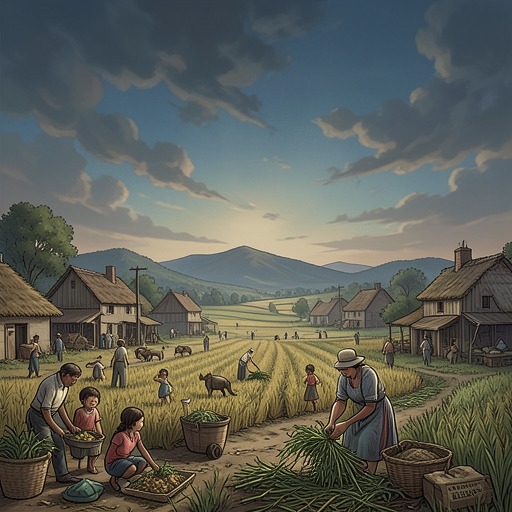
Later, villagers working the raised cabbage strips speak of how long it has been since such a dry summer. Some heads are already swelling, but their progress remains uncertain: grubs may still attack them in the drought. The danger is not hypothetical everywhere. At Wola, grubs have stripped the cabbages bare; at Modlica, the crop has dried up completely and had to be planted again. These reports give the drought a local geography, carried from one village’s fields to another through the workers’ conversation.
The women continue hoeing and earthing up the rows even as weeds grow thick among the crops. Their work proceeds under competing pressures: drought threatens what has been planted, while weeds flourish. The contrast lends the scene its practical sharpness. The land does not simply stop producing; it produces unevenly, and labor must keep responding to damage that may already have taken hold elsewhere.
Antek’s Inspection of the Fields
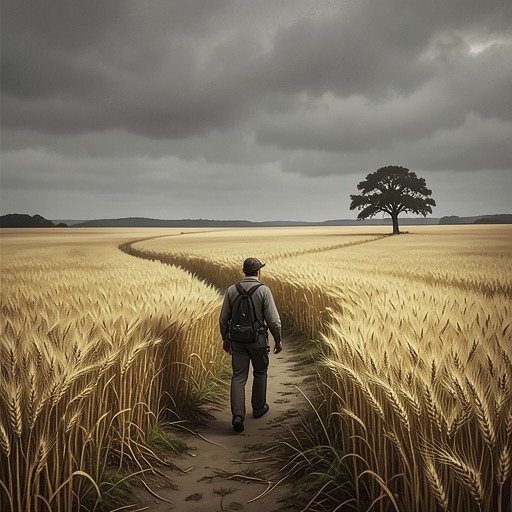
As Antek walks along the fields, he slows to examine individual strips. He notices quickweed choking the flax, whose blue flowers are scattered with yellow, and blames bad seed that was not winnowed. The barley looks feeble and already scorched, scarcely visible beneath thorns, chamomile, and sorrel. He also criticizes the state of the tilling and harrowing. His observations distinguish drought damage from poor preparation and weed growth: the fields’ condition reflects both environmental stress and the quality of cultivation.
The comparison with his father’s wheat sharpens that distinction. Antek finds the grain full and ripe but still soft, with harvest about two weeks away if hail does not flatten it. Farther on, the wheat grows unevenly yet bears dense ears; on a slope it has not been scorched, and Antek anticipates a substantial crop. One field’s promise does not erase the drought, just as drought does not erase every good crop. The scene makes vulnerability particular: the harvest depends on where a field lies, what has been sown, how it has been tended, and what weather comes next.
Scarcity, Labor, and the Village’s Wider Strain
The drought belongs to a broader pattern of insecurity. In winter, hired hands are desperate for work, some families have already lost potatoes to frost, and people fear a lean preharvest period. The expectation that the squire’s felling at Wolf’s Hollow would provide employment collapses when he refuses to hire men from Lipce. The resulting dispute brings together economic need and claims of customary justice: villagers say the manor is taking their forest while denying them work. Their protest is not presented as a direct consequence of summer drought, but it shows how environmental and economic risks accumulate in a community with few reserves.
A woman describing village poverty also recounts hunger, debt, illness, and fields left fallow while men are imprisoned. She condemns better-off farmers for tending their own comfort while leaving the poor to suffer. Her account makes clear that hardship is not distributed equally and that lack of help can compound material scarcity. Against this background, a damaged crop or uncertain harvest carries more than agricultural meaning: it threatens households already exposed to lost work, debt, and hunger.
Weather as an Agent in the Seasonal Cycle
The drought’s dry fields belong to a narrative in which weather repeatedly alters the conditions of work and habitation. In another season, the swelling pond overtops its banks and reaches roads, fences, and cottage walls; winter winds strip away snow and leave the ground frozen hard. These are not interchangeable versions of a general rural backdrop. Water, frost, wind, and heat each press upon the village differently, shaping what can be planted, gathered, traveled, or endured.
After a death, fine warm rain falls over the fields and orchards, and the parched earth drinks. The scene gives the dry land a vivid, bodily presence, but it does not make the summer drought a neatly resolved episode. Rather, the changing weather sustains the book’s larger seasonal rhythm: abundance and loss remain contingent, and human labor continues within conditions no household can fully command. The drought’s significance lies in that precarious balance, and in the unequal resources villagers possess to withstand it.