
The Moral Ambiguity of Colonization
The People UpstairsThis flow traces how the narrative complicates Milotan expansion by presenting both its victims and its internal contradictions.
increasing Bearing strength in each event
 decreasing
Bearing strength in each eventdecreasingHostile Intentions

Hostile Intentions
Strategic Purpose
Dan acknowledges that Milotan infiltration is ultimately hostile. The family is not merely studying Earth or seeking refuge; it is preparing a long-term takeover.
Ethical Fracture
Terence's potential identification with humans threatens the mission precisely because empathy would undermine conquest. A successful child may become a political failure.
The story refuses to romanticize the aliens as harmless outsiders. Their tenderness exists inside an imperial project.
Human Vulnerability
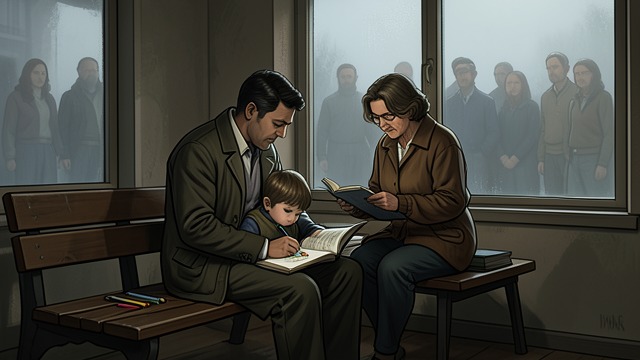
Human Vulnerability
Primitive Society
Dan describes intelligent species as gregarious while primitive, implying that humans are socially predictable and open to infiltration. The assessment reduces people to a stage of development.
Unintended Affinity
Terence nevertheless forms attachments through school, language, and shared customs. Human vulnerability becomes the source of genuine human connection.
The colonial gaze cannot account for affection. It sees a population to be managed where Terence experiences a community.
The Colonial Child
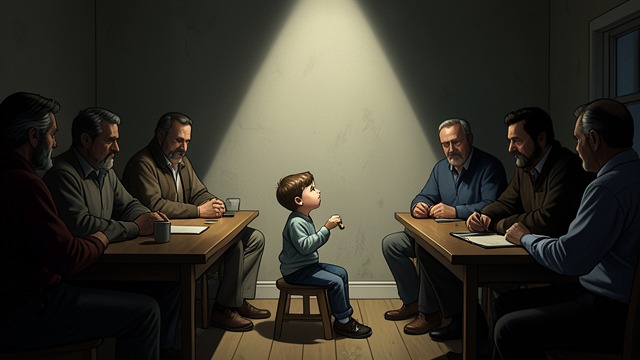
The Colonial Child
Institutional Evidence
Terence will be reported as proof that native-born agents can advance Milotan expansion. His life may influence policy for generations.
Personal Irreducibility
He cannot be reduced to the Bureau's desired function because his formation includes fear, shame, curiosity, and attachment to Earth. The experiment has generated an individual beyond its design.
The colonial project reaches its most dangerous point when its instrument becomes a moral subject. Terence's existence makes conquest psychologically unstable.
during Dan's warning about native identification
during the Greenes' observations of Earth society
at the moment of the report to Milotis
