
The Limits of Invisibility
The People UpstairsThis flow traces how the Greenes' carefully designed secrecy fails when ordinary social systems demand participation.
increasing Bearing strength in each event
 decreasing
Bearing strength in each eventdecreasingControlled Visibility

Controlled Visibility
Public Average
The Greenes maintain average jobs, clothing, furnishings, and manners. Their safety depends on appearing too ordinary to deserve sustained attention.
Private Difference
Their bodies, language, and emotional reactions require constant management. Invisibility is achieved through continuous labor rather than actual disappearance.
The cover succeeds only while the environment remains predictable. The family's vulnerability is hidden inside its apparent normality.
Mandatory Institutions
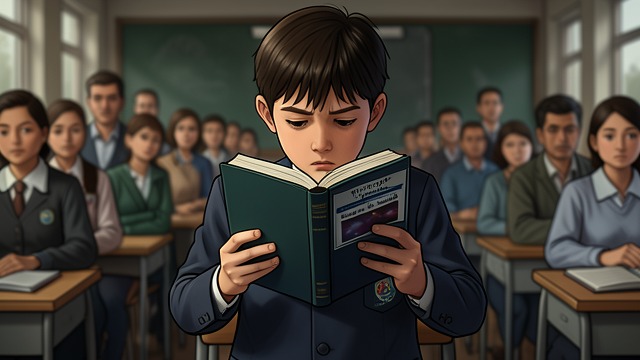
Mandatory Institutions
Legal Pressure
Compulsory School Attendance Law forces Terence into a public system despite the family's wish to keep him home. The law transforms parental secrecy into an institutional risk.
Social Exposure
School brings teachers, classmates, examinations, and physical activities that the parents cannot personally supervise. Each requirement creates another possible breach.
The family learns that an agent cannot remain inconspicuous while raising a child. Childhood itself is a series of compulsory disclosures.
The Failed Boundary
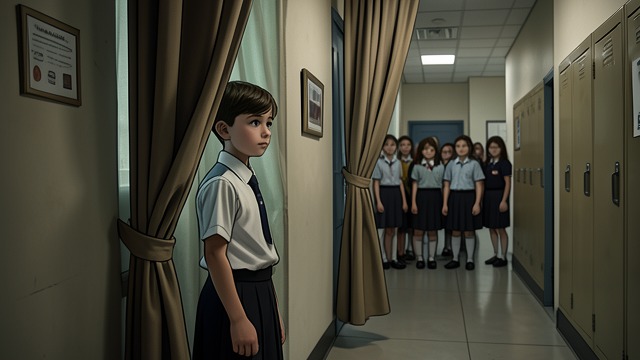
The Failed Boundary
Public Undressing
The school crosses the boundary the Greenes had preserved between Terence's covered public body and his hidden physical reality. The exposure is sudden and irreversible.
Improvised Escape
May converts the discovery into a story about mutation and radiation. The family escapes formal investigation, but the boundary between privacy and stigma is gone.
Invisibility fails not because an agent makes a mistake but because human institutions assume universal sameness. The system exposes what the mission cannot control.
during the family's first years on Earth
when Terence reaches school age
during the swimming lesson
