
The Story's Reversal of Perspective
The People UpstairsThis flow traces how the narrative shifts the reader from observing strange humans to understanding Earth as the strange culture.
increasing Bearing strength in each event
 decreasing
Bearing strength in each eventdecreasingAlien Viewpoint
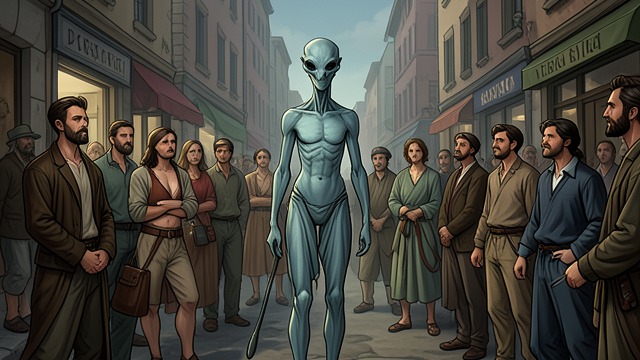
Alien Viewpoint
Familiar Strangers
May and Dan observe Earth customs with restrained distaste, while the narration presents their bodily difference as ordinary to them. The reader enters their perspective before fully seeing its implications.
Reversed Normality
Human habits such as public curiosity, laundry exposure, and unclothed swimming appear strange from the Milotan view.
The reversal makes cultural difference reciprocal. Earth is not the neutral standard but one local culture among many possible ways of living.
Human Vulgarity
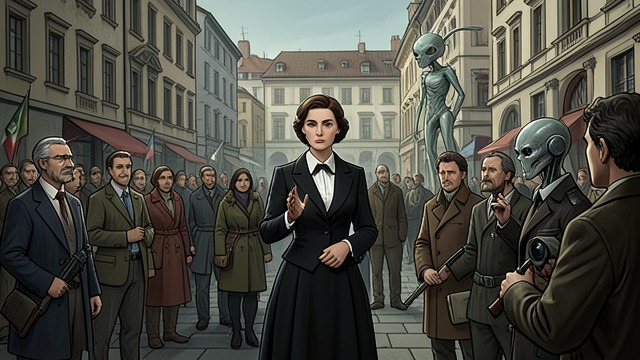
Human Vulgarity
Alien Discomfort
May regards the neighbors' lack of reserve as a vulgarity that Milotan training cannot make casual. Human intimacy with strangers feels invasive.
Adaptation Without Acceptance
She learns to answer politely but never internalizes the behavior completely. Her public success depends on managing disgust rather than eliminating it.
The scene reveals that assimilation can be behavioral without being emotional. A culture may be imitated while remaining fundamentally distasteful.
The Strange Human World

The Strange Human World
Familiar Misreading
The principal's belief in radiation, conspiracies, and dangerous doctors now appears as absurd as the Greenes' own assumptions about Earth. Human rationality is shown to be culturally bounded.
Shared Blindness
Both societies explain unfamiliar life through inherited categories. The difference is that Terence has begun to see the limitations of both.
The ending grants him a perspective unavailable to either parent. He may be the first person able to regard both worlds as strange.
at the opening apartment encounters
during May's encounters with the rooftop neighbors
near the ending after the school incident
