
The Failure of Cultural Translation
The People UpstairsThis flow traces the Greenes' attempts to translate Milotan life into human practices and the misunderstandings that follow.
increasing Bearing strength in each event
 decreasing
Bearing strength in each eventdecreasingDepartment Store Banality
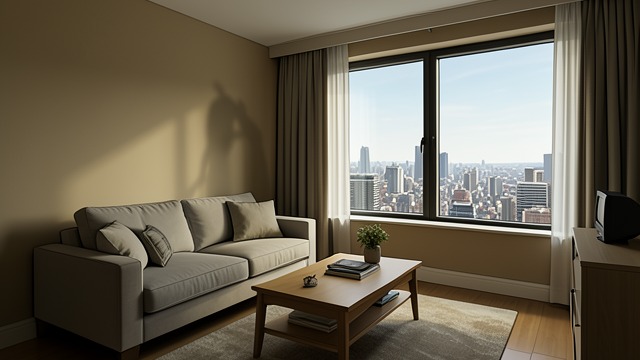
Department Store Banality
Deliberate Normality
The Greenes furnish their apartment in fashionable but outdated Earth modernism. Its brown monotones and conventional textures are selected to erase alien distinction.
Residual Alienness
Despite the effort, visitors sense something difficult to identify beneath the decor. Material imitation cannot reproduce the emotional assumptions of a culture.
The apartment proves that assimilation is more than copying surfaces. The concealed difference survives as atmosphere.
Domestic Adaptation
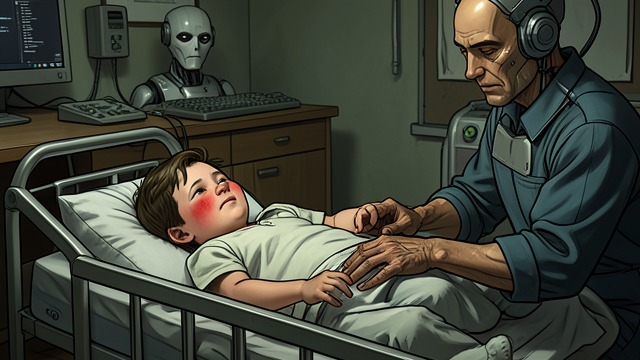
Domestic Adaptation
Human Childcare
May performs tasks that robots would handle on Milotis because the family must conform to Earth customs. Parenting becomes a daily lesson in embodied cultural compromise.
Squalid Universality
Terence's crying and physical needs resemble those of human babies, even as his biology remains alien. The common burdens of infancy create a limited shared experience.
The family discovers that some cultural differences can be endured through repetition. Others remain visible in the exhaustion surrounding every routine.
The Esperanto Insult
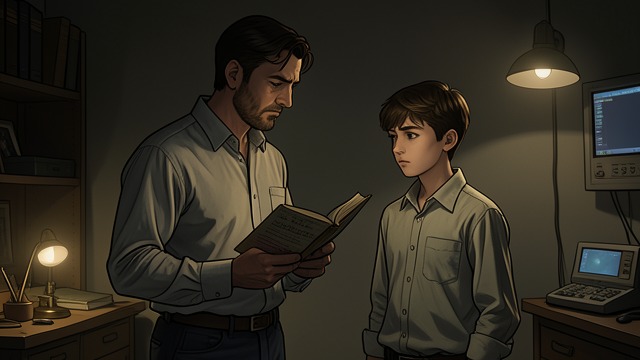
The Esperanto Insult
Heritage Rejection
Terence calls Milotan a silly form of Esperanto and refuses to study it. His mockery is a deliberate attempt to make his parents' heritage harmless and unreal.
Cultural Wound
Dan corrects the name but cannot compel identification. Language, which should connect father and son, becomes evidence of the distance between them.
The exchange shows assimilation as an emotional act of rejection. Terence is not merely learning Earth culture; he is protecting himself from the shame of being alien.
during the Greenes' settled apartment life
during Terence's infancy
during Terence's later elementary-school years
