
Human Misinterpretation
The People UpstairsThis flow traces how Earth repeatedly explains alien evidence through familiar categories instead of confronting its implications.
increasing Bearing strength in each event
 decreasing
Bearing strength in each eventdecreasingForeign Accent

Foreign Accent
Familiar Otherness
Neighbors notice that May Greene's accent is difficult to place, while Mrs. Gottesmann's is identifiable as German. The difference marks May as foreign without making her truly legible.
Safe Explanation
The residents search among national identities rather than considering another planet. Their assumptions give the Greenes an accidental layer of protection.
Human perception recognizes strangeness only within an available vocabulary. What cannot be named as nationality remains socially manageable.
Mutation Theory
Mutation Theory
Physical Evidence
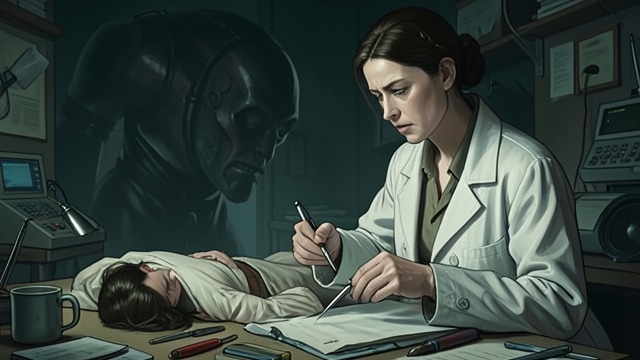
The principal sees Terence's body after the swimming incident and accepts that something is medically abnormal. She immediately connects it to radiation and bomb testing.
Ideological Channeling
Her fear follows familiar Cold War explanations about scientific secrecy and governmental cover-ups. The extraordinary becomes a scandal of human institutions rather than evidence of alien life.
The misunderstanding saves May and Terence. It also reveals how conviction can prevent observation from becoming knowledge.
Superstition's Near Truth
Superstition's Near Truth
Folk Perception
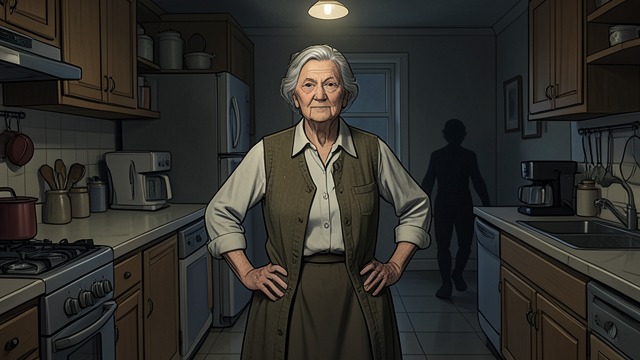
Mrs. Danko senses that the Greenes are subtly different and mutters about the evil eye or a changeling. Her language is imprecise but her perception is unusually close to reality.
Dismissed Witness
The household treats her as mentally unreliable, so her warnings never become an investigation. Truth appears in the least authoritative voice and is therefore ignored.
The story makes superstition neither wholly foolish nor genuinely explanatory. It becomes a distorted instrument for perceiving what rational society refuses to imagine.
during the Greenes' elevator encounters
during the principal's private interview with May
during Mrs. Danko's observations of the family
