Cultural alienation
The People UpstairsCultural alienation is the central condition of Terence Greene’s childhood. Born on Earth to Milotan agents, he possesses an Earth birth certificate and is technically not even a Milotan, yet his altered body, inherited language, concealed origin, and parents’ political purpose prevent him from inhabiting Earthly life without qualification. He is expected to pass as an ordinary child while remaining separate from the people around him, and the resulting conflict turns education, friendship, language, and even the exposure of his body into tests of identity.
Definition and Origins
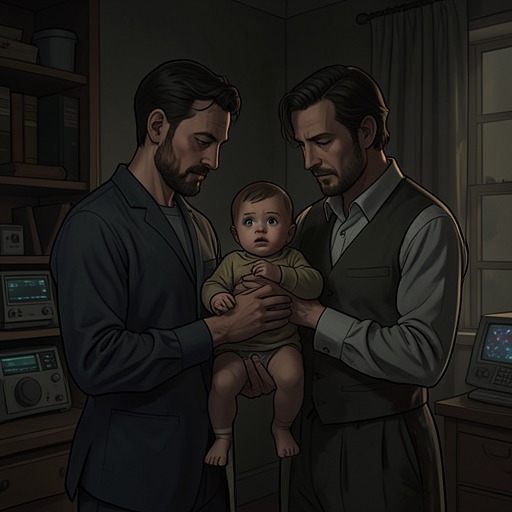
Terence’s alienation begins before he can understand it. Dan Greene and May Greene are Milotans whose bodies have been adapted for a lifetime assignment on Earth. Their hands, for example, have the wrong color for Earth and the wrong number of fingers for Milotis; returning home would be difficult because their adaptations, including amputations, have made them monstrous by the standards of their own planet as well as by those of Earth. Their son inherits the problem in a different form. He is born on Earth, in the United States of America, and receives a genuine birth certificate, but Dr. Robinson must fit him with masks and lenses to make his appearance pass as human.
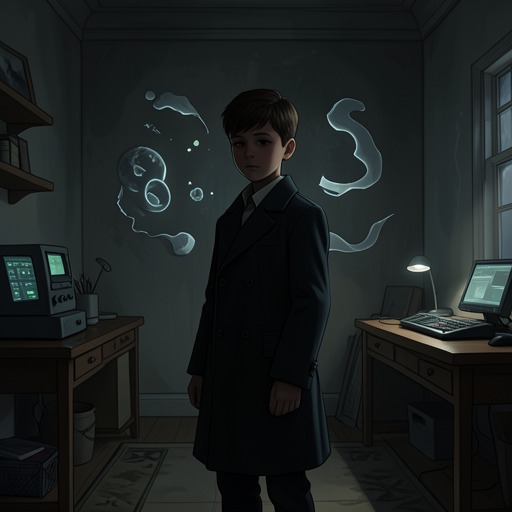
This contradiction gives Terence no simple place to stand. In formal terms he is an Earth citizen, but his physical life depends on Milotan technology and his parents’ concealment. His parents understand that the disguise is not merely cosmetic. Medical examinations, compulsory school attendance, and ordinary public exposure could reveal what they have spent years hiding. The child’s body therefore becomes the point at which competing cultural systems impose themselves: Earth demands visible conformity, while Milotis requires the preservation of an alien identity for a long-term political mission.
Childhood Between Two Cultures
Dan and May initially tell Terence only that they come from a far-off place. Dan argues that the truth should be disclosed as soon as possible so that Terence will not identify with Earth’s inhabitants, while May believes there is time because he will discover that he is an alien soon enough. Their disagreement reveals the practical and emotional difficulty of raising a child for a culture he has never seen. They want him to know enough to conceal his masks and contact lenses, but not enough to trust him with a secret whose exposure could endanger the family.
The Greenes speak both Milotan and English at home, making language a deliberate instrument of divided belonging. Terence is warned never to speak Milotan in public, although an occasional Milotan word could be dismissed as childish babble. At the same time, his parents keep him away from other children whenever possible. They take him to the theater, museums, and the zoo, and permit only limited visits from school friends, hoping that cultivated adult attention will compensate for the social world they withhold. The strategy protects the disguise but deprives him of ordinary peer relationships, leaving Earth familiar as daily surroundings but incomplete as a community.
His early development intensifies the problem. Terence does not walk until he is two or speak until he is three, and the neighbors treat him as backward. May is forced to accept their judgment, eventually becoming partly conditioned by the surrounding culture herself despite knowing that his slowness is normal for a Milotan child. Her response oscillates between indulgence and guilt: she spoils him because she feels she has not received the pleasure she expected from motherhood, then feels remorse for doubting whether he was worth the effort. Her uncertainty becomes part of his environment, even though he cannot yet name its source.
School and the Failure of Assimilation
When Terence reaches six, school becomes unavoidable. On Milotis he would be comparable to a four-year-old Earth child, but Milotan children learn quickly enough for him to follow the terrestrial curriculum. May chooses a private day school and tells its principal that the Greenes are Christian Scientists, using the claim to exempt him from medical examinations. The arrangement displays the paradox of his social position: the family can purchase access through money and a plausible religious explanation, but ordinary institutional procedures remain potential threats.
Terence performs well without becoming conspicuous. He earns marks that are good but not too good, and his self-possession comes from being raised chiefly among adults rather than from extraordinary intellectual brilliance. His parents therefore try to preserve a controlled form of Earthly success. They avoid rough sports because the coverings on his face, arms, and legs could be damaged, and the cost of disguising a child is so high that May keeps the same coat for a third season while Dan has the family car overhauled instead of replacing it.
Academic success does not produce cultural attachment. When Russia launches its first satellite, Dan and May hope the achievement will make Terence less dismissive of their accounts of Milotis and of scientific subjects generally. Miss Chase instead calls the satellite Russian propaganda, and Terence remains stubbornly Earthbound. His parents’ lessons in Milotan geography and history seem to him a joke that has lost its humor. He first feels embarrassed by Milotan and then refuses to speak it at all, dismissing it as equivalent to Esperanto while taking modest pride in his expected study of French. The moment is more than childish defiance: the language connected to his actual origin has become, in his public world, a source of shame.
Bodily Exposure and Recognition
The concealment collapses during swimming lessons, which begin in Terence’s grade. The genteel character of his school has allowed May to imagine that the most dangerous forms of physical exposure could be avoided, but swimming requires the removal of the coverings that have made his human appearance possible. Terence returns home saying that nothing happened, or nothing really happened, until he explains with difficulty that the class has started swimming.
His statement that he is different becomes an accusation directed at May. She has told him that he was different, but not what that difference meant or how violently Earth society might respond to it. The principal’s appearance at the office doorway makes the private secret public within the school. The institution interprets Terence’s body as a condition that should have been disclosed, and the principal ultimately tells May that he cannot remain at the school. The episode converts cultural alienation into an administrative fact: a child who has passed academically and socially is excluded because his body cannot satisfy the school’s assumptions about normality.
May answers through performance. She explains that the family has become so accustomed to concealing Terence’s condition that she failed to anticipate the incident, then agrees that transferring him will be best. She says Washington Heights has become too dangerous for raising a child and proposes moving to the suburbs, where nobody will know. The principal urges her to tell the authorities what is wrong with him before enrolling him elsewhere, presenting institutional surveillance as friendship and assistance. May’s polite gratitude conceals her amusement, but the victory is narrow. She has preserved the secret only by moving the child to another setting in which the same conflict may recur.
Recognition and the Turn Toward Milotis
The school crisis unexpectedly creates the closeness May has been unable to sustain. Terence clings to her hand on the way to the car, and she has not felt such intimacy with him since he was an infant. Alienation, which has separated him from his parents through secrecy, briefly draws mother and son together because both now face the consequences of the same concealed truth.
For half the drive he remains silent, then asks in halting Milotan whether Milotis really exists and whether everyone there is like them. His question shows that the language he had rejected has not disappeared; it returns when his Earthly identity is no longer secure. He suspects that his parents may have invented the planet merely to explain his difference, so the request is simultaneously factual and emotional: he wants confirmation that his body belongs somewhere.
May confirms that Milotis exists and promises that she and Dan will tell him all about it at home. She then touches the plastoskin covering his small, mutilated hand and announces that they will send a beam back to Milotis telling them about him. The planned report changes the meaning of his alienation. Until this point, his origin has been a secret used to manage him; now it becomes information that can be transmitted to the society from which his parents came. Terence has not achieved a settled identity, but he has begun to ask for one, and the family’s divided life has entered a new phase in which Milotis can no longer remain merely an explanation withheld from the child.