Milotans
The People UpstairsMilotans are a humanoid extraterrestrial people from Milotis who have established secret agents throughout Earth as part of a projected, centuries-long expansion. Their society is defined in the evidence by biological difference, elaborate physical adaptation, disciplined espionage, and a willingness to treat children born on Earth as instruments of colonization. At the same time, the birth and upbringing of Terence Greene expose the limits of that strategy: a Milotan child can possess Earth citizenship and native cultural knowledge while remaining physically unlike either society’s accepted norm.
Biology and Physical Appearance
Milotans resemble humans closely enough to pass within ordinary Earth society, but their natural bodies differ in conspicuous ways. Dan Greene is humanoid yet has dull light-green skin and restrained maroon-red pupils. His broad hands are built to support more than five fingers, an anatomical feature that becomes an immediate reminder of the disguise’s fragility. The physical differences are not merely cosmetic; they determine where Milotans can live, how they can work, and what forms of medical or institutional scrutiny they can survive.
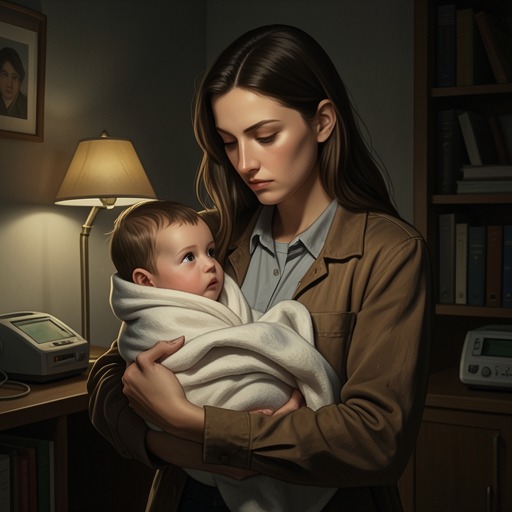
Milotan biology also differs in its developmental timetable. Milotan gestation lasts roughly as long as terrestrial gestation, but Milotan infants grow more slowly because the species has a life span about one-third longer than that of terrestrials, with maturity arriving correspondingly later. This slower growth gives parents more time to maintain a child’s disguise, yet it does not remove the financial and practical burden of doing so. Milotan babies have the same general bodily needs as human infants, and the Greenes must care for theirs according to Earth customs rather than relying on the robots that would have performed such work on Milotis.
Disguise and Adaptation on Earth
The Milotans’ presence on Earth depends on technological and surgical transformation. May Greene can peel a silk-thin plastomask from her face and remove Milotan contact lenses after returning from New York, revealing that her apparently human identity is a constructed surface. Earth objects in the apartment are also modified for Milotan use: even a terrestrial hairbrush has been subtly altered, while Milotan artifacts are kept out of sight so that the household can appear conventionally Earthly.
The Greenes’ adaptations are permanent and costly. Their assignment was intended to last a lifetime, and the changes included amputations as well as other bodily alterations. As a result, returning to Milotis would not restore them to their original condition. They would be as physically monstrous on their home planet as they would appear on Earth without disguise. Dan’s hands embody this double exclusion: they are the wrong color for Earth and have the wrong number of fingers for Milotis. Adaptation therefore does not produce an uncomplicated new identity; it leaves the agents unable to belong naturally to either world.
The disguises require continuing medical support. Dr. Robinson, a New Jersey general practitioner with an unusually complete laboratory, fits Terence with small masks and lenses that must be replaced as he grows. Because Milotan disguises are expensive, the Greenes can scarcely afford them, especially after May gives up her income to remain at home with the baby. Their method of concealment is thus a material system involving surgery, prosthetic surfaces, specialized lenses, medical expertise, money, and constant vigilance rather than a simple change of clothing.
Secret-Agent Strategy and Colonial Purpose
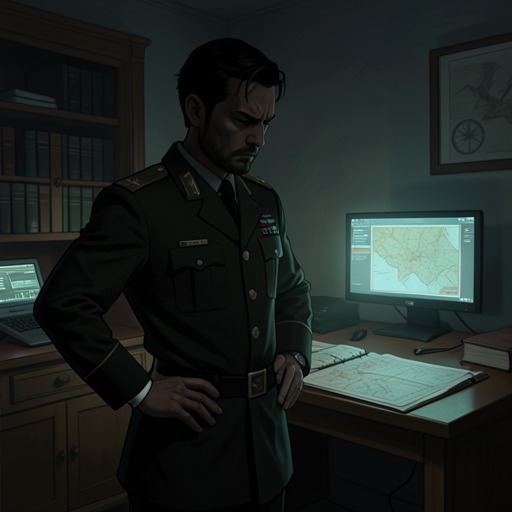
The Milotans’ Earth operation is organized through scattered secret agents. Dan explains that thousands of agents already live across Earth, with plans for hundreds of thousands and eventually millions. The undertaking is designed on a scale measured in centuries: Milotans are not terrestrials, he says, and can plan far ahead. Their objective is not ordinary migration or peaceful cultural exchange. Dan acknowledges that the agents’ ultimate intentions are hostile, and the Greenes’ respectable middle-class life is therefore a cover for a colonial program.
The agents are trained through years of indoctrination, yet even extensive preparation leaves them afraid of making a mistake. May identifies a more efficient method: Milotan couples could be sent to Earth to bear children there, creating agents who would be native to the culture from birth. Such children would know Earth customs intuitively and would not betray themselves through the slips that threaten adult infiltrators. In her proposal, Earth-born agents could multiply the Milotan presence more rapidly and economically than conventional espionage, while proving the plan’s usefulness might secure the Bureau’s forgiveness for the Greenes’ unauthorized child.
This strategy contains its own danger. Dan warns that children raised on Earth might identify with the natives rather than with Milotis. The child who is supposed to become the most effective infiltrator could instead become culturally Earthly. The plan therefore turns upbringing into a political technology: language, schooling, concealment, and family loyalty are all expected to manufacture allegiance, but none can guarantee it.
Terence and the Contradiction of Earth-Born Identity
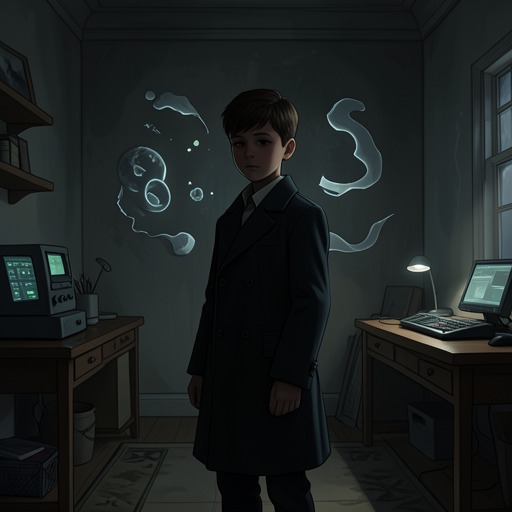
Terence Greene is the decisive test of the Milotan program. Born on Earth in the United States of America, he is an actual citizen of that country and possesses a genuine birth certificate rather than forged papers. Technically, he is not even a Milotan, although his body is Milotan and his parents intend to report his existence to Milotis. His legal identity and biological identity consequently pull in different directions from the moment of birth.
The Greenes raise him between worlds. They speak both Milotan and English at home, warn him never to use Milotan publicly, and keep him away from other children as much as possible. When he reaches six, however, the compulsory school-attendance law makes concealment difficult. May places him in a private day school and claims that the family are Christian Scientists so that he will not undergo medical examinations. The explanation works because the school fees are high and the principal is accommodating, but it also shows how the Milotan project depends on exploiting ordinary Earth institutions rather than remaining entirely outside them.
School exposes the weakness of biological disguise. During swimming lessons, Terence is expected to appear unclothed before other children, and the masks and lenses cannot conceal the body beneath them. He tells May that he is different, making the secret a source of accusation rather than parental instruction. The school principal treats his difference as a problem requiring disclosure and eventually tells May that he cannot remain at the school. Although she plans to transfer him elsewhere, the principal insists that the authorities should be informed in advance so that they can supposedly help him. Terence is therefore both protected and excluded by the same institutions: his Earth citizenship does not prevent his body from being classified as abnormal.
Significance of the Milotan Presence
The Milotans represent an alien power that seeks to conquer Earth not through open invasion but through normalization. Their most ambitious weapon is not a machine; it is the apparently ordinary child who can move through Earth society without the behavioral mistakes of a foreign agent. Yet the Greenes’ experience demonstrates that ordinary life is precisely where the strategy becomes vulnerable. Birth, school, medical inspection, language, family care, and public visibility repeatedly force biological difference into view.
The species’ deepest contradiction lies between assimilation and allegiance. Milotans need agents who can become culturally Earthly enough to pass, but they also need them to remain politically committed to Milotis. Terence makes that contradiction personal. He is born with a legitimate Earth identity, raised in Earth institutions, and injured by the demand that his natural body be hidden, while his parents still regard him as evidence for a Milotan colonial policy. When May finally tells him that Milotis exists and prepares to send a beam back reporting all about him, the act is both a family revelation and an official transmission. The Milotan project reaches its most revealing point in a child who belongs legally to Earth, physically to Milotis, and uncertainly to both cultures.