Native-born agent strategy
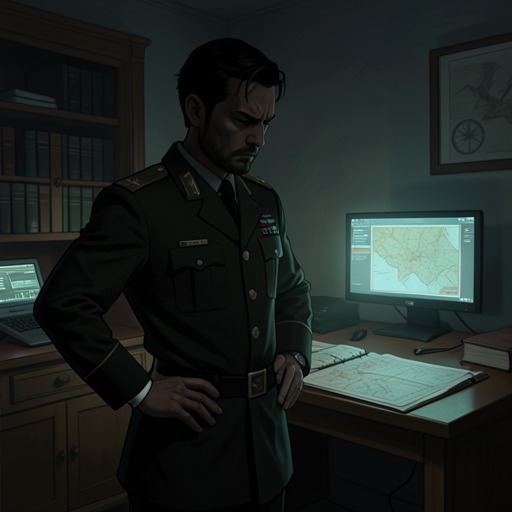
The People UpstairsNative-born agent strategy is the proposed Milotan method of recruiting and raising agents who are born on Earth and formed within Earth culture rather than trained as adult outsiders. Conceived by May Greene after her unexpected pregnancy, the strategy transforms a private crisis—the danger of returning to Milotis with a child and suffering disgrace—into a possible institutional breakthrough. Its central promise is that a child who grows up as part of Earth society could infiltrate it without the slips, visible strangeness, or cultural uncertainty that continually threaten conventional Milotan secret agents.
Definition and Strategic Logic
May Greene develops the strategy while she and Dan Greene are deciding what to do about the pregnancy. Their existing assignment has already altered them biologically: the adaptations that allow them to pass on Earth, including amputations, would leave them monstrous on Milotis, and they cannot simply be reassigned or comfortably readapted to their home world. Dan therefore sees the pregnancy as a possible cause for disgrace, while May sees a chance to create an agent who would not need to enter Earth as a foreigner.
Her reasoning begins with scale. Milotis already has thousands of secret agents scattered across Earth and expects that number eventually to grow into hundreds of thousands and then millions, although the organization of such an expansion would take centuries. Each conventional agent must undergo years of indoctrination and remain in constant fear of making a revealing mistake. May’s proposed substitute is an Earth-born child: someone raised inside the local culture would not merely memorize Earth behavior but would possess that culture as an ordinary environment. The strategic distinction is between performing belonging and inheriting it.
May argues that Earth-born agents could make Milotan expansion faster, cheaper, and more reliable. If the Bureau could be shown that children born and educated on Earth were superior infiltrators, it might send young married couples to Earth specifically so they could bear children there. In her vision, families would become the reproductive infrastructure of colonization, and each native-born child would be both a son or daughter and a long-term political asset. She expects the proof supplied by her own child to persuade the Bureau to forgive her and Dan for failing to prevent the pregnancy.
Creation Through the Greenes’ Family
The strategy is inseparable from the Greenes’ decision to keep the child. Dr. Robinson offers to terminate May’s condition without reporting it to Milotis, but May refuses because she has long wanted a child. Dan does not simply order her to comply, although he knows she would yield to his wishes. He worries about the loss of their Earth posting, their income, and the comparatively comfortable life they have built as secret agents, yet he eventually accepts that they have little left to lose and agrees to try the experiment.
Terence Greene is born eight months later, after a Milotan gestation period roughly comparable to that of terrestrials. His birth gives the plan an unprecedented legal and political advantage: he is born in the United States of America, possesses a genuine Earth birth certificate, and is technically not even a Milotan. Unlike his parents, he does not need forged papers to exist on Earth. The child’s formal status thus appears to solve one problem of espionage even as his body creates another.
Dr. Robinson equips the baby with small masks and lenses, later requiring continuing disguise and medical care. Terence’s slower Milotan growth makes the concealment somewhat more manageable, but the devices remain expensive. Because May must stay home to care for him, the family loses her income; the salaries from their terrestrial jobs were only meant to supplement allowances from Milotis, and life on an alien planet is costly. The experiment therefore imposes material sacrifices from its beginning. The Greenes surrender imported tobacco, familiar food, luxuries, and eventually necessities, making the proposed strategic economy depend on intense domestic austerity.
The arrangement also reverses the family’s expected labor pattern. On Milotis, robots would have cared for the baby, but on technologically inferior Earth the humiliating physical work falls to May while Dan continues working. She takes Terence into the sun, exchanges evasive pleasantries with neighbors watching from outside the house, and avoids drawing attention even when she briefly shows him the distant glimmer of Milotis at night. The strategy is therefore maintained through repetitive household labor, surveillance management, and the concealment of ordinary parental acts.
Education, Assimilation, and Risk
The plan requires more than disguising Terence’s body; it requires controlling the culture that will shape his mind. The Greenes speak both Milotan and English at home, teach him to understand both languages, forbid Milotan in public, and keep him away from other children as much as possible. They initially tell him only that they come from a far-off place. Dan wants the truth disclosed early so Terence will resist identifying with Earth people, but May and Dan also know that a young child cannot be trusted with the full secret.
This hesitation exposes the strategy’s central contradiction. Its effectiveness depends on Terence’s participation in Earth life, yet his parents fear precisely the identification that such participation may produce. Dan warns that a child might become one of the local crowd before reaching the maturity needed to understand Milotan intentions, which are ultimately hostile to Earth. An agent who is culturally native may therefore be impossible to command as a foreign operative. The advantage of deep assimilation simultaneously threatens Milotis’s political loyalty.
When Terence is six, compulsory schooling makes isolation impossible. May places him in a private day school rather than a boarding school and claims that the Greenes are Christian Scientists, using the school’s willingness to waive medical examinations as protection against inspection. The choice gives Terence the best limited educational opportunity available on Earth while preserving the family’s secrecy. It also brings him into the exact institution that the strategy needs him to master and that may expose him.
Terence is not a prodigy whose exceptional performance would attract dangerous attention. He is described as self-possessed, partly because he has spent most of his time with adults, and as naturally superior to Earth children in learning aptitude without being conspicuously brilliant. Even his delayed development becomes part of the disguise: he does not walk until two or speak until three, leading neighbors to regard him as backward. May is forced to accept that judgment, and prolonged residence on Earth has conditioned her enough that she begins, in a sense, to think of him as retarded herself.
Bodily Exposure and the First Report
The first major test of native-born agency is not a political mission but a school swimming lesson. Terence’s education places him in a situation for which masks, lenses, and carefully managed clothing cannot provide protection. When he realizes that his classmates will see his body, he understands that his difference is no longer an abstract family secret. He tells May that he is different, and the accusation turns the parents’ concealment into a moral burden: they have made him alien and then failed to explain the source of his alienness.
The incident demonstrates the limits of biological disguise. Dr. Robinson’s alterations can make Terence pass a superficial examination, but they cannot guarantee safety in every ordinary Earth setting. They also make the child dependent on the adults who commissioned and maintain them. His alien body is not merely concealed from Earth; it is physically reshaped for Earth, so that the strategy’s supposed native status rests on continuous technological intervention.
At the same time, Terence’s Earth upbringing has already begun producing strategic results. The neighbors suspect that the Greenes come from Russia because the parents are evasive about their origin, but their suspicions create additional camouflage rather than immediate exposure. May realizes that Terence has detected what she and Dan failed to notice: their surroundings have been observing them. She takes this as evidence that he is developing in the manner she predicted and concludes that he may eventually be more useful to Milotis than either parent.
The strategy reaches its first formal culmination after the swimming-lesson crisis. Terence clings to May’s hand on the way to the car, creating a closeness she has not felt since he was an infant. Then, speaking haltingly in Milotan, he asks whether Milotis truly exists and whether everyone there is like the Greenes. May confirms the truth and promises that she and Dan will explain everything at home. She also announces that they will send a beam to Milotis telling the authorities all about him. The report is therefore not only an administrative notification; it is the transmission of the first completed case for the native-born agent strategy.
Consequences and Significance
Native-born agent strategy converts colonization from a problem of individual disguise into a program of intergenerational reproduction, education, and cultural formation. Its agents would possess legitimate birth records, local speech, local habits, and childhood knowledge unavailable to adults trained abroad. Yet the story makes the method costly at every level. It requires parents to treat a wanted child as evidence, their home as an operational site, their language as a security system, and their affection as something entangled with political utility.
The strategy also creates a conflict between formal citizenship and lived belonging. Terence is legally an Earth citizen because he is born in the United States of America, but his body requires masks, lenses, and altered skin; his parents teach him to hide his language; and his education threatens to reveal what his family cannot safely tell him. He is native-born in the bureaucratic sense while remaining alien in the physical and familial sense. The plan seeks an agent who can belong completely to Earth, but its success would risk producing a person whose loyalties, identity, and emotional attachments cannot be controlled by Milotis.
For May, the strategy initially gives meaning to an unwanted political catastrophe and turns threatened disgrace into hope. Her satisfaction at Terence’s developing usefulness coexists with guilt, resentment, indulgence, and remorse: she sometimes questions whether he was worth the trouble, then spoils him with things that are not good for him because she feels guilty about her own disappointment. The family’s political objective thus never erases the child’s personal presence. Terence is an experiment in infiltration, but he is also a son whose hand she holds and whose closeness she suddenly rediscovers.
Its decisive irony is that the strategy succeeds by making Terence less controllable as an instrument. Earth has given him the legal identity of a citizen and the social experience of a local child; Milotis has given him a hidden origin, a modified body, and a mission he does not yet understand. The swimming lesson forces that divided identity into speech, while his request to hear about Milotis begins the process of reclaiming the truth. The beam sent back to Milotis may announce the birth of a valuable agent, but it also records the emergence of a person standing between the two worlds the strategy had hoped to align.