The report to Milotis
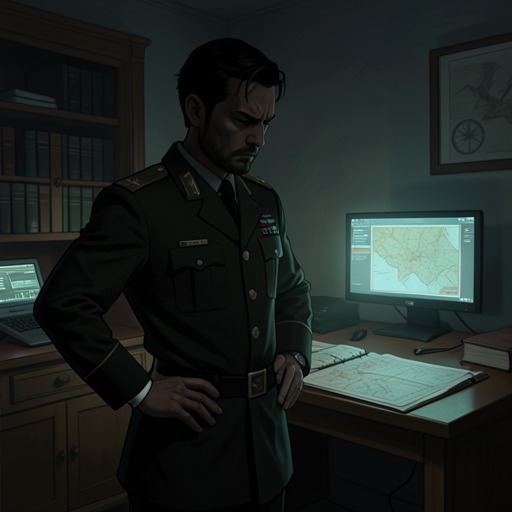
The People UpstairsThe report to Milotis is the decisive communication through which May Greene and Dan Greene intend to announce Terence Greene's existence to their home world and its Bureau. What begins as a response to an unauthorized birth becomes a proposed demonstration of a new colonial method: Milotan agents born and culturally formed on Earth could serve more effectively than transplanted adults. By the time May promises to send the beam, however, the report is no longer merely an administrative appeal. Terence has learned that Milotis exists, and the transmission becomes the family's first deliberate act of acknowledging him as both a child of their household and a figure with consequences for the future of Milotan infiltration of Earth.
Causes and Background
The report grows out of May Greene's unexpected pregnancy. The Greenes are Milotan secret agents living under Earth identities, and their assignment was intended to last a lifetime. Their biological adaptations, including amputations, have made them difficult to return to Milotis: they would be as monstrous there as their natural bodies would appear on Earth. They had also been posted to Earth partly because the Bureau believed women like May were sterile or past childbearing age. Her pregnancy therefore threatens both their professional standing and the practical arrangement of their lives.
Their first expectation is that the Bureau will blame them for failing to take proper precautions and order them home in disgrace. Dr. Robinson offers to terminate the pregnancy without reporting it, but May refuses because she has always wanted a child. Dan's reluctance is not presented as a rejection of the child so much as fear of the costs: he has adjusted to his Earth posting, is paid well, and knows that returning with dishonorable discharges would leave them worse off. The report is thus born from a conflict between bureaucratic duty, bodily adaptation, economic security, and May's long-denied desire for motherhood.
The couple initially considers concealing the child through masks and lenses. Dan rejects that solution because compulsory schooling would begin at about six, and medical examinations would make secrecy increasingly dangerous. A private tutor would also violate the inconspicuous, average, middle-class appearance required by their work in Washington Heights and might expose their secret to another person. The report becomes necessary because the family cannot preserve both Terence's safety and the Greenes' cover by indefinitely hiding him at home.
The Proposed Strategic Meaning
May transforms the crisis into an argument for a new Bureau policy. A child born on Earth to Milotan parents would be shaped by the local culture and therefore less likely to make the slips that reveal adult agents transplanted from another world. If the Greenes could prove this, she reasons, the Bureau might send young married couples to Earth specifically to bear children there. Such native-born agents could multiply the Milotan presence more cheaply and quickly, potentially producing millions of operatives.
This proposal gives the transmission a double function. It is an admission of failure under the existing system, since May and Dan have violated the expectations attached to their posting; but it is also a petition to reinterpret that failure as an experiment. May hopes that the Bureau will forgive them once Terence demonstrates the value of a native-born agent. Her plan converts private reproduction into state strategy and places the intimate fact of a child within the machinery of covert colonization.
Dan identifies the danger that May's optimism suppresses. Children born on Earth might identify with its inhabitants rather than with Milotis, undermining the hostile intentions of the mission. The possible report therefore carries an unresolved question about whether cultural adaptation will strengthen infiltration or dissolve allegiance. Terence is not simply a successful product of biological disguise; he may become evidence against the political purpose that produced him.
Terence as the Subject of the Report
Terence's status makes the proposed communication unprecedented. After roughly eight months of gestation, he is born on Earth, in the United States of America, and receives a genuine Earth birth certificate. He is the first Milotan on Earth who does not need forged papers. Technically, he is not even a Milotan, because his birthplace and legal documentation place him within Earth society from the beginning. The report must therefore describe someone who is biologically connected to Milotis yet formally rooted in Earth.
His existence also requires continuing material support. Dr. Robinson fits the baby with small masks and lenses, later maintained as part of the disguise. Milotan infants grow more slowly than terrestrial children, but the equipment remains expensive. May stays home to care for him while Dan continues working, and the loss of her income damages a household already burdened by the high cost of living on an alien planet. They surrender imported tobacco, familiar food, luxuries, and eventually necessities. The report is consequently backed by years of practical sacrifice rather than by an abstract strategic claim.
The arrangement places emotional strain on May as well. She spoils Terence partly from guilt because motherhood has not brought the pleasure she expected; at times she wonders whether he is worth the trouble and regrets refusing Dr. Robinson's offer. Remorse then drives her to give him things he wants even when they are not good for him. This ambivalence complicates the report's official meaning: Terence is presented to the Bureau as a potentially valuable agent, but within the household he has first been an expensive, difficult, and deeply personal responsibility.
The Report and Terence's Revelation
The Greenes delay telling Terence the truth. They teach him both Milotan and English, warn him not to use Milotan in public, and keep him away from other children as much as possible. They tell him only that they come from a far-off place, while Dan argues that the full truth should be disclosed early enough to prevent him from identifying with Earth. Their secrecy is intended to protect the mission, yet it also leaves Terence without the knowledge needed to understand his own body and social position.
School makes the concealment increasingly unstable. At six, Terence must attend school under the compulsory attendance law, and May sends him to a private day school while claiming that the Greenes are Christian Scientists so that he will not undergo medical examinations. The apparently respectable school environment seems safe until swimming lessons require the children to appear unclothed or nearly so. Terence recognizes the practical truth before his parents have given him the emotional means to bear it: he is different, and the difference is their responsibility.
After the exposure, Terence clings to May's hand on the way to the car, creating a closeness she has not felt since his infancy. He then asks, in halting Milotan, whether Milotis is real and whether everyone there is like them. May confirms that she and Dan were not inventing the place and promises to tell him about it at home. Only after this acknowledgment does she announce the report: that night, they will send a beam back to Milotis telling the Bureau all about him. The transmission therefore follows, rather than causes, Terence's revelation. It is the official counterpart to a family confession.
Consequences and Significance
The report promises to reconnect the Greenes with Milotis, but it also exposes the limits of their control. May hopes the Bureau will see Terence as proof of a superior native-born agent strategy; Dan fears that such a child may join the society he was meant to infiltrate. Terence's Earth birth, authentic citizenship, learned English, school experience, and emotional attachment to his mother all complicate any simple classification as a Milotan operative.
The planned beam also changes the meaning of parenthood in the story. At first Terence is treated as a security problem requiring masks, lenses, restricted contact, and careful information management. Through the report, he becomes a message sent across the distance between worlds. Yet his physical grip on May's hand and his request to hear about Milotis prevent him from remaining merely an instrument. The report records a bureaucratic case, but it is initiated at the moment when the child has become a son seeking an origin.
Its final irony is that the Greenes intend to report a successful solution to an infiltration problem while simultaneously revealing the possibility that the solution will escape Milotan purposes. Terence may be the most convincing Earth agent because he was born into Earth culture, but that same cultural belonging threatens the hostile mission. The beam back to Milotis thus stands at the threshold between strategic triumph and ideological defeat: it announces the arrival of a new kind of agent whose most important qualification may be the impossibility of deciding, in advance, whom he will belong to.