
The Jackpot and the Uneven Future
The PeripheralThis thread follows the Jackpot as a cumulative human-made catastrophe whose technological recovery produces a survivable but profoundly unequal future, forcing Flynne Fisher to measure progress against its human cost.
increasing Bearing strength in each event
 decreasing
Bearing strength in each eventdecreasingA Disaster Without a Single Beginning
A Disaster Without a Single Beginning
Catastrophe as Climate
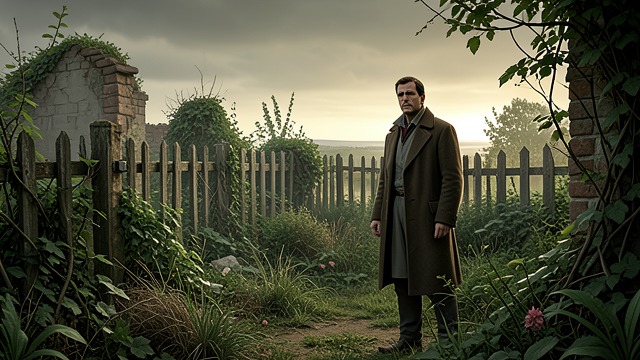
Wilf Netherton explains that the Jackpot is not one apocalyptic event but a multicausal crisis unfolding over decades. Climate change, water shortages, crop failure, disease, collapsing ecosystems, and political incapacity accumulate rather than arriving as one decisive disaster.
His account denies the comfort of a clean before and after. People did not knowingly choose every outcome, but ordinary decisions and failures compounded into an era that killed most of the world’s population. The catastrophe becomes a condition produced by human systems, not a single villain or spectacular accident.
The Scale of Inheritance
Flynne Fisher receives the account in her own garden, among familiar traces of a life that may not survive into Wilf’s era. The intimate setting makes the future’s scale difficult to absorb: the dead are not an abstraction but the possible people of her world. Her response is not immediate certainty but the unsettling recognition that a future can be both distant in years and already present as risk.
Progress Inside the Ditch
Progress Inside the Ditch
Innovation Amid Loss
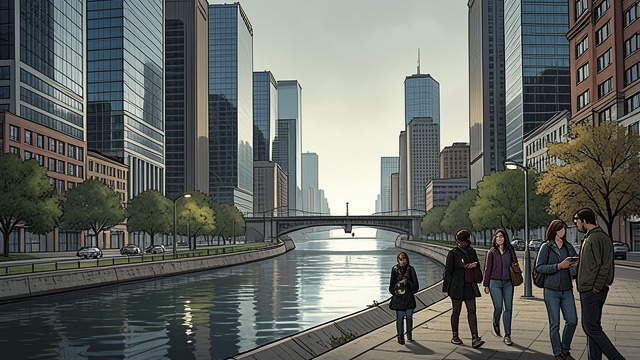
Wilf describes scientific advances emerging as the crisis deepens: cleaner energy, carbon removal, new medicines, and better ways to produce food. These breakthroughs make survival possible, but they do not arrive as a single rescue or reverse the suffering already underway.
The contrast challenges a familiar story of progress in which invention steadily improves life for everyone. In Wilf’s account, technical capacity rises alongside death, violence, and political failure. New tools brighten a world whose social and ecological foundations are still collapsing.
The Ambivalence of Recovery
The future’s technology is therefore neither a simple triumph nor a consolation. It can restore rivers, build new environments, and extend human life, but its existence does not prove that the historical response was adequate or just. The survivors inherit both extraordinary capabilities and the knowledge that those capabilities arrived too late for most people.
The Survivors’ Settlement
The Survivors’ Settlement
Wealth After the Die-Off
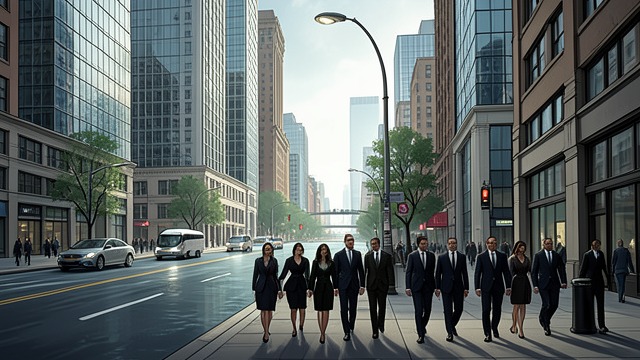
Wilf tells Flynne that the richest people did not necessarily experience the Jackpot as the same kind of disaster as everyone else. With fewer people and a smaller population to govern, surviving wealth became more concentrated; crisis offered opportunities to acquire what remained.
The London Flynne visits reflects that settlement. Shards rise over a city restored by machines, while automated systems maintain buildings and landscapes and public life appears sparse. The visible order is impressive, but it is also the product of survival organized around concentrated ownership.
A Future That Calls Itself Normal
The survivors treat their arrangement as workable, even while its critics describe it as feudal or kleptocratic. The novel does not let technological elegance stand in for justice: a cleaned river and a quiet greenway may coexist with inherited power and extreme inequality. The question is not only how humanity endured, but whose endurance became the architecture of the future.
A Personal Forecast
A Personal Forecast
The Future Enters the Garden
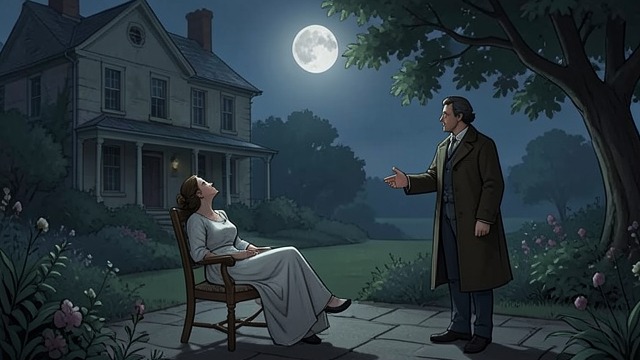
As Wilf speaks, Flynne listens from a chair beneath the oak where the family’s routines have accumulated. The moonlit yard, the old house, and the familiar landscape make his account harder to treat as distant speculation: this is the world whose people may become his past.
She cannot translate a statistic about mass death into a complete emotional experience. Her question about what happened to all the bodies reveals how concrete the consequences remain beneath the broad outline of history. Wilf answers through processes—disease, collapse, and later the work of Assemblers—but the scale exceeds both of them.
Inheritance Without Control
Flynne cannot simply undo the future by learning about it. The worlds have diverged, and even those with access to both cannot direct every outcome. Her task is therefore not to receive a prediction as destiny but to understand that present decisions carry consequences that no individual can fully command.
Pacing the Inheritance
Pacing the Inheritance
Power to Introduce Change
Coldiron uses advanced knowledge and money to reshape Flynne’s world: it acquires property, builds a company, influences political institutions, and competes through high-speed financial systems. Its interventions can protect Flynne’s family, but they also stress markets and accelerate changes whose full effects remain unknown.
After the competing operation loses its advantage, Coldiron divests rather than continuing to expand at maximum speed. The reduction does not erase the influence already acquired, but it signals an awareness that rapid technological and financial transformation can itself become destabilizing.
An Unfinished Ethical Project
Flynne’s later life is built around the question of what to do with knowledge and resources that can change history without guaranteeing a better outcome. Coldiron invests in medicine, climate measures, and other preparations, while trying to avoid the particular future Wilf has described. The effort is not a promise that catastrophe has been canceled; it is a sustained attempt to make the inherited future less destructive.
When Wilf Netherton explains the Jackpot beneath the oak at Flynne Fisher’s home
During Wilf Netherton’s account of the decades following the Jackpot
As Wilf Netherton describes the post-Jackpot order
During Flynne Fisher’s first long conversation with Wilf about the Jackpot
Near the ending, after Coldiron’s emergency expansion and partial retreat
