
Ordinary Goodness Under Pressure
The PeripheralThis thread traces how violence and corruption test the characters’ self-understanding, while small acts of restraint reveal that moral identity depends on what people choose to do rather than on what they claim to be.
increasing Bearing strength in each event
 decreasing
Bearing strength in each eventdecreasingThe Cost of Violence
The Cost of Violence
A Familiar Skill in a New Context
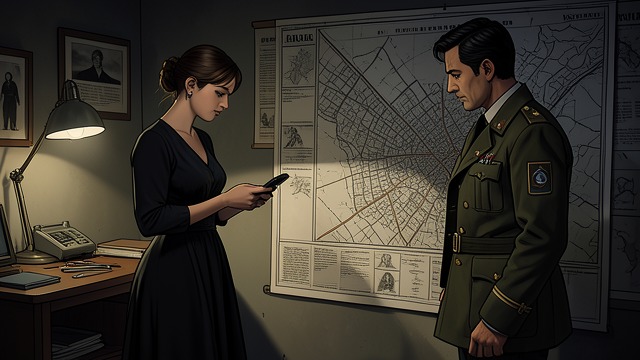
Flynne Fisher has experience as a paid player in a military-style game, where careful observation and a decisive shot once brought her money and success. The memory is not a glamorous origin story: she remembers exhaustion, the harm done to other players, and the distress that followed her final kill.
When she sees a murder in the London tower, the familiar habits of tactical attention return. She studies the man’s expression, circles back to the building, and recognizes that something is wrong. Yet this time the violence is not an abstract contest between avatars; the woman’s death leaves her grieving and physically shaken.
Skill Without Innocence
The story refuses to equate competence with moral clarity. Flynne’s ability to observe and react can help protect people, but it does not make violence painless or turn it into a game. Her distress remains part of her understanding of what her skills cost, even when action is necessary.
Burton’s Discipline and Its Uses

Burton’s Discipline and Its Uses
Control as Survival
Burton Fisher organizes his life with military precision: clothes, tools, and spaces are squared away, and his experience in Haptic Recon shapes how he assesses threats. His discipline gives the family a practical advantage as attacks grow more likely, but it is also intertwined with injuries and haptic glitches that he cannot simply command away.
He tends to see events tactically and move quickly, bringing other veterans into a defense network around the family home. Those choices provide protection, but they also pull the family deeper into armed conflict and into deals with local power brokers.
The Boundary Between Protection and Escalation
Burton’s desire to protect Flynne and their family does not make every decision harmless. He agrees to arrangements on Flynne’s behalf and buys political cover after lethal confrontations, leaving her to challenge the assumption that necessity cancels her right to choose. His arc shows discipline as both a resource and a temptation: the same habits that protect people can normalize escalation.
The Ordinary Economy of Evil

The Ordinary Economy of Evil
Corruption as Local Routine
Janice explains that Corbell Pickett’s power is woven through the county’s drug economy and its political arrangements. The system is not sustained by a single theatrical villain but by transactions, silences, and people who depend on the money it generates.
Flynne learns that people around her have understood parts of this arrangement for years without discussing it. Their silence has sometimes protected her, but it has also allowed her to mistake a corrupt structure for a series of unrelated local problems.
The Familiar Face of Harm
The revelation gives moral weight to Flynne’s involvement with Coldiron. She and Burton have accepted money before they know who holds power around them, and now every attempt to keep their family safe risks reinforcing another part of the same system. Evil appears not as an alien force but as ordinary self-interest extended through institutions and repeated without honest examination.
Refusing Party Time
Refusing Party Time
An Available Weapon
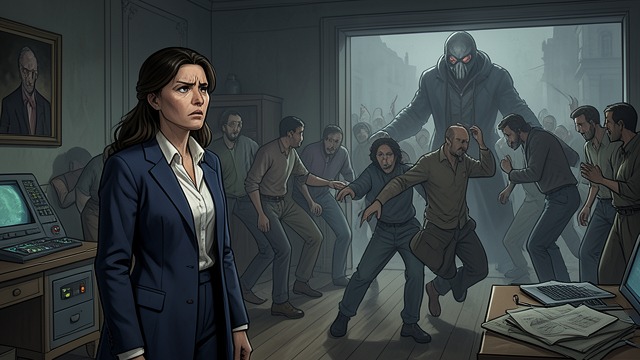
When Flynne learns that Ainsley Lowbeer’s operation may use Party time against the protesters, she understands that the weapon would not simply scatter a hostile crowd. It would turn people into violent, sexually predatory versions of themselves, potentially leaving them with unbearable memories or dead.
The protesters are hateful and provocative, and Burton has personal reasons to despise them. That makes the proposal easy to rationalize as an efficient way to prevent a dangerous confrontation. Flynne refuses to let their behavior make them acceptable targets for a weapon designed to destroy their agency.
A Moral Condition of Cooperation
Flynne tells Wilf Netherton that she will withdraw her family from the future’s business if the plan proceeds. The decision risks their access to money and protection, but she insists that remaining decent depends on refusing certain acts, even when powerful people call them useful.
Lowbeer later says that the proposal was a test, but Flynne’s choice has force beyond the test’s result. She does not act to prove her virtue; she acts because complicity would make the enterprise unacceptable. The scene makes conscience a practical limit on power rather than a private feeling.
What Makes a Person Good

What Makes a Person Good
The Compromise of Survival
After Flynne is rescued from Corbell Pickett, Tommy Constantine asks about the money, the deaths, and the changing economy. She cannot give him a clean account, but she chooses not to lie about the company or the danger. Their conversation acknowledges that people may participate in compromised systems while trying to preserve the lives and relationships that matter to them.
Tommy’s own position is equally difficult. He has tried to enforce the law in a county where political influence and the drug economy constrain what law enforcement can do. He does not present his compromises as innocence; he describes the cost of keeping a community functioning amid corruption.
Character as Conduct
Flynne later connects her decision about Party time to a lesson from her mother: a person’s moral identity is shown by how that person behaves. Neither good intentions nor a claim to decency is enough. The novel’s moral center lies in repeated choices—whether to tell the truth, refuse an atrocity, protect the vulnerable, or acknowledge one’s own capacity to do harm.
After Flynne Fisher witnesses the killing at the tower
As Burton Fisher’s private security work expands after the first assassination threat
When Janice explains Corbell Pickett’s influence to Flynne Fisher
After Flynne Fisher learns of the proposed attack on Luke 4:5
During Flynne Fisher’s conversation with Tommy Constantine after her kidnapping
