Aelita West
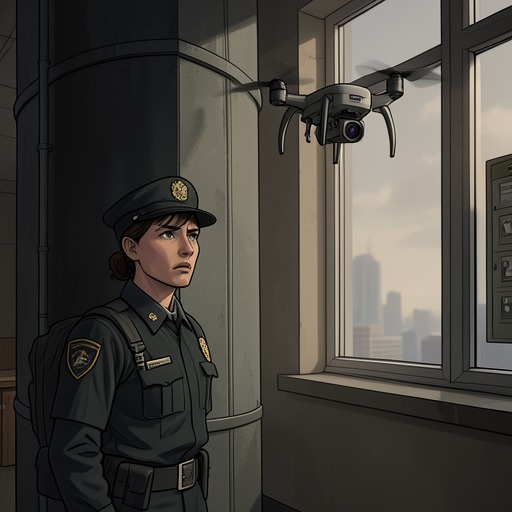
The PeripheralAelita West’s disappearance and death set the investigation in motion across the two linked worlds: she is a United States citizen living in London, connected to Lev Zubov through a polt he gave her, and to Daedra West as her sister. Her residence at Edenmere Mansions becomes the scene of the killing, while the effort to establish who was responsible exposes the distance between seeing a crime and proving it.
Identity and Connections
Aelita is identified in the investigation as an American resident in London. Her connection to Lev includes the polt he had given her: she had wanted to know more about it, and she had arranged to meet his secretary for lunch on the Strand. That appointment was canceled. Lev learned of the cancellation through his secretary and said that the Metropolitan Police had been listening when the two secretaries spoke, indicating that the people around Aelita and Lev were already under surveillance.
Aelita was also linked to a cultural, semigovernmental gathering originally planned around Lev’s project. Rather than cancel it, she reframed the event after Daedra killed one of Lev’s men and reinforcements arrived. The new purpose is not established, but the gathering went ahead with strong security. It was held at Aelita’s residence, where she occupied floors fifty-five through fifty-seven of Edenmere Mansions, and Daedra attended. The juxtaposition of a carefully secured public occasion and the violence associated with the building gives Aelita’s residence a central place in the account of her final days.
The Killing and the Witness
Flynne Fisher is presented with a headshot from Aelita’s website and asked whether the woman in the image is the one she saw. The image is described as more than seventy years old, belonging to a past that is no longer quite the same past that produced Wilf Netherton’s world. Flynne recognizes the woman. Her identification connects Aelita’s image and identity to the earlier account of a woman falling from a railing and being killed by the small creatures that swarmed over her; only the clothes she had been wearing remained. The evidence establishes the killing as the deeply unpleasant homicide Flynne witnessed, while leaving the identity and role of the man she saw unresolved.
That uncertainty shapes Flynne’s involvement. Ash tells her she may have witnessed Daedra’s sister’s murder, and Flynne responds with surprise that the event was real. Later, Lowbeer explains why she wants to speak with Flynne: Flynne witnessed a homicide and saw the face of someone who may have been either the perpetrator or an accomplice. The qualification matters. Flynne is a witness to the killing and a possible source of identification, but the account does not establish that she can identify the man’s guilt or precise role.
Investigation and Suspicion
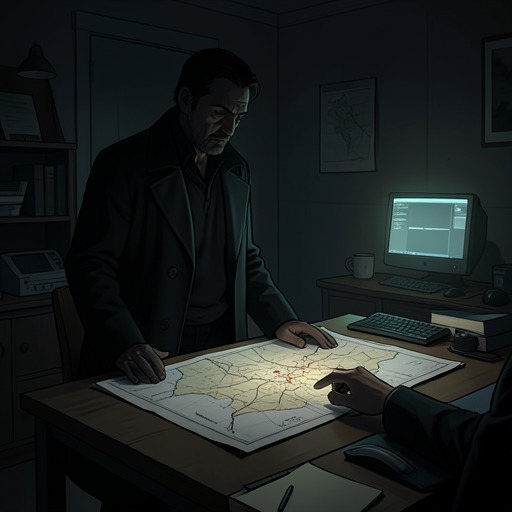
Lowbeer formally describes Aelita as missing and asks Lev and the others to explain their relationships to Aelita and to one another. She says that the matter will become part of the record. Lev had understood that no recording devices would be present; Lowbeer confirms this but explains that she has court-certified recall, which is admissible as evidence. The exchange places Aelita’s disappearance within an official inquiry and makes the reliability and admissibility of testimony a practical concern rather than a formality.
Suspicion extends beyond the people present at the gathering. Lowbeer mentions back-channel talk of retaliation by the patchers. Wilf recalls that Flynne had described the recovered plastic creature that scaled Edenmere Mansions to kill Aelita. The talk is characterized as rumor rather than established fact, and the reference to the patchers does not prove who sent or controlled the creature. Later, a rental tells Wilf that people are saying he killed Aelita. The accusation is reported, not substantiated; it shows how quickly the unresolved death becomes a source of suspicion even among those involved in the investigation.
Proof, Memory, and Remembrance
When Wilf asks whether Lowbeer knows who Flynne saw, she answers that she imagines she does, but that this is not enough. The state requires proof, she says, even when the state itself is built on secrets and lies. Her distinction defines the investigation’s central constraint: a probable identification may guide inquiry, but it cannot stand in for evidence. Lowbeer also reflects on the part she played in the world’s transformation and on living long enough to recognize her mistakes. Her account of that history gives the pursuit of proof a broader context, without resolving Aelita’s case.
Aelita’s presence persists at Daedra’s later gathering. Flynne sees a large black screen displaying Aelita’s face, dimly visible among people holding drinks and talking. Wilf says that the image is Aelita, but adds that he has never seen such a display before. Daedra explains that the City Remembrancer had to stay and hear her appreciation of Aelita. When Flynne recalls the earlier peripheral and the actress involved, Daedra insists that the celebration was not ruined. The gathering thus becomes an act of remembrance as well as a point of contact between Daedra and Flynne: Aelita is absent, but her image and her sister’s tribute keep her at the center of the scene.
Narrative Significance
Aelita is known principally through the consequences of her absence: a canceled lunch, a secured gathering at Edenmere Mansions, a witness’s recognition, competing suspicions, and an official demand for proof. These traces make her death both a personal loss for Daedra and the hinge of a wider investigation involving Lev, Wilf, Flynne, and Lowbeer. The case’s unresolved identification also preserves a crucial distinction between the spectacle of a witnessed killing and the slower, evidentiary work required to assign responsibility. Aelita’s image ultimately returns in a public tribute, where remembrance offers a form of presence but no substitute for an answer about who killed her.