Haptics
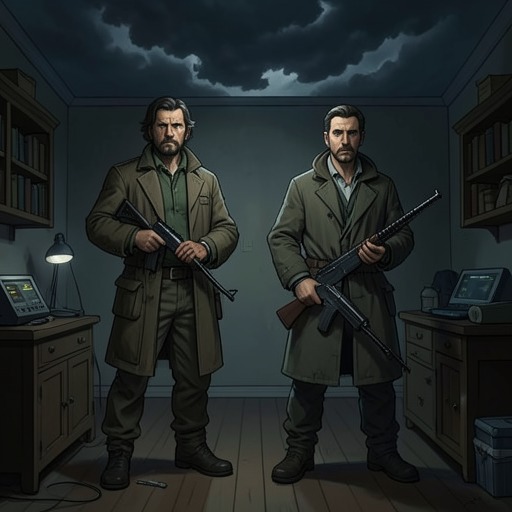
The PeripheralHaptics is a military sensory-feedback system represented on Burton Fisher’s body by tattoos that once directed his actions in combat. After the system was removed, its effects did not simply disappear: Burton still experienced glitches described as phantom-limb sensations, and the marks left on his skin remained visible. The technology therefore occupies two states at once in the novel: it is a system for translating tactical instructions into bodily response, and a residue that continues to shape a veteran’s ordinary life.
Design and Military Use
The Haptics tattoos had encoded instructions for when Burton should run, remain still, or perform what the narration calls the “bad-ass dance,” as well as which direction to move and at what range. Their purpose was not merely to display information but to put it into the body as actionable sensation. Burton’s experience thus connects the system to a particular kind of military training, in which sensing, interpreting, and moving could become tightly linked.
Lev Zubov had taken an interest in the military unit in the Stub to which Burton had belonged, describing its equipment as transitional technology from slightly before the Jackpot. When asked what technology he meant, Lev identified Haptics. This places the system within a specific historical and military context: it is neither presented as timeless equipment nor as an abstract futuristic enhancement, but as technology associated with a particular unit and period.
Removal and Residual Effects
The account distinguishes the removal of the equipment from the end of its influence. The people discussing Burton’s condition do not think he has PTSD, but say the Haptics sometimes glitch him. Those episodes are likened to phantom limbs: ghosts of the tattoos that once told him how and when to move. The comparison makes the aftereffect bodily and specific, rather than reducing it to a general account of distress.
When Flynne Fisher approaches Burton in the Airstream trailer, she sees the marks on his spine and side where the Haptics were taken off. His skin looks dusted with dead-fish silver. He has been told that the discoloration could also be removed, but he does not want to keep going back. The remaining patches record a second stage of removal: the system is gone, yet its trace persists, and further treatment would mean returning to the process again.
Flynne thinks she sees the familiar shiver of a Haptics glitch, only for it to pass. Burton then asks her to cover his five-hour quadcopter shift as though nothing has happened. The movement is brief, but it sets the invisible malfunction beside an immediate practical demand: the technology’s afterlife is not explained away before the day continues. Burton is also receiving disability, while the conversation makes clear that he is not supposed to work, giving the system’s residual effects a material consequence in his daily circumstances.
From Combat System to Drone Work
Burton’s later drone work retains an evident connection to the skills associated with his Haptics-equipped service. He is exceptionally good at drone games, and Haptic Recon 1 had been built around them in many ways. Flynne has heard it said that Burton himself had been something like a drone, or partly one, when he still wore the tattoos. That description makes the relationship between bodily feedback and remote operation more than a loose thematic parallel: the same military history joins his trained movements to his ability to control flying machines.
The connection also appears in the routine organization of the drones around the family property. From her bedroom, Flynne uses an app on her phone to see a low satellite image of the estate and twenty drones moving above it in a Celtic-knot pattern. Each drone is replaced in rotation by one of twenty spares and then recharged. The display offers a concrete image of coordinated movement distributed across machines, while Burton’s reputation as a skilled player links that present-day system to the combat technology he once wore.
His Haptics-related tag, HaptRec, is pronounced privately by Burton and Flynne. In the same exchange, he needs his login and password for an arrangement involving Leon Fisher’s account, and he unfolds a thick, creamy slip of paper printed with a paragraph of characters and symbols. The paper is presented as something that must be scanned or typed outside a particular window if they are to keep the job. This is not a description of the Haptics hardware itself, but it shows how Burton’s military identity and technical work are carried into the family’s present through names, access credentials, and shared procedures.
Body, Disability, and Memory
Haptics makes the body both the system’s interface and the place where its consequences remain legible. During service, the tattoos supplied tactical prompts; after removal, their marks and glitches persist without the original equipment. The system’s apparent success at directing action therefore does not amount to a clean separation between technology and wearer. Its instructions were learned through the body, and the body remains where the system’s history can be seen and felt.
The account is also precise about the limits of what can be said about Burton’s condition. Others distinguish the glitches from PTSD rather than treating the terms as interchangeable. The phantom-limb comparison gives the effect a recognizable bodily analogy, while the silvered skin records a physical consequence of removal. Together, these details resist a simple choice between a functioning tool and a cured injury: Haptics was equipment, but its discontinuation has not erased either its sensations or its visible trace.
Flynne’s small act of noticing matters within that distinction. She sees a shiver, recognizes what it may be, and then sees it vanish; Burton turns at once to the ordinary business of getting someone to cover his shift. The system is neither explained in a full clinical account nor made the whole of Burton’s character. Instead, it appears through a fleeting bodily sign, scars that could be treated but are left alone, and the skills that persist in the work he can still do. Haptics thus binds military history to present labor without making those two things identical.