Party time
The PeripheralParty time is the deceptively casual name for a chemical weapon that Coldiron’s team considers for use against the religious protesters of Luke 4:5. Its effects are described as psychologically catastrophic and potentially fatal, and the plan is ultimately canceled after Flynne makes clear she will not accept its use. The episode turns a proposed crowd-control measure into a test of responsibility: Flynne’s refusal matters not only because it prevents an atrocity, but because Lowbeer later says she may need Flynne to remain someone who would refuse it.
The weapon and its effects
Clovis introduces the chemical to Flynne through its antidote. While Flynne is in bed under a crown, Clovis presses a small, bright-pink adhesive patch just left of her navel and tells her to keep it on. Flynne later recognizes it as the antidote when she asks Griff what party time is. The protective patch establishes that the threat is not abstract: the people around the proposed operation are already preparing for possible exposure.
Griff describes party time as an aerosol, with a plan for a small black aircraft to fly along the line of protesters and spray them. He identifies its combined effects as stimulant, aphrodisiac, and psychotomimetic, meaning that it can induce a state associated with extreme, sadistic violence. Burton calls it a war crime; Griff agrees that its effects could make those exposed dangerous to themselves and others. Flynne is also told that a survivable recreational dose cannot be found: even a highly diluted amount can produce the same severe transformation. If people survive what they do under its influence, the memory may drive them to suicide.
The name’s breeziness jars against this account. In a conversation over food, Burton rates the proposed weapon beyond the top of a war-crimes scale, while Griff postpones a full explanation until after the meal. That delayed naming does not soften the danger; it lets the contrast between an offhand label and the weapon’s consequences gather force. The antidote patch, the planned aerosol release, and the predicted aftermath show a weapon designed not simply to disperse a crowd, but to remove ordinary restraints and leave lasting damage.
The proposed use at Luke 4:5
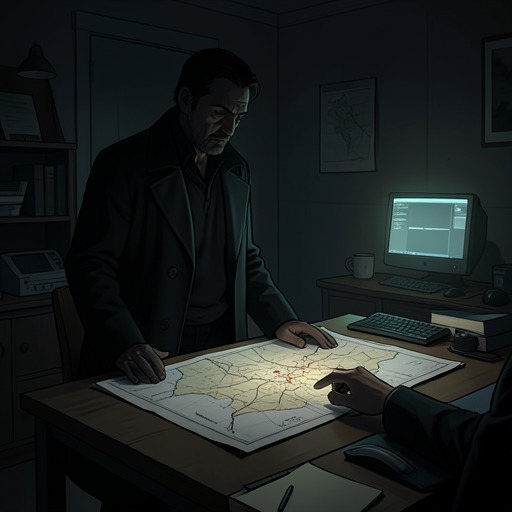
The immediate target is Luke 4:5, a group of religious protesters whom the competition is using to embarrass Coldiron. Flynne hears that the rival’s protest campaign may draw Burton into the open, where someone could shoot him. The protesters therefore become bait in a conflict that combines corporate image-making with a physical threat to Burton. Griff’s proposed chemical response would put the crowd at risk while appearing to answer the competitor’s provocation.
Flynne objects directly: she does not want the chemical used on Luke 4:5 or on anyone. Griff’s account makes clear why the objection is not a matter of taste or public relations. The aerosol would expose the protesters to a state of extreme violence, and the people administering it could not treat its consequences as temporary or contained. Flynne understands the planned use as too cruel to accept, even while recognizing that events in the stub could endanger everyone involved.
The competing claims surrounding the protest sharpen the stakes. Coldiron is concerned with not pricing local residents out of chili dogs, yet the organization could be associated with an attack on religious protesters using a substance that turns them into homicidal erotomaniacs. Griff argues that even if blame could be spun away, Coldiron’s name would remain attached to something horrific. His objection is at once moral and institutional: the company’s civic posture cannot be reconciled with authorizing this weapon.
Flynne’s intervention and the cancellation
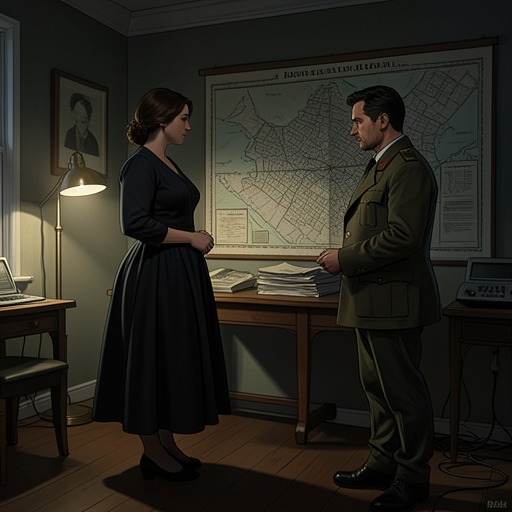
Flynne carries her objection beyond the first discussion. She tells Burton that the competition is using the protesters as a way to embarrass Coldiron and perhaps draw Burton into an ambush, then explains that Griff has the weapon and intends to use it. She also tells Burton that Clovis has already given her the antidote. The warning connects the imminent plan to her own exposure risk and makes clear that Flynne is not speaking from ignorance of the danger.
The decision is not resolved by a simple exchange in which Flynne persuades Griff. When she asks why Griff could not talk Lowbeer out of the plan, he says he lacks agency because of more pressing concerns. Later, Lowbeer is described as having extensive intelligence feeds and analytical systems that effectively make her aware of matters discussed within reach of any platform. Griff reports that she herself is wiping party time from the mission statement; when Flynne asks whether it is canceled, he answers that it is. The proposed use is therefore removed from the plan rather than carried out against the protesters.
Griff says he had already brought Tommy into the matter so Tommy would be ready to tidy up. He is glad Flynne stopped the operation, and the cancellation gives Macon and Edward some much-needed relief after a run on government systems. Their rest is explicitly linked to no longer having to dose Luke 4:5 with party time, or with what Griff would have considered an equivalent. The consequences extend beyond the protesters’ immediate safety: the canceled plan changes the work and pressure facing the team.
Flynne’s refusal as a test
Lowbeer later explains that the contemplated attack was also a test. She says she would have infected the protesters with a mild strain of Norwalk virus, having made Flynne and the others immune, if Flynne had not protested. She expected to be disappointed, though she had not thought that outcome likely. The planned disease exposure was not the same as party time, but the disclosure places both proposals within a test of whether Flynne would permit harm to a crowd for operational purposes.
Lowbeer tells Wilf that Flynne has passed the test, although she did not know why she made the right decision. Wilf assumes that Flynne acted because she likes him; Lowbeer says that counts for something. The moment complicates the meaning of her refusal: it is a moral choice with practical consequences, but also evidence of a personal attachment that may have helped shape it. Lowbeer’s later explanation does not erase the danger Flynne believed she was confronting; it reveals that her judgment was being assessed as well as relied upon.
When Flynne later discusses the episode with Wilf, she acknowledges that she would have followed through on her threat to stop the use, even though doing so would likely have meant that everyone back in the stub died. She does not present the threat as a bluff: the willingness was real, while the consequences were potentially catastrophic. Wilf ultimately says he was pleased by her unwillingness to allow the chemical’s use and explains why that quality matters to him: he may need her, going forward, to be exactly the person who will not do that. Party time thus becomes a measure of the boundary Flynne will hold even when the decision threatens her own side.
Meaning of the name
The phrase “party time” makes a weapon with devastating psychological effects sound almost celebratory. That mismatch is central to the way the danger enters the conversations: the antidote is a small pink patch, the weapon has a glib name, and its proposed delivery is assigned to a small aircraft, yet its consequences are described as an atrocity. The ordinary packaging of the plan makes the ethical stakes easier to conceal, not less severe.
The weapon also exposes a limit to Coldiron’s claims of civic responsibility. A company concerned about local affordability cannot convincingly separate that public image from the treatment of protesters whom its people are prepared to chemically incapacitate. Flynne’s refusal forces the organization’s stated values and its proposed methods into the same frame. The cancellation, and Lowbeer’s later attention to Flynne’s choice, establish party time as more than an abandoned tactic: it is the point at which the story tests whether operational advantage can be allowed to override responsibility for what people are made to do and live with.