Firmin Richard
The Phantom of the OperaFirmin Richard is one of the two joint managers of the Paris Opera House who take over from MM. Debienne and Poligny in Gaston Leroux's The Phantom of the Opera. A distinguished composer with a hasty temper, he becomes the primary target of the Opera Ghost's demands and tricks, from the memorandum-book clauses to the theft of twenty thousand francs, and his skeptical, confrontational attitude drives much of the novel's middle-section conflict.
Identity and Background
Firmin Richard is introduced as a very distinguished composer who has published a number of successful pieces of all kinds and who likes nearly every form of music and every sort of musician. The narrator notes that it was therefore the duty of every sort of musician to like M. Firmin Richard. The only things said against him are that he is rather masterful in his ways and endowed with a very hasty temper. He is selected as the active manager by Armand Moncharmin, who, knowing little of music himself, chooses Richard as the best possible partner to run the Opera. Richard's background as a composer and his forceful personality shape his response to the ghost: he treats the ghost's letters and demands as a practical joke, a challenge to his authority, and an affront to his dignity.
The Ghost's Demands and Richard's Defiance
Richard's first encounter with the ghost comes through a letter written in red ink, in a clumsy childish hand, which he recognizes as the same handwriting that completed the memorandum-book with the ghost's clauses. The letter demands the return of Box Five, insists that Christine Daae sing the part of Margarita, and threatens that if the managers refuse, they will give Faust in a house with a curse upon it. Richard's reaction is explosive: he brings his fists down on his office table and shouts that he is sick of the ghost. He dismisses the ghost's ultimatum as a joke, but his defiance leads to a series of incidents, including the mysterious voice in Box Five and the fall of the chandelier.
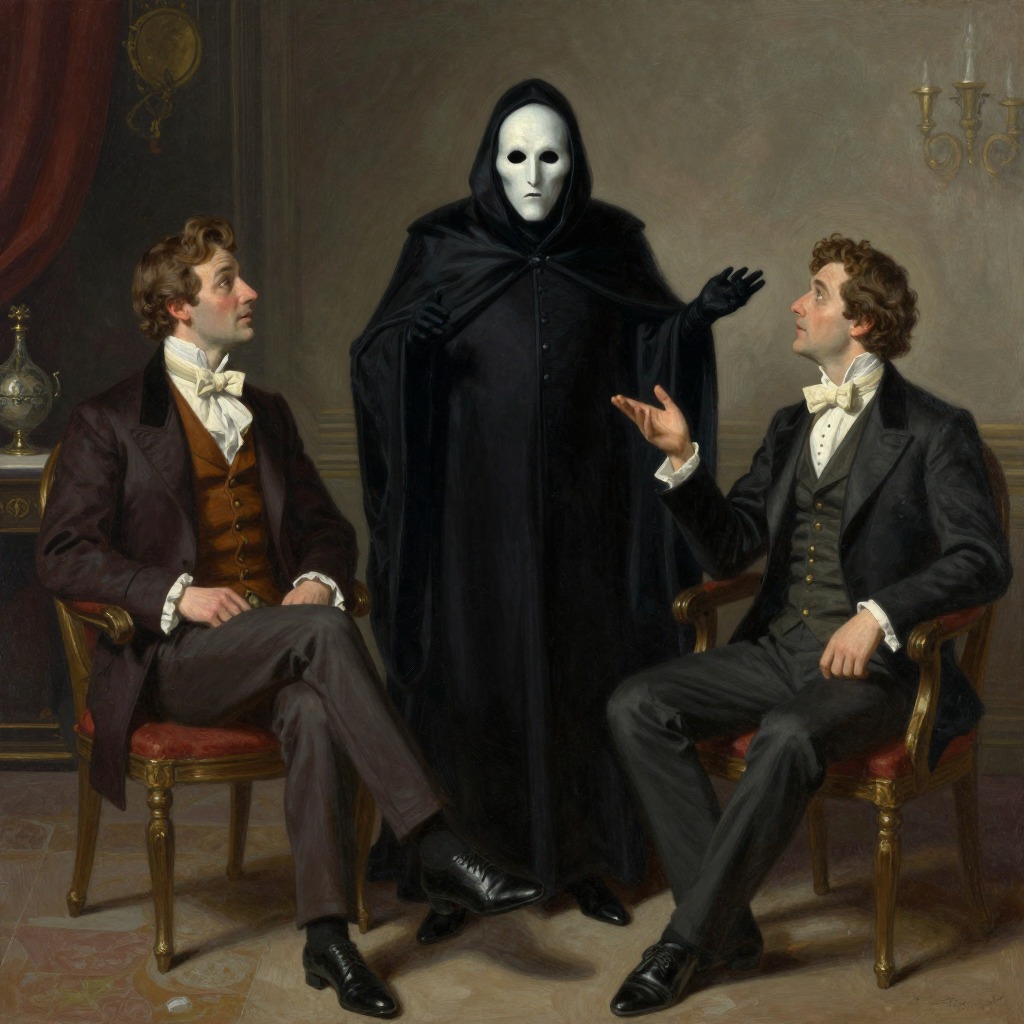
Richard's skepticism is evident when he and Moncharmin visit Box Five to investigate. They find nothing unusual, and Richard concludes that "those people are all making fools of us!" He decides to watch the next performance from Box Five himself, determined to catch the ghost in the act. During the performance of Faust, when Carlotta croaks like a toad, Richard and Moncharmin are horrified, and they hear the ghost's voice in their right ear saying, "She is singing to-night to bring the chandelier down!" The chandelier then crashes into the stalls, killing the concierge who had replaced Mme. Giry. Richard's defiance has direct consequences, and he is left shaken.
The Magic Envelope Affair
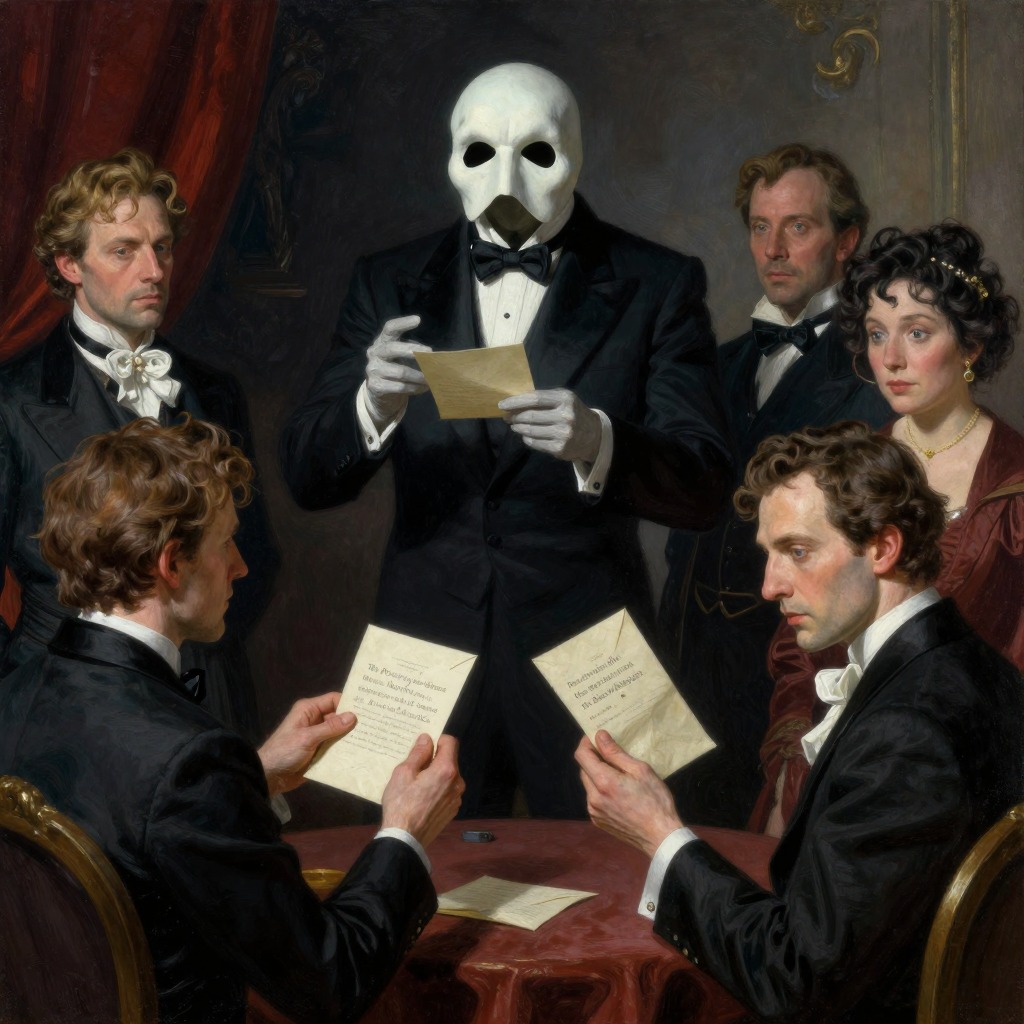
Richard becomes the central figure in the ghost's financial extortion. The ghost demands a monthly allowance of twenty thousand francs, as stipulated in the memorandum-book. Richard and Moncharmin decide to pay the first installment, placing the money in an envelope and handing it to Mme. Giry, who is to deliver it to the ghost's box. They watch the envelope, but when they open it, they find that the real notes have been replaced by twenty notes from the "Bank of St. Farce." Richard is furious but resolves to catch the ghost the next time.
The second payment is made on the evening of Christine Daae's abduction. Richard counts the twenty thousand francs in front of Moncharmin and places them in the envelope, but this time he does not seal it. Mme. Giry is brought in, and Richard questions her about her relations with the ghost. When she claims to know nothing, Richard threatens to have her arrested as a thief. In the ensuing struggle, the envelope is knocked open, and the notes scatter. Mme. Giry reveals that she substituted a fake envelope and slipped the real one into Richard's coat-tail pocket. Richard is astonished, and Moncharmin becomes suspicious of his partner.
To prevent the theft from recurring, Moncharmin insists on pinning the envelope to Richard's pocket with a safety-pin. They lock themselves in their office, and Moncharmin watches Richard's pocket closely. At midnight, when they check, the pin is still in place, but the notes are gone. Richard is accused by Moncharmin, and the two managers nearly come to blows. The mystery of the vanishing money is never fully explained to them, and they are left believing in the ghost's supernatural powers.
The Fall of the Chandelier and Its Aftermath
Richard's management is marked by the catastrophic fall of the chandelier, which kills the concierge who had replaced Mme. Giry. The inquest rules it an accident caused by wear and tear on the chains, but Richard and Moncharmin are held responsible for not having discovered the defect. The incident leaves them changed: they are seen crossing the stage with hanging heads, care-worn brows, and pale cheeks, as though pursued by some abominable thought. Their friends no longer recognize them, and they lose all their gaiety and spirits. Richard's defiance of the ghost has led to tragedy, and he is visibly shaken.
Relationship with Moncharmin and the Ghost
Richard's partnership with Moncharmin is strained by the ghost's tricks. Moncharmin suspects Richard of stealing the twenty thousand francs, and Richard suspects Moncharmin of playing a joke on him. Their mutual distrust culminates in the safety-pin incident, where Moncharmin pins the envelope to Richard's pocket and watches him closely, but the money still disappears. Richard is convinced that Moncharmin is responsible, and he demands the return of the money. The two managers are on the verge of a breakdown, and their relationship is never the same.
Despite his skepticism, Richard is forced to acknowledge the ghost's power. After the chandelier falls, he and Moncharmin feel the ghost's presence in their box, and they hear his voice. Richard wipes the perspiration from his forehead and trembles, realizing that the ghost is real. His defiance gives way to fear, and he becomes one of the ghost's victims.
Significance
Firmin Richard represents the rational, skeptical mind confronted with the supernatural. His refusal to believe in the ghost leads to a series of disasters, from the fall of the chandelier to the theft of the twenty thousand francs. His character serves as a foil to the more credulous characters, such as Mme. Giry, and his downfall illustrates the power of the Opera Ghost. Richard's story is a cautionary tale about the dangers of dismissing the unknown, and his eventual submission to the ghost's will underscores the novel's theme of the supernatural's triumph over reason.