House on the Lake
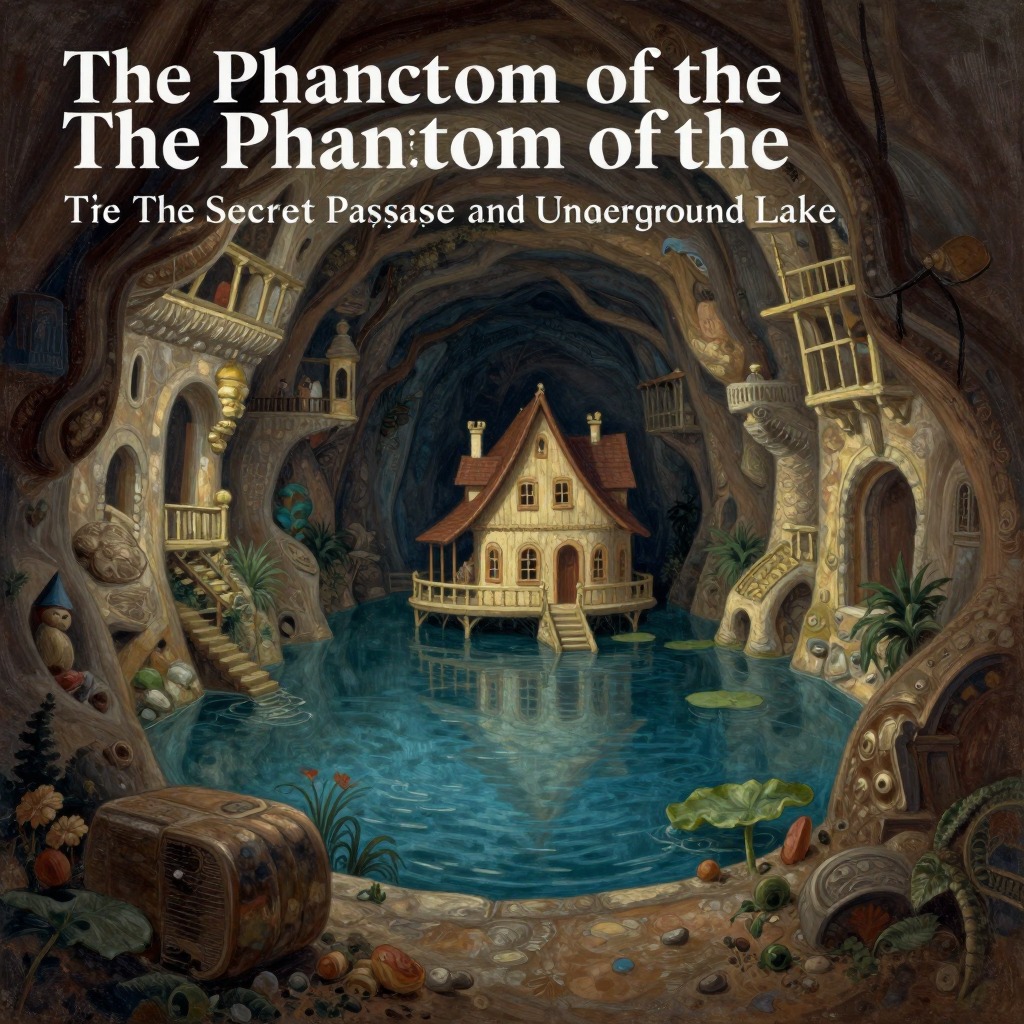
The Phantom of the OperaThe House on the Lake is the secret dwelling that Erik, the Opera Ghost, has built for himself within the double foundation walls of the Paris Opera House, five stories below the level of the ground. It is the hidden heart of the novel's underworld, the place where the phantom ceases to be a legend and becomes a man—where he imprisons Christine Daae, confesses his love, and stages the terrible choice that decides the fate of everyone in the theater above. The house is at once a palace of flowers and a tomb, a home furnished with the relics of a dead mother and a coffin for a bed, and it stands as the most complete expression of Erik's character: his genius, his horror, and his unbearable loneliness.
Location and Construction
The House on the Lake lies at the end of an underground lake that exists in the lower cellars of the Opera, on the Rue-Scribe side. It was built by Erik himself, who was one of the chief contractors under Philippe Garnier, the architect of the Opera, and who continued to work alone when the official works were suspended during the war, the siege of Paris, and the Commune. The house was constructed in the double case of the foundation-walls, a space formed by a thick wall built as an embankment or dam, then a brick wall, a tremendous layer of cement, and another wall several yards in thickness. This hidden cavity, designed to keep the water surrounding the building from the theatrical machinery, became Erik's private kingdom. The Persian, who knew Erik from the "rosy hours of Mazenderan," describes the house as the easiest thing in the world for Erik to build, because he was a master of trap-doors and secret chambers, having constructed the famous hidden rooms at Yildiz-Kiosk for the Sultan and a palace for the Shah-in-Shah that allowed the monarch to move about unseen.
The approach to the house is guarded by the lake itself, which Erik patrols in a little boat. The Persian, who once tried to row across to the house, was nearly drowned when two monstrous arms issued from the water and seized him by the neck; Erik, using a long reed learned from the Tonkin pirates, had been breathing and singing beneath the surface, creating the illusion of a siren. The house can also be reached through a secret entrance in the third cellar, between a set piece and a discarded scene from the Roi de Lahore—the exact spot where Joseph Buquet was found hanged. This entrance, worked by a spring that moves a stone, was the way Erik came and went, and it was through this hole that the Persian and Raoul de Chagny would later penetrate the house.
The Interior: A Home of Contradictions
The house is a strange mixture of the luxurious and the macabre. When Christine Daae is first brought there, she finds herself in a drawing-room decorated, adorned, and furnished with nothing but flowers—magnificent but stupid flowers, tied to baskets with silk ribbons, like those sold in the shops on the boulevards. The furniture, the hangings, the candles, the vases, and the very flowers in their baskets are all mortal, visible, tangible things, and Christine notes that they are "much too civilized" for a dwelling in the cellars of the Opera. Yet this ordinary drawing-room is only the surface. Erik's bedroom is hung entirely with black, with an enormous stave of music bearing the notes of the Dies Irae, many times repeated, and in the middle of the room stands a canopy with curtains of red brocaded stuff, under which lies an open coffin. "That is where I sleep," Erik tells Christine. "One has to get used to everything in life, even to eternity." The house also contains a dining-room, a simply furnished little bedroom with an ordinary mahogany bedstead and a Louis-Philippe chest of drawers, a bath-room, and an organ that fills one whole side of a wall, on whose desk rests the score of Don Juan Triumphant, Erik's masterpiece, written in red notes.
The house is notably without a single mirror—a detail Christine remarks upon, and which Erik does not explain. The absence of mirrors is a telling omission for a man who cannot bear to see his own face, and it underscores the house as a space where Erik has tried to create a world that excludes the reality of his ugliness. The most terrible room in the house is the torture-chamber, a six-cornered room lined entirely with mirrors, with an iron tree in one corner and a hidden window through which the tortures can be observed. This room, an exact copy of the torture-chamber Erik built at Mazenderan, is the instrument of his most cruel power, and it is here that the novel's climax unfolds.
Christine's Captivity and Erik's Confession
The House on the Lake is the stage for the central drama of Erik's love for Christine. After her first abduction, Christine wakes in the house to find herself a prisoner, with a note in red ink assuring her that she has no better nor more respectful friend in the world than Erik. He gives her five days, telling her that when they are past she will have learned not to see him, and that she will come to visit her poor Erik from time to time. During this captivity, Erik reveals himself: he confesses that he is not an angel, nor a genius, nor a ghost, but a man named Erik. He shows her his bedroom with its coffin, his organ, and his score of Don Juan Triumphant, and he tells her that he has no name and no country, having taken the name of Erik by accident. When Christine, unable to control her curiosity, tears off his mask, she sees his face for the first time and recoils in horror. Erik's reaction is violent and despairing; he drags himself about the floor, uttering terrible sobs, and then crawls away like a snake into his room, leaving Christine alone. But the house also becomes the place of his most vulnerable confession. He kneels before Christine, accuses himself, curses himself, and implores her forgiveness, laying at her feet "an immense and tragic love." He tells her that he is built up of death from head to foot, that it is a corpse that loves her, and that his own mother, so as not to see him, made him a present of his first mask.
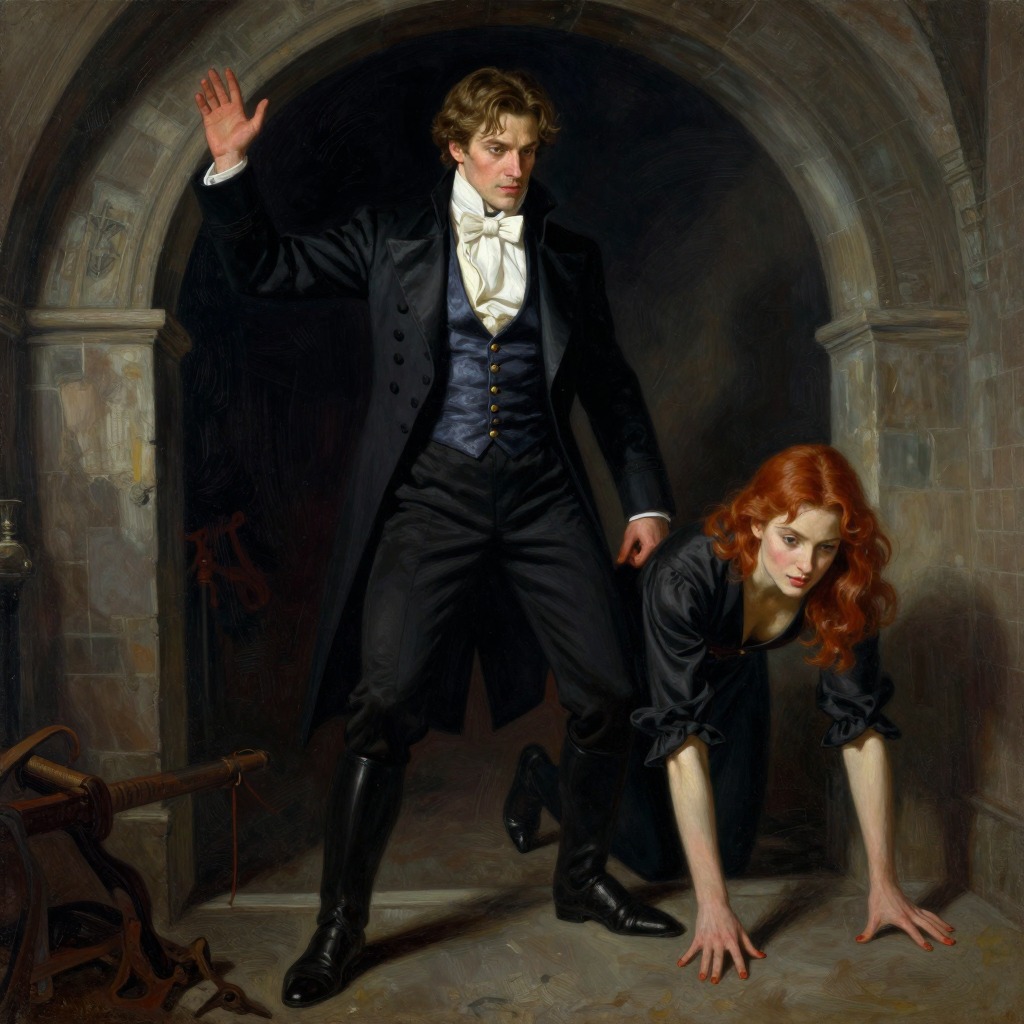
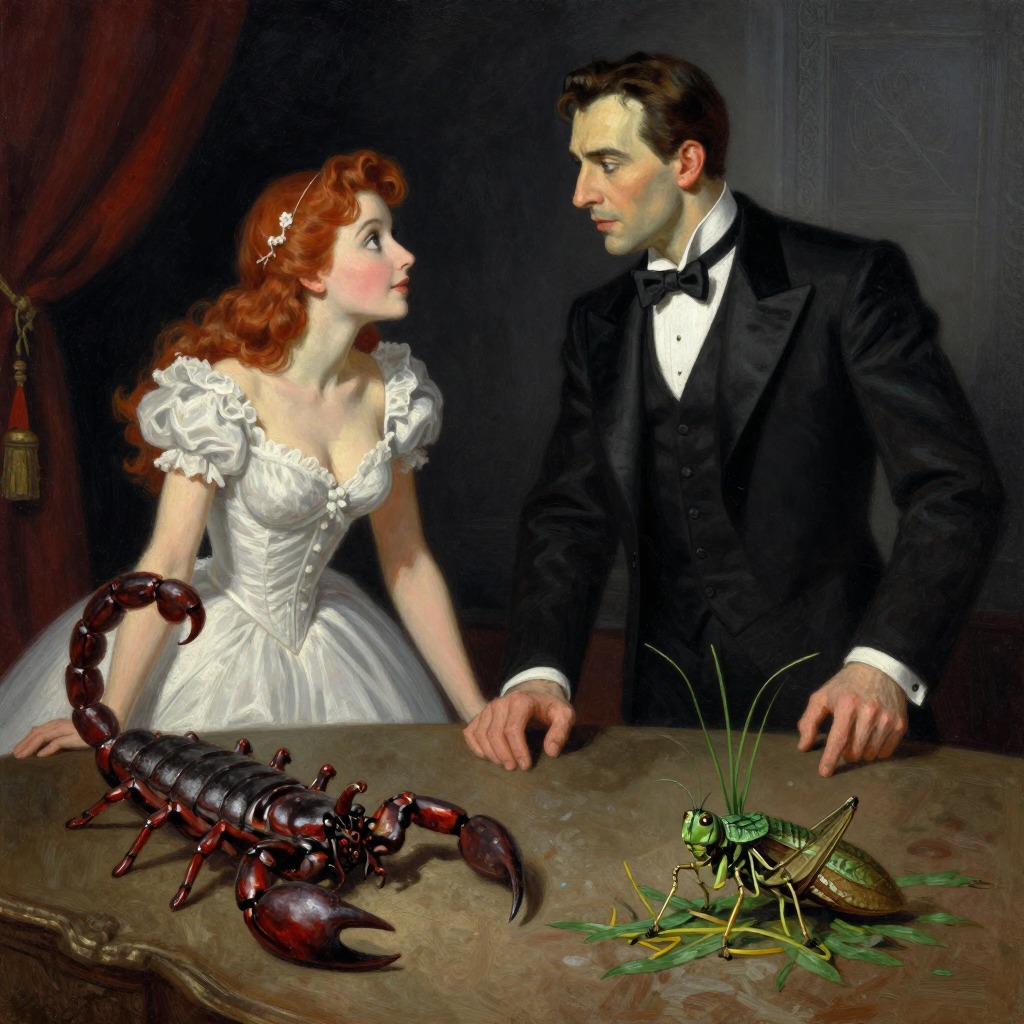
It is in the house that Erik's madness and his tenderness are most fully displayed. He sings to Christine, plays the organ, and takes her walking on the banks of the lake and rowing in the boat on its leaden waters. He lets her out through the gates that close the underground passages in the Rue Scribe, and a carriage takes them to the Bois. But the house is also the prison from which Christine must escape, and the scene of her most desperate act: when Erik leaves her alone, she tries to kill herself by striking her forehead against the walls. It is this suicide attempt that leads Erik to bind her, and it is in the house that he gives her the ultimatum that will decide the fate of the Opera: she must choose between the wedding mass and the requiem mass, between turning the scorpion and turning the grasshopper.
The Torture-Chamber Ordeal and the Flood
The house's most terrible secret is the torture-chamber, into which the Persian and Raoul de Chagny drop when they enter through the secret passage in the third cellar. The room is a regular hexagon lined with mirrors, with an iron tree in one corner, and it is designed to drive its victims mad with illusion. Erik, knowing his enemies are inside, subjects them to the full sequence of tortures: first an equatorial forest blazing under a tropical sun, then a desert, and finally a mirage of water that drives them to lick the burning glass. The Persian, who has seen this room before at Mazenderan, recognizes the iron tree and the Punjab lasso at its foot, and he knows that the room has already served its purpose for Joseph Buquet, who must have fallen into it and hanged himself on the tree. The ordeal nearly kills both men, driving Raoul to the point of suicide and the Persian to the edge of madness, before the Persian discovers a black-headed nail in the floor that opens a trap-door leading to a cellar full of barrels—barrels filled not with wine or water, but with gunpowder.
It is in this cellar that the full horror of Erik's plan is revealed. The gunpowder is enough to blow up a whole quarter of Paris, and Erik has given Christine until eleven o'clock to decide whether she will marry him or whether he will turn the grasshopper and destroy the Opera and everyone in it. The house, which has been Erik's sanctuary, becomes the potential tomb of the entire human race. Christine, in the Louis-Philippe room, is given the choice of the scorpion or the grasshopper, two bronze figures in ebony caskets on the mantelpiece. When she turns the scorpion, the water that floods the cellar soaks the gunpowder, and the house is saved from destruction. The flood rises through the trap-door, filling the torture-chamber and nearly drowning the Persian and Raoul, until Erik, moved by Christine's promise to be his living wife, turns off the tap and the water returns to the lake.
The House as Erik's Tomb and Legacy
The House on the Lake is also the place of Erik's renunciation and his death. After Christine turns the scorpion and agrees to be his wife, Erik releases Raoul and brings him to the Louis-Philippe room, where the two young people kiss before him. Erik gives Christine the gold ring he had found, telling her it is his wedding-present, and he makes her swear to come back, one night, when he is dead, to bury him in the greatest secrecy with the ring on her finger. He tells her where she will find his body and what to do with it. The house, which was built to hide Erik from the world, becomes the place where he chooses to die alone, and where Christine will return to keep her promise. The Persian, who visits Erik in his flat in the Rue de Rivoli after the tragedy, hears Erik's account of his final hours in the house: how Christine, waiting for him as a living bride, did not run away when he came forward, and how he kissed her on the forehead and felt her tears mingle with his own. "I have tasted all the happiness the world can offer," Erik tells the Persian, and it is this moment of human connection, in the house that was his prison and his home, that finally breaks him.
Long after Erik's death, the house on the lake remains hidden. The narrator, in the epilogue, reports that he has not been able to find it, because Erik blocked up all the secret entrances. The house, which was the center of the novel's terror and its most intimate drama, is sealed forever, a tomb for the man who built it and a monument to his impossible love. The narrator suggests that it might be reached by draining the lake, and wonders whether the score of Don Juan Triumphant might yet be discovered in the house. But the house itself, like Erik, has withdrawn from the world, leaving only the memory of the tragedy it contained.