Opera rats
The Phantom of the OperaThe Opera rats are a recurring element in Gaston Leroux's The Phantom of the Opera, appearing in a memorable scene in the cellars beneath the Paris Opera House. They are not merely vermin but are woven into the novel's atmosphere of terror and the supernatural, serving as a conduit for the ghost's control over his underground domain. The rats are led by a mysterious rat-catcher, whose fiery head and swarm of rodents create one of the most striking and unsettling images in the book, underscoring the theme of hidden, primal forces lurking beneath the surface of civilized society.
The Rat-Catcher and His Fiery Head
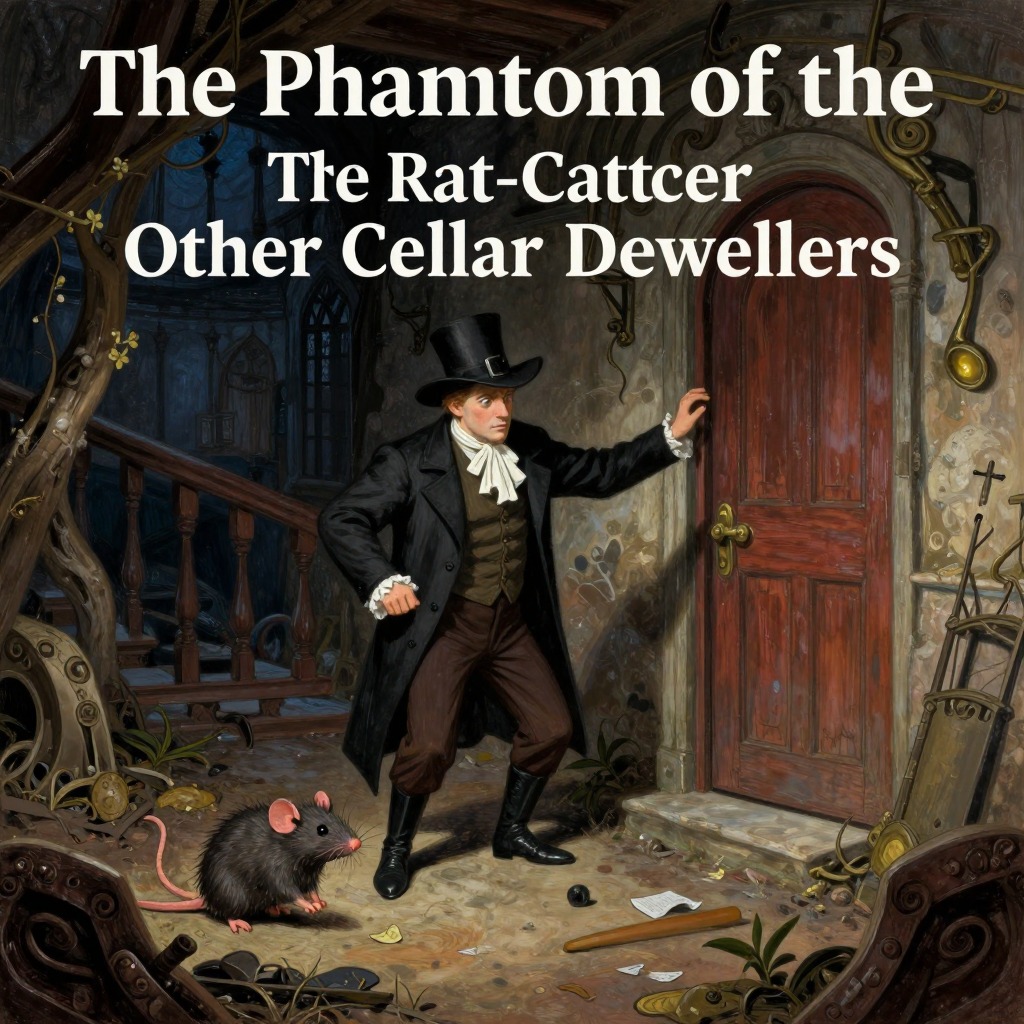
The rats first appear in the narrative during the Persian's account of his descent into the Opera's cellars with Raoul de Chagny. As the two men navigate the dark, labyrinthine passages, they encounter a terrifying apparition: a head of fire, floating at a man's height, with no body attached. This fiery visage, with its round, staring eyes, crooked nose, and large mouth with a hanging lower lip, resembles a red moon gliding through the darkness. The Persian, who has never seen this phenomenon before, recalls that the fireman Pampin had once reported a similar sight, and he realizes that the rat-catcher is not a ghost but a living man who uses a dark lantern to illuminate his own head, so as not to scare the rats he is herding.
The rat-catcher's appearance is accompanied by a cacophony of sounds: a scratching, scraping, grating noise, like thousands of nails on a blackboard, which grows louder as the swarm approaches. The rats themselves are described as "little night-waves foaming under the moon," a tide of vermin that flows between the legs of Raoul and the Persian, climbing up their bodies, causing them to cry out in horror and pain. The rat-catcher, seeing their distress, warns them not to move and not to follow him, identifying himself as "the rat-catcher" and asking to pass with his rats.
The Rats as Instruments of Terror
The rats serve as a potent symbol of the Opera's hidden, untamed underbelly. They are part of the ghost's domain, a world of darkness and primal fear that lies beneath the glittering performances above. The Persian, who knows Erik's tricks, is nonetheless unnerved by the encounter, noting that Erik had never told him about the rat-catcher's appearance. The rats, like the other denizens of the cellars—the door-shutters, the firemen, the shade in the felt hat—are part of the ecosystem that Erik commands, and their presence reinforces the idea that the Opera is a place of layered secrets, where the rational and the monstrous coexist.
The scene also highlights the vulnerability of even the bravest characters. Raoul, who is desperate to rescue Christine, and the Persian, who is experienced in Erik's ways, are both reduced to trembling, helpless figures as the rats swarm over them. The rats, in this sense, are an equalizer, reminding the reader that the underground world is not subject to the rules of the surface. The rat-catcher's fiery head, which initially seems like a supernatural manifestation, is revealed to be a practical tool, yet the effect is no less terrifying, blurring the line between illusion and reality that pervades the novel.
The Rats and the Ghost's Mastery
The rats also serve to demonstrate Erik's complete control over his subterranean realm. The rat-catcher is one of the many figures who inhabit the cellars, and his presence suggests that Erik has not only built his house on the lake but has also populated the surrounding darkness with a network of strange and fearful creatures. The rats, like the siren's voice and the Punjab lasso, are tools of intimidation, ensuring that no one ventures too far into the ghost's territory without facing consequences. The Persian's warning to Raoul never to go near the lake is echoed by the rats' appearance, which serves as a visceral reminder of the dangers that lurk below.
In the broader context of the novel, the rats are a minor but memorable element, contributing to the gothic atmosphere and the sense of dread that permeates the underground passages. They are a testament to Leroux's ability to create vivid, unsettling imagery that lingers in the reader's mind, and they reinforce the theme of the Opera as a place where the civilized and the primal are in constant tension.