Artist Should Not Put Life into Art
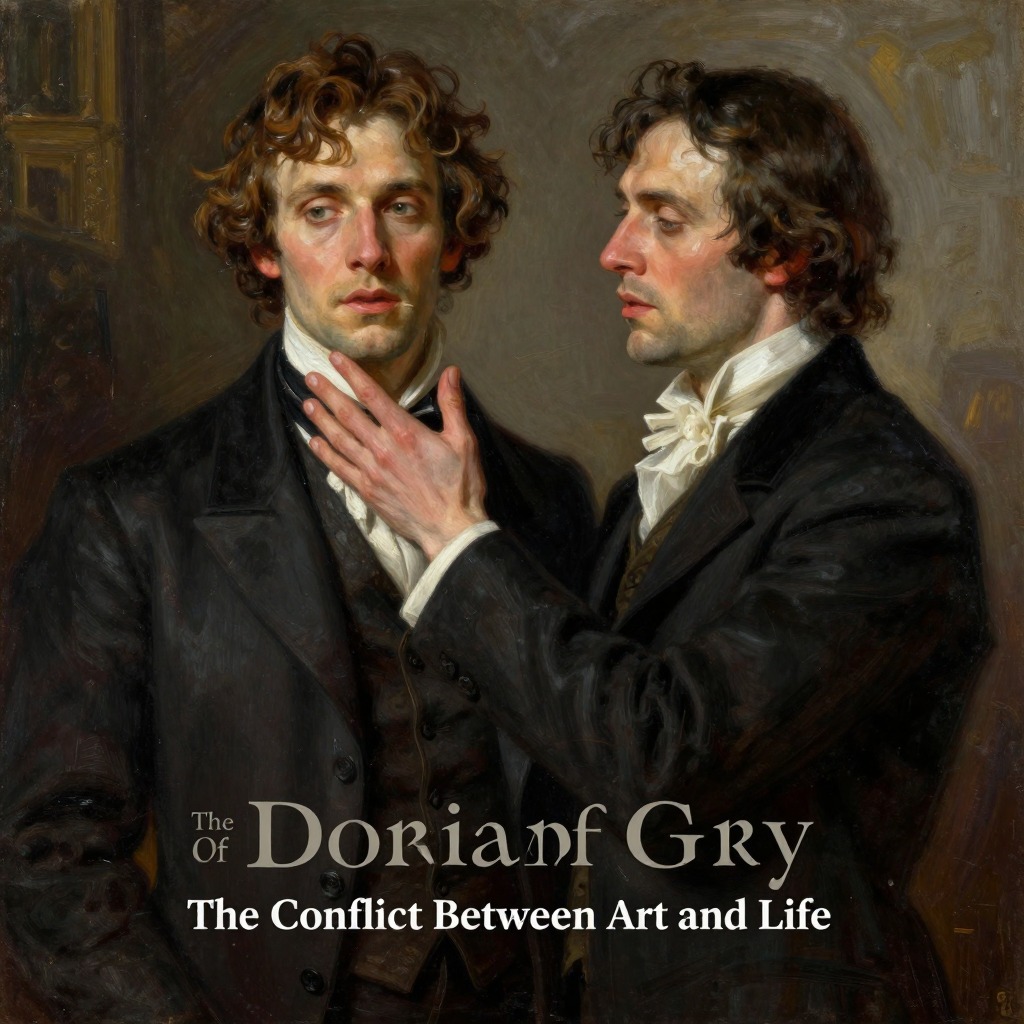
The Picture of Dorian GrayThe principle that an artist should not put his own life into his art is a central aesthetic creed for Basil Hallward, articulated in the opening chapter of The Picture of Dorian Gray. It expresses his belief that art should be an abstract creation of beauty, not a form of autobiography, and it directly motivates his refusal to exhibit the portrait of Dorian Gray, which he feels reveals too much of his own soul. This rule becomes a foundational irony of the novel, as the portrait itself becomes a living record of Dorian's sins, ultimately proving that art can be inseparable from the life it depicts.
Statement of the Principle
Basil Hallward first declares this rule in his studio, during a conversation with Lord Henry Wotton. When Lord Henry presses him for the real reason he will not exhibit the portrait of Dorian Gray, Hallward explains that "every portrait that is painted with feeling is a portrait of the artist, not of the sitter." The sitter, he says, is "merely the accident, the occasion"; it is the painter who, "on the colored canvas, reveals himself." Hallward then states his fear directly: "The reason I will not exhibit this picture is that I am afraid that I have shown with it the secret of my own soul." This confession establishes the rule as a matter of personal vulnerability, not merely a theoretical position.
The Rule as a Defense of Artistic Abstraction
Hallward's principle is part of a broader aesthetic philosophy that values abstraction over personal expression. He tells Lord Henry, "An artist should create beautiful things, but should put nothing of his own life into them. We live in an age when men treat art as if it were meant to be a form of autobiography. We have lost the abstract sense of beauty." He vows that if he lives, he will "show the world what it is"—the abstract sense of beauty—and that for this reason "the world shall never see my portrait of Dorian Gray." The rule thus serves as a defense against what Hallward sees as the autobiographical reduction of art, a reduction that would destroy beauty's abstract purity.
The Rule's Violation and Its Consequences
The novel's central irony is that Hallward's own portrait violates the rule he cherishes. He admits that in painting Dorian, he put "all the extraordinary romance" of his feelings into the work, though he "never dared to speak to him" about it. The portrait becomes a repository of Hallward's hidden passion, and its magical transformation into a record of Dorian's sins literalizes the principle that art cannot be separated from the life of either the artist or the subject. When Dorian later shows Hallward the corrupted portrait, Hallward recoils, crying, "My God! what a thing I must have worshipped!" The portrait has become a mirror of Dorian's soul, not Hallward's, but the damage is done: the rule has been broken, and the consequences—murder, suicide, and Dorian's own death—follow inexorably.
The Rule's Thematic Significance
The principle that an artist should not put his life into his art is a key to the novel's exploration of the relationship between art, morality, and identity. Hallward's rule is an ideal that the narrative systematically undermines. The portrait, which was meant to be a pure work of art, becomes the most intimate possible record of a life—Dorian's life of sin. In the end, when Dorian stabs the canvas, the portrait reverts to its original beauty, while Dorian's body becomes the withered, loathsome thing the portrait had become. This final reversal suggests that art cannot be divorced from life; the attempt to do so leads only to destruction. The rule, then, is not a viable aesthetic principle but a warning against the illusion that art can be a realm of pure form, untouched by the messy realities of human existence.