Influence
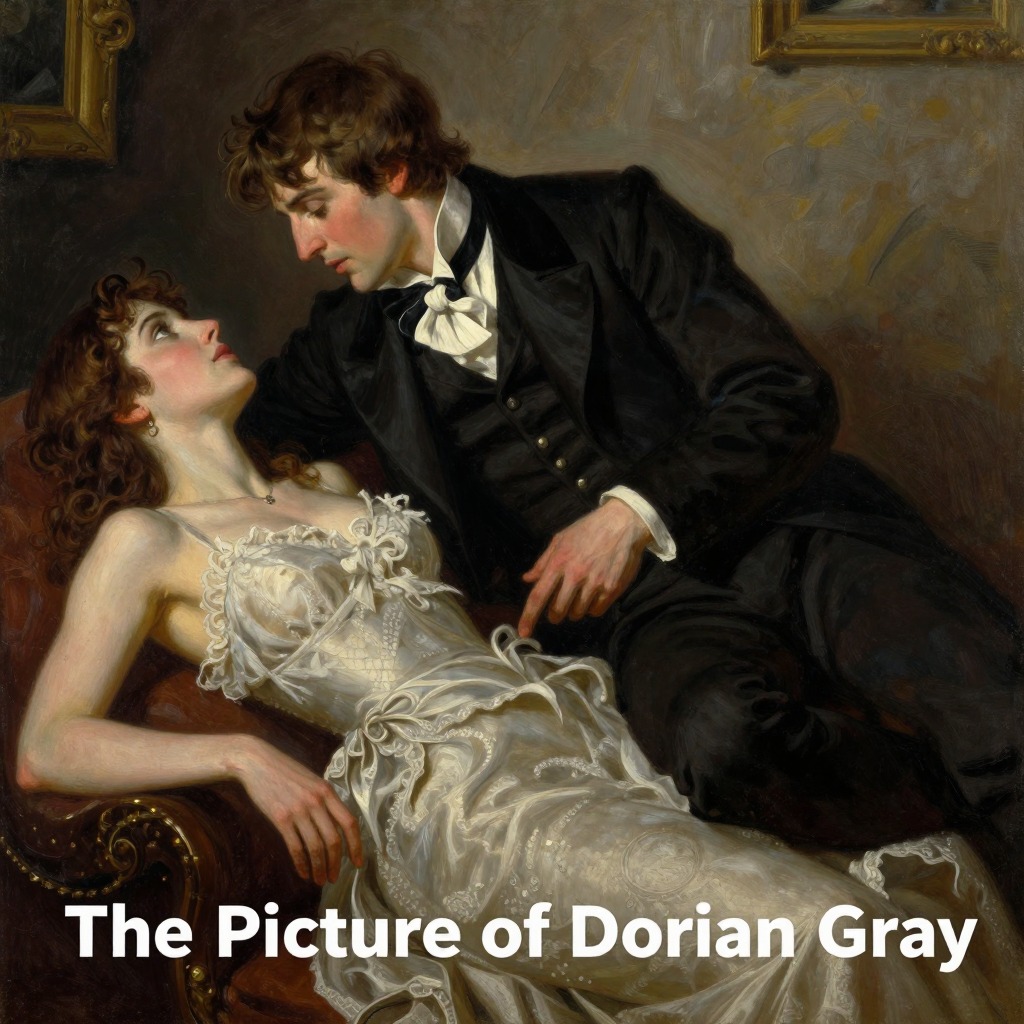
The Picture of Dorian GrayInfluence is the central mechanism of moral and psychological transformation in The Picture of Dorian Gray, operating as a deliberate, almost scientific transfer of ideas and desires from one person to another, most powerfully from Lord Henry Wotton to Dorian Gray. Lord Henry articulates a philosophy that influence is inherently immoral because it imposes one soul upon another, yet he himself becomes the novel's most effective agent of influence, reshaping Dorian's nature through words that act like a poison. The concept is dramatized through Dorian's sudden awakening to new impulses, his subsequent inability to resist temptation, and his eventual use of influence as a weapon to coerce others, revealing influence as a force that corrupts both the influenced and the influencer.
Lord Henry's Philosophy of Influence
Lord Henry declares to Dorian Gray that "all influence is immoral" from the scientific point of view, because "to influence a person is to give him one's own soul." He argues that the influenced person no longer thinks his natural thoughts or burns with his natural passions; his virtues are not real to him, and his sins, if such things exist, are borrowed. He becomes "an echo of some one else's music, an actor of a part that has not been written for him." This doctrine, delivered in Lord Henry's low, musical voice with characteristic graceful gestures, presents influence as a violation of the individual's duty to self-development, which Lord Henry calls "the highest of all duties." Yet even as he condemns influence in theory, Lord Henry practices it with exquisite skill, treating Dorian Gray as a subject for psychological experimentation, a "subject made to his hand" that promises "rich and fruitful results."
The Mechanism of Influence: Words as Poison
Influence in the novel operates primarily through language. When Lord Henry speaks to Dorian in Basil Hallward's garden, his words touch "some secret chord, that had never been touched before, but that he felt was now vibrating and throbbing to curious pulses." Dorian becomes dimly conscious that "entirely fresh impulses were at work within him," impulses that seem to come from himself but have been planted by Lord Henry's speech. The narrative emphasizes the power of words: "Mere words! How terrible they were! How clear, and vivid, and cruel! One could not escape from them. And yet what a subtle magic there was in them!" Dorian's life suddenly becomes "fiery-colored" to him; he feels as if he had been "walking in fire." Lord Henry watches this transformation with intense interest, recognizing the precise psychological moment when to say nothing, and remembers a book he read at sixteen that had similarly revealed to him much he had not known before. The influence is so complete that Dorian later tells Lord Henry, "I cannot help telling you things. You have a curious influence over me. If I ever did a crime, I would come and confide it to you. You would understand me."
The Consequences of Influence: Corruption and Violence
The influence Lord Henry exerts leads directly to Dorian's moral corruption. After Lord Henry's panegyric on youth and his warning of its brevity, Dorian gazes at his portrait and feels a "sharp pang of pain" at the thought of losing his beauty, leading him to utter the wish that the picture might age instead of him. This wish, born of Lord Henry's influence, sets the entire supernatural plot in motion. Dorian later acknowledges that Lord Henry "filled me with a wild desire to know everything about life" and that the search for beauty became "the poisonous secret of life." The influence extends to Dorian's relationships: when Sibyl Vane fails as an actress, Dorian rejects her with brutal cruelty, telling her, "You have killed my love. You used to stir my imagination. Now you don't even stir my curiosity." This rejection, which leads directly to Sibyl's suicide, is a direct consequence of the aesthetic and hedonistic values Lord Henry has instilled. Dorian's corruption culminates in murder: when Basil Hallward confronts him with the rumors of his depravity, Dorian feels "an uncontrollable feeling of hatred" and stabs him repeatedly with a knife, the violence itself a product of the moral vacuum Lord Henry's influence has created.
Influence as Coercion: Dorian's Use of the Same Weapon
Dorian Gray, having been shaped by Lord Henry's influence, learns to wield the same power over others. When Alan Campbell refuses to help dispose of Basil Hallward's body, Dorian blackmails him with a letter that threatens exposure of some unknown secret. Campbell, reading the letter, becomes "ghastly pale" and feels "a horrible sense of sickness." Dorian tells him, "You leave me no alternative. I have a letter written already. Here it is. You see the address. If you don't help me, I must send it. You know what the result will be." Campbell, dominated by Dorian, performs the chemical destruction of the body and later commits suicide. Dorian also attempts to use influence for good: he spares Hetty Merton, a village girl, deciding not to corrupt her as he has others. He tells Lord Henry, "I spared somebody. It sounds vain, but you understand what I mean. She was quite beautiful, and wonderfully like Sibyl Vane." Yet even this act of renunciation is ambiguous, as Lord Henry suggests it may be merely a desire for a new sensation or the passion to act a part. The novel thus presents influence as an inescapable force, one that can be used for corruption or for good, but whose effects are always profound and often irreversible.