Victor
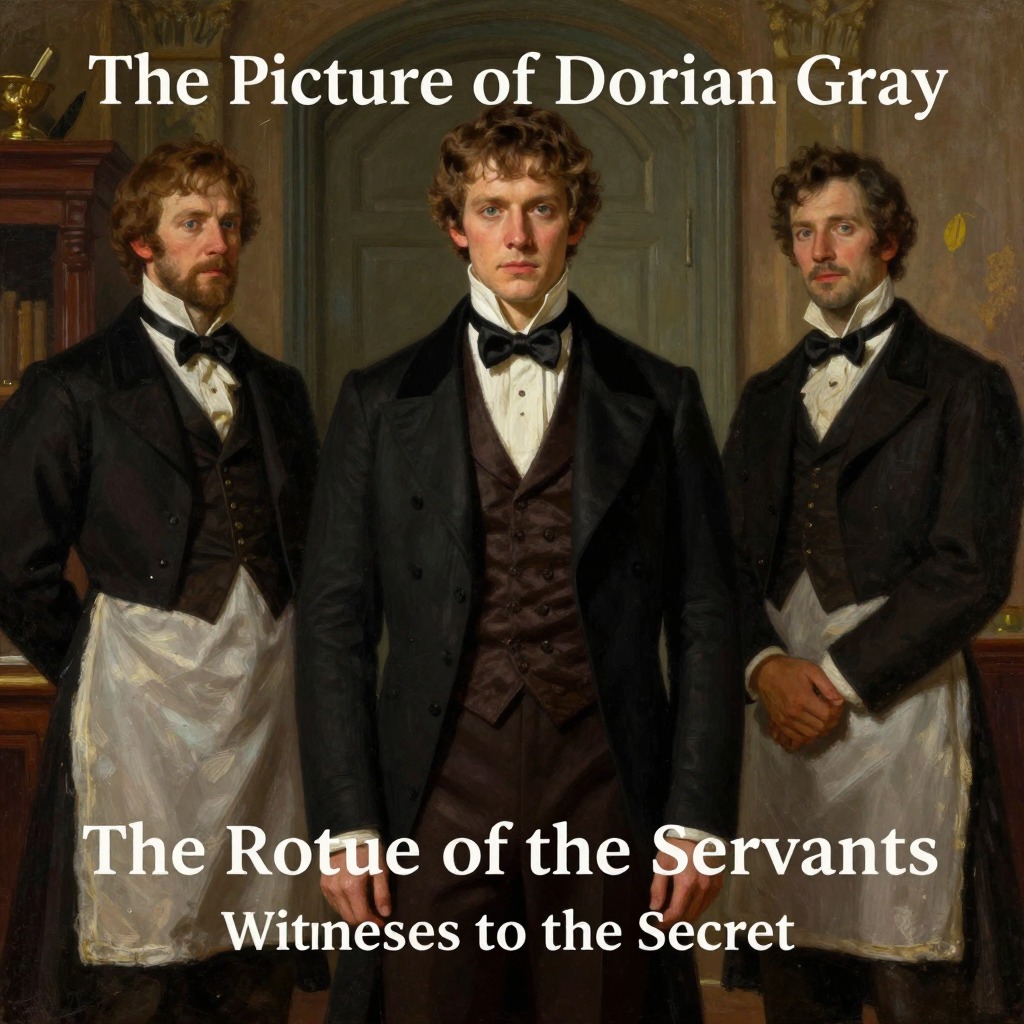
The Picture of Dorian GrayVictor is the French valet who serves Dorian Gray in his London house on Grosvenor Square. He is a quiet, efficient, and observant servant, whose presence in the household places him at the periphery of some of the most significant and terrible events in Dorian's life. Though he never learns the full truth of his master's secret, his role as a domestic attendant makes him a silent witness to the physical and psychological changes that overtake Dorian after the portrait's magical transformation begins.
Identity and Role in the Household
Victor is first introduced as the valet who brings Dorian his morning tea and letters, a task he performs with soft-footed discretion, creeping into the room on tiptoe to see if his young master is stirring. He is described as speaking to Dorian in French, addressing him as "Monsieur," and he takes care of the elaborate routines of Dorian's dressing and grooming. His duties include drawing the olive-satin curtains with their shimmering blue lining, setting out a light French breakfast on a small round table near an open window, and managing the household's daily rhythms. Victor is also responsible for handling Dorian's correspondence, bringing in a pile of letters on a small tray of old Sevres china, and for attending to the master's requests, such as fetching a specific book or arranging flowers. He is a figure of quiet competence, yet Dorian regards him with a degree of suspicion, wondering if the man has thought of peering behind the screen that conceals the portrait, and noting that Victor has "thoughtful, treacherous eyes."
Witness to the Aftermath of Crime
Victor's most significant role in the narrative comes in the aftermath of Basil Hallward's murder. On the night of the killing, Dorian sends Victor to bed early, and later, after disposing of the body with Alan Campbell's help, Dorian deliberately rings the bell to wake his valet, claiming he had forgotten his latch-key. Victor, half-dressed and looking very drowsy, answers the door and tells Dorian that Mr. Hallward had stayed till eleven and then left to catch his train. This exchange provides Dorian with a crucial alibi, as Victor's testimony establishes that Basil was seen leaving the house at a time consistent with his planned departure for Paris. The next morning, Victor brings Dorian his chocolate and opens the shutters, finding his master sleeping peacefully. Later, Dorian sends Victor on an errand to Richmond to order orchids, deliberately keeping him away from the house while Alan Campbell performs the gruesome chemical disposal of Basil's body in the locked room upstairs. Victor's unquestioning obedience makes him an unwitting accomplice in the cover-up.
A Servant's Perspective on His Master
Victor's observations of Dorian are limited to the surface, yet they reveal the profound disconnect between Dorian's public appearance and his inner corruption. He sees only the beautiful, youthful master, never the hideous portrait hidden away. When Dorian, after a sleepless night of horror, asks Victor the time and is told it is a quarter past one, he marvels at how late it is, and Victor smiles and says, "Monsieur has well slept this morning." This moment of domestic normalcy contrasts sharply with the psychological turmoil Dorian has just endured. Victor's presence is a constant reminder of the ordinary life Dorian maintains while his soul decays. He is the one who brings the tea, arranges the flowers, and ensures the household runs smoothly, all while the secret of the portrait and the weight of murder lie hidden in the rooms above. His eventual replacement by Francis, another valet, marks a shift in Dorian's household, but Victor's brief tenure establishes the pattern of a servant who is both essential and unknowing, a figure whose loyalty is taken for granted and whose discretion is never fully trusted.