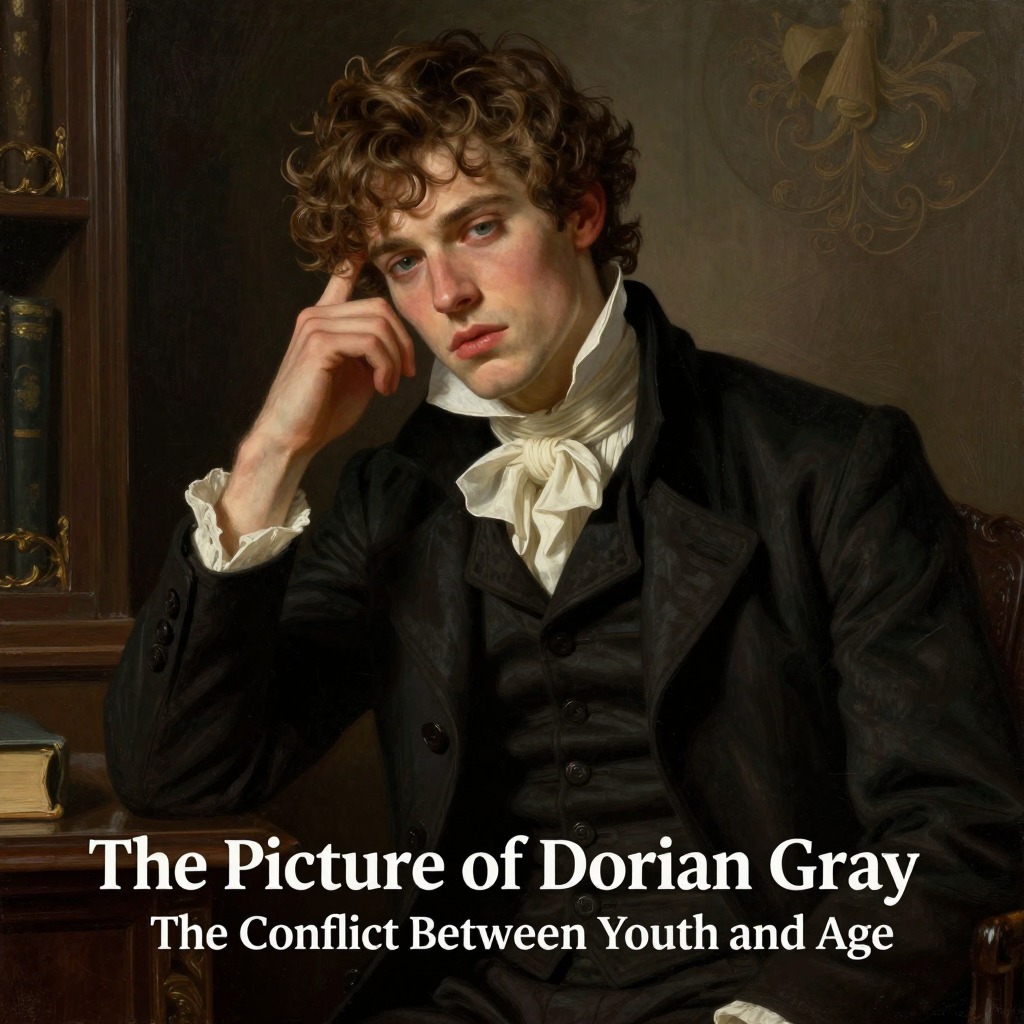
Youth is the Only Thing Worth Having
The Picture of Dorian GrayYouth is the Only Thing Worth Having is the core doctrine of the New Hedonism that Lord Henry Wotton preaches to Dorian Gray, and it becomes the governing principle of Dorian's life. Lord Henry first articulates this idea in Basil Hallward's garden, telling Dorian, "You have now the most marvellous youth, and youth is the one thing worth having." He elaborates that beauty is a form of genius, higher than intellect, and that the gods give youth only to take it away, leaving one with "no triumphs left for you" except bitter memories. This speech strikes Dorian with the force of a revelation, making him acutely aware of his own beauty for the first time and filling him with terror at its transience.
The Wish and Its Consequences
Standing before Basil Hallward's completed portrait, Dorian is overwhelmed by the contrast between his own fleeting youth and the painting's permanence. He cries out, "How sad it is! I shall grow old, and horrid, and dreadful. But this picture will remain always young." In a moment of desperate longing, he wishes for the opposite: "If it was I who were to be always young, and the picture that were to grow old! For this—for this—I would give everything!" This wish, born directly from Lord Henry's teaching, is mysteriously granted, and the portrait begins to age and bear the marks of Dorian's sins while he remains untouched by time.
The Doctrine's Influence on Dorian's Life
Dorian's belief that youth is the only thing worth having justifies his entire career of hedonism and cruelty. He pursues "eternal youth, infinite passion, pleasures subtle and secret, wild joys and wilder sins," knowing that the portrait will bear the burden of his shame. He becomes a "visible symbol" of the New Hedonism, as Lord Henry had predicted, and his unchanging appearance allows him to move through society with impunity, even as rumors of his corruption spread. The doctrine also shapes his relationships: he rejects Sibyl Vane when her acting fails to match the idealized beauty he worshipped, and he later spares Hetty Merton not out of genuine moral reform but because the novelty of renunciation offers a new sensation.
The Doctrine's Failure and Dorian's End
In the end, the principle that youth is the only thing worth having proves hollow. Dorian's attempt at reform—sparing Hetty—does not change the portrait, which remains "loathsome" and even gains a "curved wrinkle of the hypocrite." Realizing that the portrait is the only evidence of his crimes, Dorian seizes the knife that killed Basil Hallward and stabs the canvas, hoping to destroy the past. Instead, the spell is broken: the servants find a splendid portrait of their master in his youth, and on the floor lies a dead man, "withered, wrinkled, and loathsome of visage," recognizable only by his rings. The doctrine that promised eternal life through youth delivers only death and decay, revealing its ultimate emptiness.