
Winchell and Lindbergh
The Plot Against AmericaThe public rivalry between Winchell and Lindbergh shows how dissent is first celebrated, then suppressed, and finally made dangerous.
increasing Bearing strength in each event
 decreasing
Bearing strength in each eventdecreasingThe First Broadcast Attack
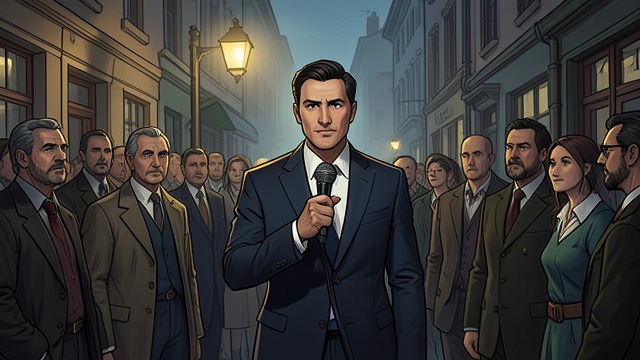
The First Broadcast Attack
A countervoice
Walter Winchell denounces Charles A. Lindbergh’s nomination and pro-Nazi sympathies.
His broadcast gives Jewish listeners an influential ally at a moment of political shock.
A fragile reprieve
The voice comforts the neighborhood without changing the election’s course.
The Dinner Accusations
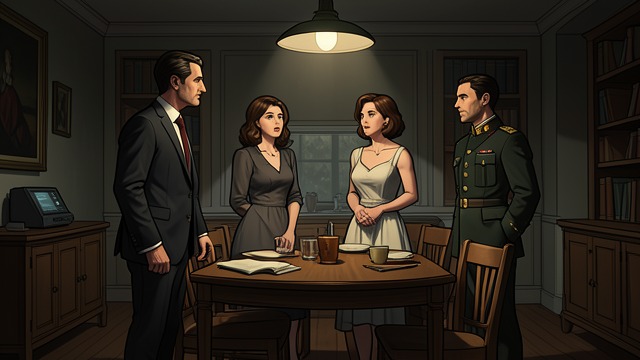
The Dinner Accusations
Conflict over the White House
Walter Winchell condemns the invitation to Joachim von Ribbentrop and questions the administration’s motives.
The government’s supporters accuse him of manufacturing panic.
A widening divide
The dispute becomes a test of whether public criticism can remain legitimate.
Broadcast Silenced
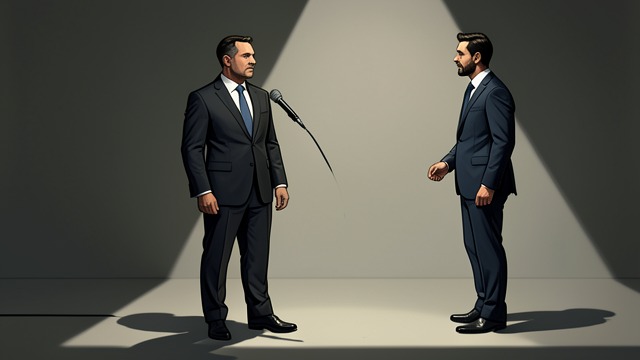
Broadcast Silenced
Commercial pressure
Jergens ends Winchell’s radio program after he accuses the administration of a persecution plan.
The newspaper debate reframes political warning as irresponsible demagoguery.
Escalation
Winchell answers by taking his protest directly into public streets.
Street Campaign and Mob
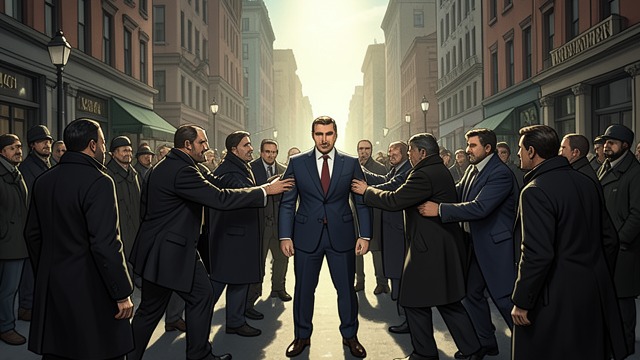
Street Campaign and Mob
Protest becomes confrontation
Winchell campaigns across northeastern cities, warning crowds that fascism threatens American freedom.
In Boston and other places, anti-Semitic mobs attack him and his supporters.
A dangerous strategy
His visibility exposes both the depth of hatred and the state’s uneven response.
Assassination and Aftermath
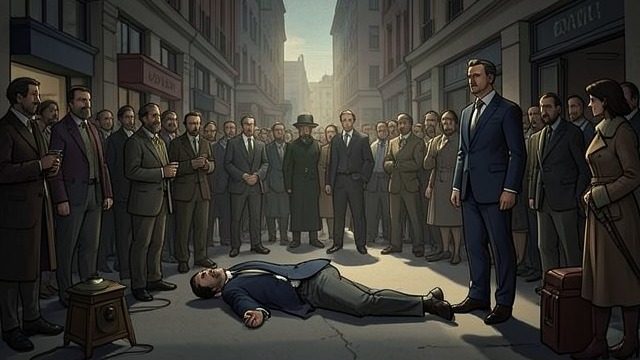
Assassination and Aftermath
A public killing
Winchell is assassinated in Louisville, and his funeral draws a vast crowd in New York.
Fiorello La Guardia’s eulogy makes Lindbergh’s silence part of the national accusation.
Conflict broadens
The murder fuels riots and pushes the crisis beyond a rivalry between two public men.
June 1940
spring 1942
summer 1942
September 1942
October 5 through 7, 1942
