First Amendment to the United States Constitution
The Plot Against AmericaThe First Amendment to the United States Constitution is invoked in the novel as a constitutional safeguard for a free public sphere, especially the work of newspapers, magazines, and radio. Its importance becomes clearest during the 1942 political crisis: after the government restricts the press, Anne Morrow Lindbergh appeals to the amendment as part of her effort to reverse the Wheeler administration’s actions and restore constitutional procedures.
Public scrutiny before the crisis
Before the amendment is named directly, the narrative connects a free press with the ability to scrutinize political power. As President Lindbergh takes office, Philip’s parents reassure their sons that the new government remains bound by the Constitution. They point to reporters including Walter Winchell and Dorothy Thompson, as well as the staff of PM, as evidence that the administration is being watched. Philip, who reads the newspaper his father brings home, treats it as tangible reassurance that the family still lives in a free country.
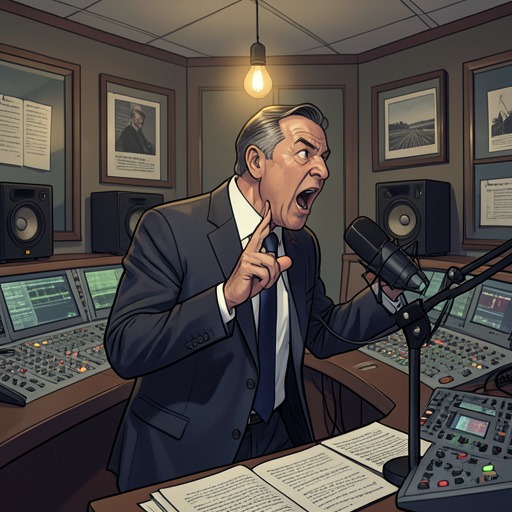
This scrutiny operates amid mounting fear about the Iceland Understanding and the government’s treatment of Jewish Americans. Winchell’s broadcasts accuse the administration of targeting Jews through Homestead 42 and give the relocation program a threatening political interpretation. His oppositional journalism offers a counter to official assurances, while also showing that the public’s understanding of government policy is being contested through competing accounts.
Speech, campaigning, and intimidation
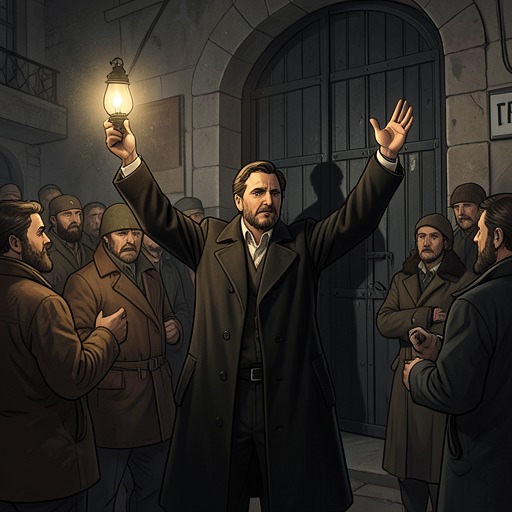
Winchell’s public opposition extends from radio to the streets after he loses both his broadcast position and newspaper column. He begins campaigning against Lindbergh’s supporters, addressing crowds from a soapbox and warning that the administration’s actions threaten democratic government. His campaign draws large audiences, but his appearance in Boston is met by a hostile mob; he is rescued by his bodyguards and receives treatment for facial wounds and minor burns. The episode makes the ability to speak publicly a matter of physical as well as political vulnerability.
The response to Winchell’s campaign also sharpens the distinction between dissent and the government’s portrayal of dissent. Vice President Wheeler and Lindbergh’s supporters depict opponents as disloyal or politically dangerous, while Winchell uses his remaining public appearances to challenge that account. His political speech does not itself secure protection: after violence spreads, Jewish communities prepare for further attacks, and Newark’s Jewish leaders organize with local and state authorities to plan for their community’s safety.
The press under martial law
On October 9, 1942, Acting President Wheeler announces that martial law has been imposed throughout the country and its territories and possessions. The crisis intensifies over the following days: Lionel Bengelsdorf and other political figures are arrested, troops enter New York to assist the National Guard, and Mayor La Guardia is arrested after demanding the release of detainees. In this setting, control of information becomes part of the government’s broader confrontation with its opponents.
On October 16, Anne Morrow Lindbergh broadcasts after escaping from Walter Reed Army Hospital, where authorities have held her. She calls for detained people to regain their rights and, specifically invoking the First Amendment, demands that police leave government-sequestered newspapers, magazines, and radio stations so those outlets can resume normal activity. Her appeal presents control of the press not as a separate administrative dispute but as one of the constitutional injuries that must be addressed for lawful government to return.
Constitutional restoration
Anne’s broadcast also asks Congress to remove Wheeler from office and appoint a successor under the Presidential Succession Act of 1886, and to authorize a special presidential election. At noon, she announces that she is returning to the White House and calls on the public to refuse support for indefensible government conduct. Congress and the courts subsequently dismantle the Wheeler administration. Within this sequence, the First Amendment functions as a public standard against which emergency restrictions can be judged: restoring the press’s ordinary activity is joined to releasing detainees and returning political authority to constitutional procedures.