France
The Plot Against AmericaFrance links private memories of combat to public arguments about war. For Monty Roth, it is the place where he fought in 1918; for Alvin Roth, it is where his military service ended in grave injury and the loss of his left leg. In a political address elsewhere in the narrative, France also appears as one of the countries whose declaration of war against Germany forms part of an argument over whether the United States should enter the conflict. The location therefore carries distinct meanings: remembered experience, personal cost, and political claim.
A place remembered through two wars
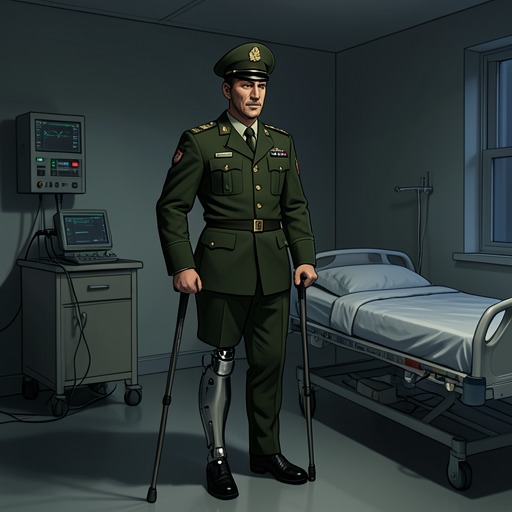
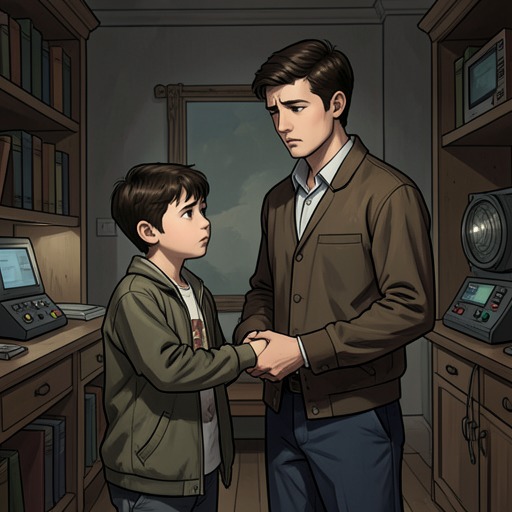
When Monty visits Alvin one January afternoon, Alvin is in bed and still wearing pajamas at four o’clock. He has been withdrawn since returning home, answering Philip Roth’s attempts to cheer him with grunts. Monty, his intimidating uncle, asks how Alvin lost his leg. Alvin initially answers only with the name of the place: France.
Monty answers from his own history. At twenty-one, in the summer of 1918, he had fought in France against German forces, including at the Second Battle of the Marne and in the Argonne Forest, where the Allies broke through on the western front. His blunt declaration that France is the worst country in the world comes from having fought there himself. The comment is not a detached description of the country; it is the judgment of a veteran who treats his earlier experience as sufficient authority. France is already a personal and generational memory before Alvin explains what happened to him there.
The exchange gives the place two separate wartime histories. Monty’s account reaches back to 1918, while Alvin’s refers to his own later service. The visit brings those histories into the same family room, but it does not make them identical: Monty can speak with certainty about his battles, while Alvin is slow and reluctant to tell his story. France is the shared name through which the two men approach experiences separated by years and shaped by different outcomes.
Alvin’s account of his injury
Pressed to explain how rather than where, Alvin gradually recounts a night spent in no man’s land. He says that an enemy soldier had been screaming, and that near dawn, while awaiting the arrival of a boat, he crawled to the man, who was already dead. Alvin then fired at him. A grenade exploded, injuring both legs; one could be treated, but the other was so badly damaged that the left leg was nearly severed and was ultimately lost.
The circumstances resist the heroic version Philip Roth had imagined. Alvin does not describe a clear victory or a cleanly intelligible act of battlefield courage. His account places him alone in a dangerous space, making a decision in the uncertain light before dawn, and suffering consequences that permanently altered his body. Monty adds another uncertainty: in the half-light, he suggests, a frightened soldier might have mistaken the sound of gunfire and thrown the grenade, possibly striking one of his own side. This is Monty’s conjecture, not a confirmed explanation. France is thus not merely the setting of a remembered battle; it is the place where the story of Alvin’s injury remains entangled with chance and incomplete knowledge.
Alvin’s brief first answer and his later, more detailed account also make the telling itself significant. The place-name opens a story he has not volunteered to his cousin, and Monty’s persistence draws out the sequence behind it. The account changes Philip Roth’s understanding: what he had imagined as heroic does not match the troubled, contingent circumstances Alvin relates. France becomes the distance between an outsider’s story of bravery and a veteran’s account of what happened.
France in the argument over American involvement
France has a different role in the political address represented in the novel. The speaker says that, when England and France declared war on Germany in 1939, national polls showed that fewer than ten percent of Americans favored a similar course for the United States. France appears here as part of the historical context for American opinion, not as the subject of an independent description. The address invokes the country’s declaration of war to frame the question of whether the United States should follow the European powers into conflict.
The speech groups British, Jewish, and Roosevelt administration interests as forces pressing the country toward war, and it presents that account as a challenge to what it describes as the American public’s desire to remain out. Within this argument, France is named alongside England at the point of declaration, while the speaker’s extended discussion concentrates on England’s motives and military position. The address claims that England wanted American participation to share the military and financial burden, and it recalls the debts left by the previous European war. Those are the speaker’s political claims, not neutral facts established by the narrative.
The address also describes a sequence of measures said to have brought the United States closer to war: selling arms to Europe, lending arms, patrolling the ocean, and occupying a European island in the war zone. It presents these actions as successive steps that had brought the country to the verge of war. France belongs to the speech’s initial account of how the European conflict began, while its broader argument uses the European war as the setting for a dispute over American policy.
Narrative significance
The contrast between the family conversation and the political address gives France its layered significance. In the conversation, its meaning is measured through two men’s military histories and Alvin’s lasting injury. In the speech, the country is invoked as evidence in a public case about intervention, neutrality, and the intentions attributed to those favoring involvement. One register is intimate and retrospective; the other is strategic and persuasive.
The difference matters because the address turns the war into an argument about national policy, while Alvin’s story restores individual circumstance to that abstraction. His experience is not offered as a general account of France or of every soldier’s service there. It is a particular account, reluctantly given, whose uncertain details complicate any simple heroic reading. Across these scenes, France connects political language about war to the human cost that language can leave out.