Jergens
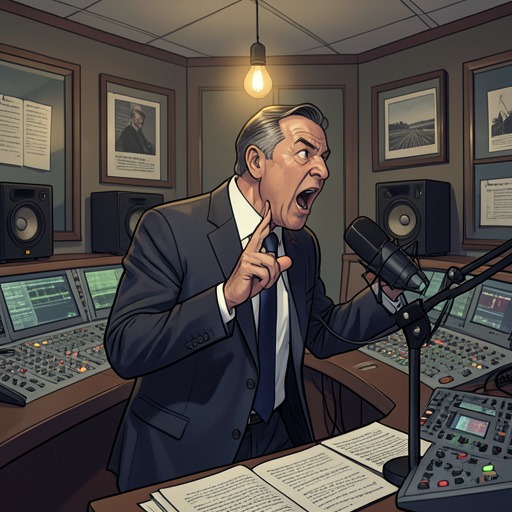
The Plot Against AmericaJergens was the sponsor that ended Walter Winchell’s radio contract after he used his nationwide broadcast to attack the Lindbergh administration. The decision, announced only hours after Winchell came off the air one Sunday night, removed a broadcaster with more than twenty-five million weekly listeners and became a public contest over the boundaries of political criticism and press freedom.
Radio Relationship and Dismissal
Winchell had been on the air for ten years as the country’s leading radio reporter. Jergens’s action took effect immediately: the following Sunday at nine o’clock, a dance band broadcast from the terrace of a midtown Manhattan hotel supper club in his place. The replacement made the loss conspicuous in the same national broadcast slot where Winchell had addressed millions.
Jergens gave two principal grounds for ending the arrangement. It charged that Winchell had effectively incited public panic and had slandered the president with malicious accusations of the kind, in Jergens’s characterization, made by an outrageous demagogue. The company thus presented its decision as a response to irresponsible broadcasting and an attack on the office of the presidency, rather than as a political judgment about Winchell’s opposition to the administration.
Public Defense of the Decision
The New York Times endorsed Jergens in an editorial titled “A Professional Disgrace.” It described Winchell’s accusations against the administration as bombastic and unethical, argued that he had disgraced himself, and commended Jergens for removing him from the airwaves. The paper extended the dispute beyond the broadcaster’s conduct, condemning the standards of accuracy and responsibility it associated with his journalism.
A letter published after the editorial, signed by Lionel Bengelsdorf as director of the Office of American Absorption, reinforced that defense. Bengelsdorf accused Winchell of frightening fellow Jews and misrepresenting Homestead 42, which the administration presented as a means of widening Jewish participation in national life. In this public account, Jergens’s firing was aligned with the administration’s claim that Winchell’s warnings were reckless attacks on a policy supposedly intended to secure inclusion.
Winchell’s Countercharge and Significance
Winchell answered in his New York Daily Mirror column, describing the firing as part of an assault on freedom of expression and accusing Jergens of corporate cowardice. His response cast the company’s stated concern about inflammatory journalism as a pretext for silencing a critic of the administration. The conflicting accounts left Jergens’s act at the center of the controversy: to its defenders, a broadcaster had crossed ethical lines; to Winchell, a powerful sponsor had helped suppress political dissent.
The episode also sits within a broader sequence of pressure on Winchell. He alleged that White House pressure had led William Randolph Hearst to fire him from the Daily Mirror, a separate action from Jergens’s termination of his radio contract. The distinction matters: Jergens ended the broadcast relationship, while Winchell presented the later newspaper dismissal as another consequence of the political campaign against him. In the novel’s account, the rapid disappearance of a program heard by millions shows how a private sponsor’s decision could acquire national political force.