Kentucky
The Plot Against AmericaKentucky is where Sandy Roth spends a summer working on a farm through the Just Folks program, an experience that becomes both a demanding encounter with rural labor and a public argument about Jewish belonging in America. The farm’s daily routines make the program’s promise tangible: Sandy leaves the familiar world of home for strenuous work, then returns with a story that his supporters present as a model for other Jewish Americans.
Setting and Daily Work
Sandy describes a day structured by labor and repetition. His friend Orin Mawhinney, who is Sandy’s age, rises at four in the morning to do chores before taking a bus roughly forty-five minutes to school. In the evening he returns to the farm, does more chores and homework, and goes to bed before beginning the same cycle again. Sandy presents this as a life markedly unlike his own, even though the Mawhinneys are wealthy.
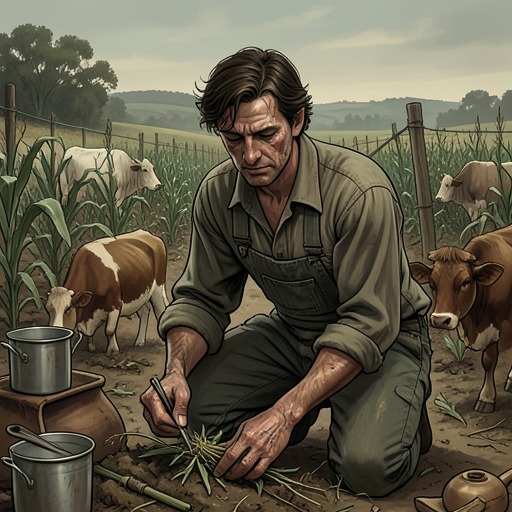
The summer’s heat shapes the workday without interrupting it. At lunchtime, Sandy and Orin come inside for tomato-and-mayonnaise sandwiches and plenty of lemonade, rest, and then return to the fields. Their work includes weeding corn and tobacco and tending their vegetable garden. They also work alongside hired hands, so the farm experience is not simply a lesson in outdoor life: it places the boys within an organized labor force.
The Farm’s Labor and Landscape
Sandy’s account distinguishes between hired workers and Randolph, a Black laborer who has risen from hired hand to tenant. Mr. Mawhinney regards Randolph as an excellent farmer. That detail gives the farm a visible hierarchy of work and status, even as Sandy’s description emphasizes shared tasks in the fields. The boys weed crops alongside adult workers, but their summer position is temporary and chosen; the farmhands’ labor belongs to the continuing operation of the farm.
The tobacco fields also bring Sandy into contact with the risks and technical demands of cultivation. He explains that a worker spraying against tobacco worms must cover himself from head to foot, wear heavy clothes and large gloves, and use a bellows to distribute insecticide. The green dust coats the worker’s clothes, and contact with the chemical can burn him. Sandy later tries to render this scene in drawings, including the protective clothing and the difficulty of depicting the dust. The farm thus survives in his account both as physical work and as material he has studied and tried to represent.
The Experience as an Argument
When a rabbi looks through Sandy’s drawings, he recognizes the weary farmworker in one image and asks about the figure using the bellows. Sandy explains the protective clothing and insecticide, then affirms that the Kentucky experience was not wasted on him: he loved it. His enthusiasm becomes part of a larger case made at dinner. The rabbi presents Jewish participation in the country’s national life as an unprecedented opportunity and holds up Sandy and other boys in Just Folks as examples for Jewish children and adults. He connects that ideal directly to the dream of President Charles A. Lindbergh.
The family’s response complicates the celebratory interpretation. Herman Roth has been silent while the rabbi examines Sandy’s work; after Sandy says he loved Kentucky, Herman rises and says he must help Bess. His departure makes plain that the farm experience carries a political meaning he does not share. Kentucky is therefore more than the setting of a summer job: it is the ground on which Sandy’s personal account of work is turned into an argument for assimilation, while his father’s silence registers the family conflict surrounding that argument.