Mrs. Wishnow
The Plot Against AmericaMrs. Wishnow is a working mother whose life in the Roth family’s neighborhood is shaped by illness, responsibility, and the care that neighbors provide one another. After her husband’s cancer left him unable to work, she took over his insurance business, becoming the first female agent in the Newark district. Her husband’s death and the later uncertainty surrounding her whereabouts reveal how precarious her family’s security has become.
Family and Work
Mrs. Wishnow is the wife of Mr. Wishnow and the mother of their only child, Seldon Wishnow. When cancer of the mouth and throat kept her husband at home for more than a year, she took over his work as an insurance agent. The change made her both mother and family breadwinner, carrying the long hours and financial responsibilities that had previously belonged to him.
The Roths’ account of her labor is framed by a contrast between past and present. Herman Roth remembered her as a laughing, lighthearted young woman when he knew her family in the Third Ward; the child narrator now sees her as tall and ungainly, walking with her fists clenched. Her life, as he understands it, has become a fight, and the clenched fists make that struggle visible without explaining it away.
Illness and Neighborhood Care
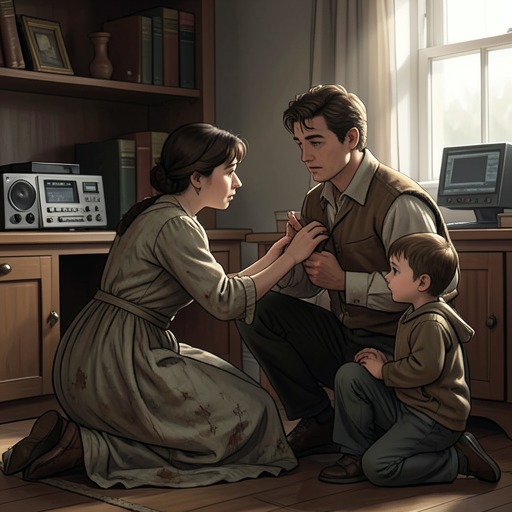
While Mr. Wishnow was ill, Bess Roth regularly checked on him. When Mrs. Wishnow could not get home in time to prepare dinner, Bess made extra food, and her sons carried warm plates downstairs for Mr. Wishnow and Seldon before sitting down to their own meal. Mr. Wishnow was often too weak to feed himself. He nevertheless asked the boys for jokes, while Seldon sometimes invited the narrator to accompany him to the drugstore to refill his father’s medicine.
The care also extended into practical household work. After Alvin Roth ran away to join the Canadian army, Herman rescued his belongings from the Wright Street room. Bess washed the clothes in the cellar, using the divided tub and wringer, and the narrator helped carry laundry upstairs, bring in the clothes from the backyard line, and fold Alvin’s clothing. This episode places her care within a household where tending to others meant sustained, ordinary labor as well as attention to illness.
Mr. Wishnow’s Death
Mr. Wishnow died at home after a long illness. When an ambulance arrived, the narrator feared that his cough meant he could not breathe and tried to run after the stretcher. Bess held his hand and explained that Mr. Wishnow had died from his illness that afternoon, correcting the child’s panic and reminding him that the sickness had been known to the family.
His death leaves Mrs. Wishnow responsible for Seldon without her husband’s help. The narrative does not dwell on her response to the loss; instead, it shows the changed circumstances through the Roths’ continuing concern for the boy and through the account of Mrs. Wishnow’s work as the family’s provider.
Seldon in Danville
Later, during a period of violent upheaval, Seldon is alone in Danville, Kentucky, and calls the Roths in distress. Bess Roth contacts Mrs. Mawhinney and asks her and her husband to help him. Mr. Mawhinney agrees to go to Seldon, and Bess arranges for the boy to stay with the Mawhinneys that night. She tells him to pack basic necessities in a paper bag, dress warmly, and wait for Mr. Mawhinney’s truck.
Seldon fears that his mother is dead. Bess tells him that Mrs. Wishnow will collect him from the Mawhinneys the next morning and drive him to school, but the situation remains uncertain: Bess also makes clear to the Mawhinneys that, if something serious has happened to Mrs. Wishnow, the Roths will take responsibility for Seldon. Herman Roth is prepared to drive from Newark to bring him home. The plan therefore protects Seldon without pretending that his mother’s safety is known.
Narrative Significance
Mrs. Wishnow is portrayed mainly through the work she performs and the support her neighbors extend to her family. Her history as a breadwinner, the Roths’ meals for her husband and son, and the emergency arrangements for Seldon connect private family hardship to a community under political pressure. In the final crisis, she is absent from the scene but remains its central uncertainty: the adults organize a safe place for her child while trying to preserve the possibility that she will return for him.