Newark Penn Station
The Plot Against AmericaNewark Penn Station is where the Roth family meets Alvin Roth on his return from Montreal, making the station the threshold between his wartime injury and an uncertain homecoming. The delayed train stretches the family’s anxious wait, while the arrival itself turns the platform into a place of reunion, shock, and unresolved political tension.
Setting and the wait
The family drives downtown to Newark Penn Station to meet Alvin, as they had gone there to meet Sandy Roth the previous summer. This time Sandy is with them. The Montreal train is late, and then the station announcement says it will be later still. While the family paces the platform, Herman Roth sits on a bench with a copy of the Daily News, a right-wing New York tabloid he usually calls a rag. After reading as much as he can bear, he throws it into a trash basket—a small but pointedly unusual gesture in a household where nickels and dimes matter.
The wait unfolds under the pressure of national politics. Herman condemns the paper’s continued admiration for the president, while the narration notes that the promise to keep the United States out of the worldwide war has made Charles A. Lindbergh a hero to nearly every newspaper except PM. At the station, a delayed train is therefore more than an inconvenience: it prolongs a family’s anticipation at a moment when the country’s politics have entered even its ordinary routines.
Alvin’s arrival
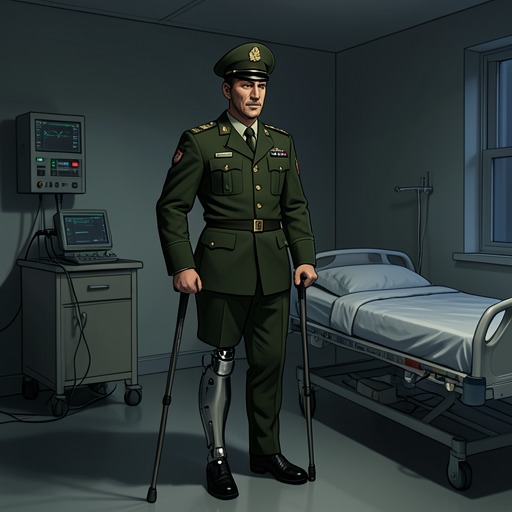
When the train finally arrives, Bess Roth links arms with Sandy and Philip Roth as they return to the bench to wait together. Herman tells Philip not to fear Alvin or his leg, and urges him to let his cousin see how much he has grown. Sandy breaks away first, racing toward the arriving car. A nurse in a Red Cross uniform pushes Alvin from the train in a wheelchair.
Sandy, who has only just turned fourteen, drops to his knees on the concrete platform and embraces Alvin. Bess begins to cry. Herman takes Philip by the hand, apparently trying to keep the child from being overwhelmed—or to steady himself amid his own feelings. Philip then pulls away to embrace Alvin too. The physical details complicate the welcome: Alvin smells bad, his wooden crutches are strapped to the wheelchair, and Philip sees how skeletal and dejected he has become. Alvin’s eyes, however, show neither fear nor tears. He looks at Herman fiercely, then reaches to shake his uncle’s hand and says only his name.
Family reunion and political fault lines
The meeting brings together relatives whose responses to the altered country have diverged. Sandy has supported Lindbergh’s government through his work with Just Folks, a fact his parents have decided not to explain to Alvin until he has had time to recover and understand how America has changed. At the station, Sandy’s immediate embrace makes the family bond visible before that concealed political difference is addressed. Philip, meanwhile, is trying to hold on to his faith in Herman and in the political figures he believes might keep the country from embracing Lindbergh.
The reunion does not resolve those tensions. Alvin’s fierce scrutiny of Herman gives the greeting an edge: the injured young man returns not simply as the object of his family’s concern, but as someone looking at the guardian he appears to hold responsible. The station thus gathers affection, concealment, and blame into one encounter without settling any of them.
Narrative significance
Newark Penn Station marks the passage from absence to physical presence, but Alvin’s arrival is no simple restoration of the family’s former life. The wheelchair, the crutches, and Philip’s difficult first awareness of Alvin’s altered body make the consequences of war tangible on the platform. The family has come to welcome him home; what arrives is both their cousin and the visible cost of a world they have been arguing about in his absence.