Philadelphia
The Plot Against AmericaPhiladelphia links a national political turning point to the Roth family’s increasingly precarious private life. In 1940 it is the city from which the Republican convention broadcasts Charles A. Lindbergh’s unexpected nomination; later, it becomes the destination of Alvin Roth’s flight from pressure in Newark and a waypoint on Herman Roth and Sandy Roth’s dangerous drive to Kentucky. The city’s significance lies in these crossings: national politics breaks into a household over the radio, while political danger and family obligation take physical form on the road.
The Convention and Lindbergh’s Nomination
On the night of June 27, 1940, the Republican convention in Philadelphia remained deadlocked after six ballots. Lindbergh was not there: he was advising on the design of a fighter plane at a Midwestern factory and was not expected to attend. From their home in Newark, Philip Roth and Sandy Roth followed the live broadcast with their parents and cousin Alvin Roth. The convention was thus present in Philadelphia as a political gathering and in the Roth home as a voice carried across the radio. The boys fell asleep while the delegates continued voting. At 3:18 in the morning, Lindbergh arrived on the convention floor after flying his own plane into the Philadelphia airport. His appearance transformed the stalemate. Delegates rose to acclaim him, and Senator Gerald P. Nye quickly placed his name in nomination. At four o’clock on June 28, the Republican Party chose Lindbergh by acclamation. Philadelphia was the site of a rapid reversal: a candidate who had not been named during the earlier ballots became the party’s nominee through a dramatic arrival and a display of collective enthusiasm. The consequences of that decision reached beyond the convention hall. Lindbergh had already made public accusations against Jews, and his nomination confirmed the political force of those views. On the Newark block where the Roths lived, the announcement roused people into cries of disbelief. Philip and Sandy returned to the radio, where their mother sat with her fingers over her mouth and Alvin paced the room. Philadelphia’s political event became an immediate domestic shock, heard through a broadcast rather than witnessed in person.
A Destination Under Pressure
Philadelphia later offered Alvin a place to go when Newark had become untenable. After Alvin had worked little more than a week at Monty Roth’s market, the Federal Bureau of Investigation questioned the workers about him and spread an allegation that he was plotting to assassinate Lindbergh. The claim was false, but Alvin was dismissed. Monty explained to Herman that he had been ordered to remove his nephew by Longy Zwillman’s associates. With both the investigation and local criminal influence closing off his position in Newark, Alvin left town within a day. This departure was not another journey across the border to Montreal, where Alvin had previously gone to join the Canadian commandos. He crossed the Delaware instead and went to Philadelphia, where he found work with the uncle of Shushy Margulis, a gambling-machine operator. The change in destination marks a change in the kind of refuge available to him: not military service abroad, but employment in a criminal business across state lines. Philadelphia becomes a practical escape route, though not a return to secure or respectable work.
The Schapp Connection and Alvin’s New Position
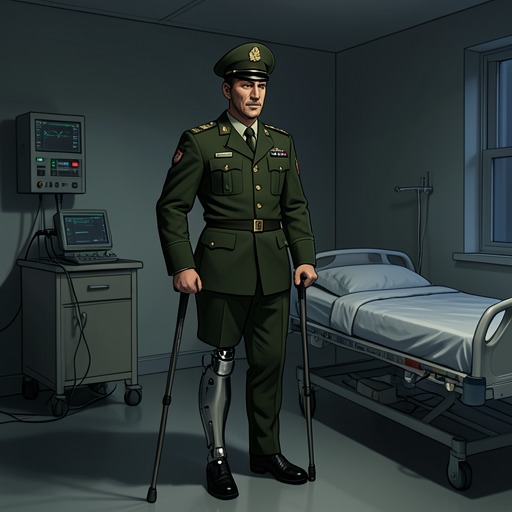
Alvin’s connection to Philadelphia deepened through Minna Schapp, whom he brought to the Roth home as his fiancée in October 1942. Her father, William F. Schapp II, had built wealth through gaming machines and associated businesses, while presenting himself as a prominent civic and religious figure. His ventures included the Intercity Carting Company, a public-facing part of the gaming operation, and a popular steak house in Philadelphia. The description of his rise joins criminal enterprise to social standing: money from pinball machines and slot machines supported club membership, synagogue connections, an elaborate suburban home, and conspicuous leisure. William F. Schapp II proposed an explicit arrangement for the couple: Minna would care for Alvin’s leg, Alvin would care for Minna, and her father would take care of Alvin. Through that bargain, Alvin moved from the unstable work of transporting and installing illegal machines to a managerial role in a restaurant in Atlantic City. Philadelphia therefore belongs to the network that enables his advancement, even though his new post is outside the city. The Schapp family’s business and connections convert his association with Minna into a route toward a more elevated position. Alvin adopted the visible signs and speech of that new role. He wore hand-tailored suits and welcomed prominent customers, signaling to them that the restaurant would cover their bills. His confident, heavily inflected slang unsettled his parents, while Sandy eagerly borrowed expressions from it. Philadelphia’s underworld economy reaches the Roth household not only through Alvin’s employment but through a new performance of money, status, and masculine authority that the younger boy finds both striking and imitable.
A Route Through Philadelphia
In the later crisis, Philadelphia becomes one segment of a long drive undertaken by Herman and Sandy to bring Seldon Wishnow back from Kentucky. The route ran diagonally south across New Jersey to Camden, crossed the Delaware into Philadelphia, continued south to Baltimore, then turned west and south through West Virginia and on into Kentucky. The journey covered roughly 750 miles each way. On the outward leg, Philadelphia was a passage through a larger map of risk; the family’s route placed the city between their New Jersey home and the more distant communities they had to cross to reach Seldon. The return made that geography oppressive. Seldon was ill and feverish, and the trip back took three times as long as the drive out. The car broke down six times in a twenty-mile radius of Charleston, West Virginia, while Herman and Sandy also stopped repeatedly because Seldon was sick. Herman drove with broken ribs, a neck brace, and a sutured facial wound, carrying a spare pistol belonging to Mr. Cucuzza for protection. Sandy tracked the route with a flashlight and an Esso road map, while Bess Roth followed the family’s progress on a foldout map at home. Philadelphia was far behind them by then, but it remains part of the route that connected the Roths’ home to the dangers of the journey and the effort to bring Seldon back.
Narrative Significance
The novel gives Philadelphia several distinct functions rather than making it a single, stable refuge. In the convention episode, it is a remote center of power whose decisions arrive in a family room by radio. In Alvin’s flight, it is a nearby destination made available by personal and criminal connections. In the journey to Kentucky, it is a named point on a route whose length and hazards become part of the family’s ordeal. The city’s meaning shifts with the characters’ circumstances: national spectacle, improvised employment, and geographic passage. These uses also contrast political movement with the constraints of ordinary life. Lindbergh can cross the sky to Philadelphia and arrive at the moment the convention needs a resolution; the Roths, by contrast, must negotiate work, surveillance, family obligations, and a difficult road one stop at a time. Philadelphia links those scales without erasing their difference. A decision made in the city can reorder the country, while a journey through it belongs to the intimate labor of keeping a family together.