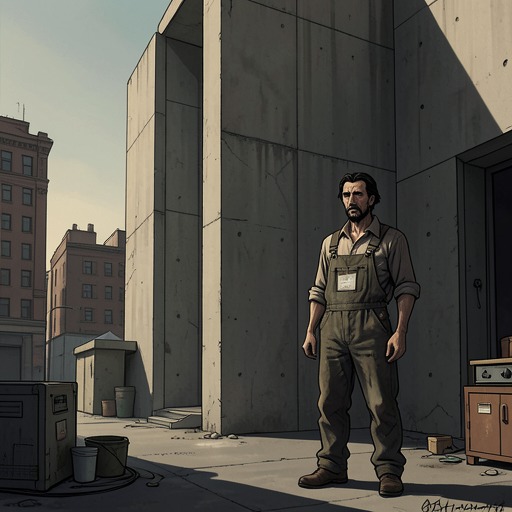
Winchell riots
The Plot Against AmericaThe Winchell riots turn Walter Winchell’s campaign against President Charles A. Lindbergh into a test of whether public opposition can expose political violence without making its speaker and the communities he defends more vulnerable. Beginning with an attack on Winchell in Boston, the violence widened into assaults on Jewish neighborhoods, schools, and synagogues, with Detroit suffering the most extensive outbreak. The events also reveal how responses diverge: some officials move to protect public order, others fail to intervene, and Newark’s Jewish residents prepare for danger themselves.
From campaign to street violence
Winchell began his congressional campaign in New York on the Tuesday after Labor Day, speaking from a wooden soapbox at Broadway and 42nd Street. His former prominence as a radio broadcaster and tabloid journalist drew large crowds. He presented his campaign as a warning against fascism in the White House, and argued that the removal of his microphone and newspaper column had not silenced the danger he saw. Although his political appeal remained controversial, his speeches made him a conspicuous opponent of the administration.
The shift from political performance to physical danger came in Boston. Winchell had planned to campaign for three days across neighborhoods including South Boston. There, hecklers who had targeted him as a Jew gave way to a larger hostile crowd. An attacker carrying a burning cross moved toward his soapbox, and gunshots sounded. Winchell’s armed, plainclothes bodyguards got him away from the crowd and took him to Carney Hospital. The Boston police did not arrive until about an hour after the shots. Governor Leverett Saltonstall, by contrast, visited Winchell, promised an investigation and protection by state police, and ordered authorities to maintain order and arrest violent attackers.
That contrast mattered as Winchell continued his tour. In Massachusetts, Saltonstall’s instructions meant state authorities would act against rioters. Elsewhere, local officials often showed less willingness to restrain the crowds. Winchell continued speaking, sometimes with a cane and bandages after the Boston assault, and met hostile gatherings in communities across New York State, Pennsylvania, and the Midwest. The attacks were not simply confined to the immediate vicinity of a speech: they accompanied a campaign that carried the question of anti-Semitic violence into places where local protection could not be assumed.
Detroit and the spread of violence
The most widespread violence took place in Detroit, where networks of anti-Semitic activism already had a public presence. Father Coughlin’s Christian Front and the minister Gerald L. K. Smith operated in a city also associated with Henry Ford’s anti-Semitic publications. Against this background, the attacks that began near Winchell’s appearance in Hamtramck spread into Detroit’s Jewish neighborhoods. Shops were looted, windows broken, and Jewish residents attacked in the streets. Crosses were set alight outside homes across neighborhoods of different incomes and housing types.
The violence reached institutions as well as homes and businesses. Firebombs were thrown at Winterhalter Elementary School, where half the pupils were Jewish, and at Central High, whose student body was predominantly Jewish. Other attacks targeted the Sholem Aleichem Institute and the Jewish Workers’ Alliance. Windows were broken and walls defaced at many of the city’s Orthodox synagogues; an explosion at Shaarey Zedek damaged the temple’s distinctive entrance. Several bystanders were injured, but the account reports no other casualties there.
By nightfall, hundreds of Detroit’s Jewish residents had crossed the river to seek refuge in Windsor, Canada. The narrative characterizes the outbreak as the first large-scale pogrom in American history and compares its pattern to the anti-Jewish violence in Nazi Germany known as Kristallnacht. The comparison emphasizes the organized character and public consequences of the attacks, while also showing how quickly the violence was reframed. A Detroit newspaper blamed Winchell as a provocateur, turning the campaign against anti-Semitism into an alleged cause of the attacks against Jews.
The violence did not end with Detroit. The following week, Jewish neighborhoods in Cleveland, Cincinnati, Indianapolis, and St. Louis also experienced attacks on homes, shops, and synagogues. Winchell’s opponents blamed his appearances for provoking disorder; Winchell instead traced the violence to a climate of hatred emanating from the White House. In Indianapolis, he narrowly escaped a paving stone thrown from a rooftop that killed a bodyguard beside him. The competing explanations made the campaign itself part of the dispute: was Winchell exposing a danger, or, as his critics alleged, creating the pretext for it?
Newark prepares for an attack
In Newark, children and adults followed reports from Detroit and debated whether Winchell’s confrontational strategy helped Jews by awakening public attention or harmed them by giving anti-Semites a convenient excuse. With roughly fifty thousand Jewish residents in a city of more than half a million, local leaders feared violence might reach Newark either during a visit by Winchell or through the spread of attacks to cities with similar social divisions. These fears prompted preparations before a comparable outbreak occurred there.
Rabbi Joachim Prinz and five other prominent local Jews established the Newark Committee of Concerned Jewish Citizens. The committee sought practical cooperation from municipal and state authorities: it met with Newark’s police and fire chiefs and public-safety director, then met with the governor, state police superintendent, and National Guard commander at the State House in Trenton. Attorney General David T. Wilentz attended and, according to the committee’s bulletin, assured Prinz that assaults on Newark’s Jews would be prosecuted. When the committee asked Lionel Bengelsdorf for a meeting in Washington, he responded that the matter was local rather than federal and directed them back to city and state officials.
A separate effort to prepare for possible failures by public authorities came from Longy Zwillman. He assigned Bullet Apfelbaum to recruit young Jewish men into a volunteer force called the Provisional Jewish Police. The recruits were drawn from young men who had been marginalized in the community and were now tasked with watching the streets and organizing neighborhood readiness. Members were stationed at street corners, encouraged residents to keep baseball bats ready, and recruited able-bodied men so that each block could assemble a small squad in an emergency. Their presence expressed a stark reversal: people whom the community had regarded with fear or disapproval were now being organized as its potential protectors.
Assassination and the stakes of the riots
The riots formed the violent setting for Winchell’s campaign, but the danger ultimately extended beyond attacks on the streets. On October 5, 1942, a radio bulletin announced that Winchell had been shot and killed while addressing a political rally in Louisville, Kentucky. The account identifies a suspected American Nazi Party assassin working with the Ku Klux Klan. It presents his assassination as unprecedented for a presidential candidate in American history and places it in the same escalating crisis as the anti-Semitic violence.
Winchell’s death intensified the public significance of the preceding attacks. His candidacy had forced a national argument over whether exposing organized anti-Semitism could help protect Jews or instead increase their immediate risk. In Newark, the answer was not merely rhetorical: residents sought official guarantees while also organizing an armed volunteer patrol in case those guarantees proved inadequate. The riots therefore mark both the spread of violence and the transformation of communal fear into civic and neighborhood action. Their unresolved tension is central to the episode: public denunciation may make hidden hostility visible, but visibility alone does not ensure protection.