Ankara
The Portable DoorAnkara is the setting for a lunchtime encounter that changes the meaning of Paul’s travels through the portable door. What had become a pleasant break from office routine proves to be a route others can follow, and the city’s café becomes the place where Rosie identifies a hidden danger without disclosing who is behind it.
A destination in Paul’s lunch-hour routine
By this point, Paul’s trips through the door have lost much of their initial novelty. Rather than treating foreign travel as an extraordinary adventure, he has come to regard it as a more enjoyable way to spend his lunch hour than remaining at the office. He still has to eat ordinary food afterward, since what he finds on the other side of the door provides no nourishment, and he must return to the spreadsheets and the strained silence of sharing an office with Sophie. The journeys are a welcome interval, not an escape from the obligations waiting for him at home.
Ankara belongs to this practical, improvised itinerary. On a Wednesday, Paul sits outside a café there with Turkish coffee, which he has tried partly because he doubts it can be as bad as people say. His attention is on the drink and his own reflection when someone asks whether the other chair is taken. The scene begins as an ordinary pause in a working day: a chair, a café table, and a cup of coffee. Its significance comes from the unexpected company that arrives there.
The meeting with Rosie
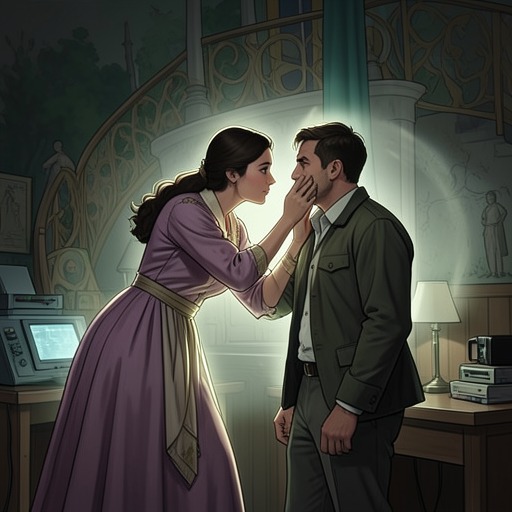
The woman who sits opposite Paul speaks in English, or in a voice he takes to be Australian. She is tall and slim, around twenty, with long black hair beneath a broad-brimmed straw hat; Paul registers her striking appearance before he understands who she is. When she smiles, a family resemblance gives her away. He begins to identify her as Mrs Tanner, then settles on Rosie. The recognition makes the apparent stranger a familiar presence in an unfamiliar city.
Rosie’s appearance is not a reliable guide to her identity. At Paul’s recognition, she briefly shows a goblin face and talons before lifting her hair back over her shoulders and greeting him. The shift makes visible the difference between the form she presents and what lies beneath it. Ankara is not merely somewhere Paul has gone alone: it is a setting where a person able to change appearance can meet him while appearing to belong to a different world.
Rosie explains that she has come for the same reason as Paul: a break from the office and some sun during her lunch hour. She has followed him through the door after he went through, using the same route to reach the café. Her arrival therefore overturns Paul’s assumption that these journeys are a private diversion. The door can take him away from the office, but it does not make the destination exclusive to him.
A warning without a name
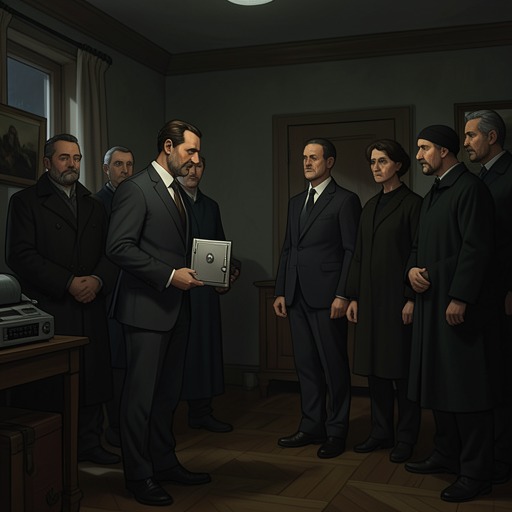
The meeting also alters what Paul knows about an item placed in his desk drawer. Rosie tells him that neither she nor Dennis Tanner put it there, and that it did not arrive there by itself. When Paul asks who did, she says she saw the person responsible but will not identify them. She presents her silence as a restriction, not as ignorance, and urges him to be careful because much is happening around him, including matters he may not yet understand.
Her warning draws a contrast between the ordinary moral expectations Paul associates with his own kind and the dangerous conduct of the unusual people around him. She cautions that those involved do not necessarily observe the fair rules he might expect. The encounter gives Paul grounds to suspect that the object in his desk is part of deliberate action, while withholding the information he would need to resolve the suspicion. Ankara thus becomes the place of a partial disclosure: a denial, confirmation of a witness, and a warning, but no name.
The city as a meeting point
The café scene brings together the two sides of Paul’s door journeys. For him, Ankara has been another place to spend a lunch break away from office discomfort; for Rosie, it is reachable by following him through the same passage. Their meeting turns travel into contact and gives the apparently recreational route a bearing on the events unfolding at the firm. The foreign setting does not itself explain the mystery, but it allows information about it to surface beyond the office.
The scene’s importance lies in that combination of escape and exposure. Paul can leave the spreadsheets behind for a while, yet the people and troubles associated with his work can reach him abroad. Rosie’s shifting appearance unsettles the distinction between visible form and identity, while her warning unsettles the assumption that a convenient journey is a harmless one. Ankara is therefore defined less by a broad portrait of the city than by this specific encounter: a café, a lunch-hour visit, and a clue whose source remains concealed.