Arthur Tanner
The Portable DoorArthur Tanner is a clerk and colleague of Philip Catherwood, known as Pip, whose attempt to use a J.W. Wells portable door turns into an imprisonment with no apparent exit. He and Pip refuse to surrender a talisman to Humphrey Wells, are trapped in a Doorless room, and endure an uncertain span of time together. Arthur’s eventual recognition of Rosie gives the confinement’s otherwise claustrophobic story a sudden human point of connection.
Identity and Introduction
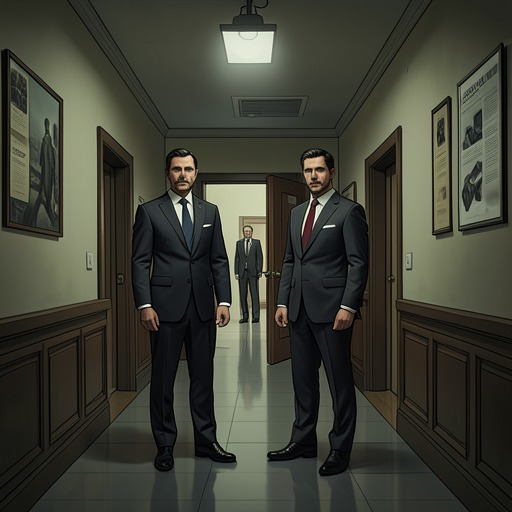
Arthur appears alongside Pip as one of two young men in Victorian dress. When Paul Carpenter introduces Sophie Pettingell, Pip identifies Arthur as his friend and colleague. Paul recognizes the name Catherwood from documents in the strongroom, but Arthur’s name has a different significance for him: Arthur tells Paul that they have met before, suggesting a history Paul does not initially recall.
Arthur is also identified as a clerk. The scenes provide little account of his earlier life, but his formal introduction and Victorian clothing place him among people whose past has become entangled with the magical workings of J.W. Wells & Co.
Refusal and Imprisonment
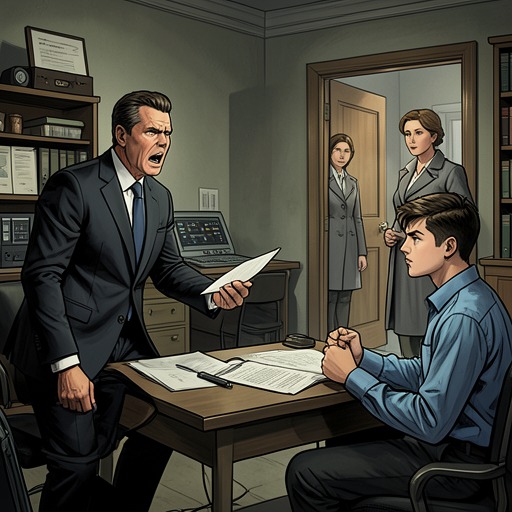
Arthur and Pip recount that Humphrey Wells summoned them after learning that the old man had given them a talisman. He tried to persuade them to hand it over with offers of money, promotion, and partnership in the firm. They refused. Humphrey became angry and threatened them, but then unexpectedly dismissed them rather than using spells to compel them or attacking them with lightning. For several weeks, they heard nothing more from him.
Their next assignment came from Casimir Suslowicz, who asked them to spend a day or two putting the J.W. Wells underground strongroom in order. Near the end of the work, Humphrey’s secretary brought down a box of miscellaneous items. Inside was a cardboard tube holding a rubber mat shaped like a door. Arthur and Pip read its instructions, spread it against a wall, and opened the resulting magical doorway. Cautiously, they directed it to take them only to their own lodgings and wedged it open with a heavy book.
The doorway brought them to the lodgings, but the ordinary door that should have connected their rooms to the rest of the building was missing. Humphrey then appeared in the magical doorway. He told them that their refusal to give him the talisman, and their knowledge of his business, made it safer for them to be removed from harm’s way. Before they could respond, he slammed the doorway shut; it vanished, leaving Arthur and Pip in the Doorless room.
Confinement with Pip
The confinement places Arthur and Pip in a close, repetitive struggle with one another. Pip admits that their friendship became severely strained and that he had repeatedly tried to strangle Arthur, stab him, beat him with a poker, and drown him in a washbasin. None of these attacks had any effect, so Pip eventually stopped trying. They turned instead to chess, dominoes, and nomination whist, games that eased the tension without the aftermath of another fight.
Arthur contributes a different measure of their isolation: until Paul appeared, neither man knew how long they had been there. They might, for all they knew, have spent only a day in the room, though the passage of time felt like a hundred years. Arthur compares that impression to the tedious experience of having tea with his aunt as a boy, then acknowledges that the world outside seems to have changed. His response makes the room’s dislocation concrete without establishing how much time actually passed for the two prisoners.
Recognition of Rosie
When Rosie sits up on the bed and looks at the group, she calls Arthur by name. Arthur stares back; then recognition seems to fall into place, and he whispers her name in return. The exchange is brief, but it changes the emotional register of his appearance: after the dead end of the vanished doorway and the dreary routine of confinement, Arthur is confronted with someone he recognizes from his past.
Arthur’s story in these scenes is defined by reversals of access and recognition. The portable door appears to offer a controlled escape, but Humphrey turns it into the instrument of their imprisonment; the men’s estimate of time remains uncertain, while the changed world hints at an absence they cannot measure. His reunion with Rosie closes the supplied account on recognition rather than explanation, leaving the importance of their shared past to the larger story.