Doorless room
The Portable DoorThe Doorless room is a magically imposed prison whose defining feature is not a locked entrance but the disappearance of the entrance itself. Pip and Arthur reach it through a Portable Door, only for Humphrey Wells to remove that magical passage and leave them unable to find the real door to the rest of their building. The room turns an apparently useful route home into a means of confinement, and remains a threat even after others escape it.
Arrival and Entrapment
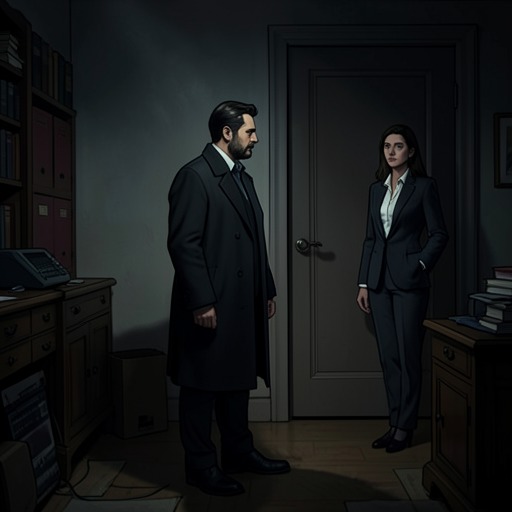
While clearing the strongroom, Pip and Arthur find a cardboard tube containing an india-rubber mat shaped like a door. Intrigued by its instructions, they spread it against the wall, open the doorway that appears, and wedge it ajar with a heavy book. Cautious about where it might lead, they command it to take them only to their own lodgings. It does so, but their actual door—the one connecting their rooms to the rest of the building—is missing.
The discovery is followed almost immediately by Humphrey Wells appearing in the magical doorway. He tells them that their refusal to surrender the talisman, combined with what they know about his business, makes it safer for him if they are removed from the way. Before Pip and Arthur can respond, he slams the Portable Door shut. It vanishes, leaving them in a room with no door and no visible ordinary exit. Pip’s later account establishes the confinement as an ongoing condition rather than a brief interruption.
A Prison with a Possible Key
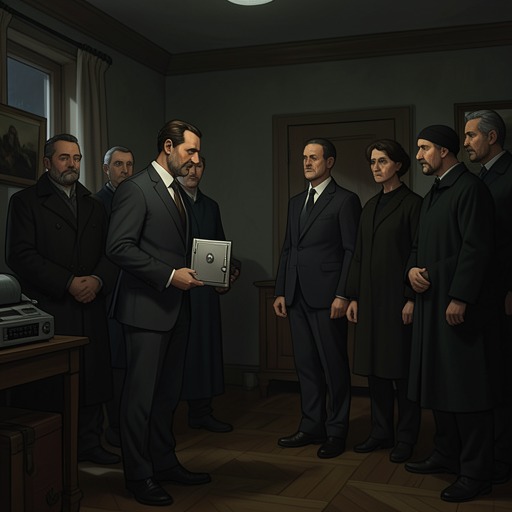
The room’s threat is not confined to Pip and Arthur’s initial predicament. Humphrey later considers sending a group of opponents back to the same cramped room, though he recognizes that it may not hold them permanently. The episode confirms that the Doorless room remains available to him as a means of isolation even after its limits have become apparent.
The prospect of escape is linked to Humphrey’s habit of hiding solutions behind tests. Mr Tanner’s mum points out that the Portable Door has two keyholes and therefore requires two keys; she expects Humphrey to disguise them or make access depend on some challenge. Paul recognizes the fairy-tale shape of the problem. When he and Sophie examine a sword set in stone, they draw it out together and discover that its blunt, ridged tip resembles a key. Paul breaks off the brittle key-shaped portion and keeps it, identifying it as one of the two needed keys. The discovery supplies a concrete lead toward opening the door, but the evidence here does not establish that both keys have been found or that the room has been opened by them.
Escape and Recurrence
The company does not remain in the room throughout the later confrontation. Paul recognizes the sensation when a recovery charm whisks them out, and they arrive in the office boardroom, where Humphrey advances in conjuror’s costume. That departure shows that confinement can be interrupted by magic; it does not erase the room’s significance as a destination Humphrey can threaten to impose again.
Narrative Significance
The room reverses the ordinary promise of a doorway. The Portable Door appears to provide controlled passage to a familiar home, yet its use exposes the absence of the home’s normal exit and gives Humphrey the power to seal the route behind its users. The paired locks and concealed keys then recast escape as a fairy-tale puzzle, linking the modern magical workplace to the sword-and-key motif. In this setting, a room’s defining boundary is not simply its walls: it is whether passage can be opened, controlled, or made to disappear.