Goblin colony at 70 St Mary Axe
The Portable DoorThe Goblin colony at 70 St Mary Axe is the hidden community that owns the building occupied by J.W. Wells & Co. Its relationship with the firm is an unusual urban tenancy: the goblins let the property for a peppercorn rent, while the firm undertakes to protect their access to the building after its doors are locked. When Paul Carpenter and Sophie Pettingell first encounter the consequences of that arrangement, the goblins appear not as a disclosed part of the business but as an alarming population inside its workplace. The later explanation recasts the apparent invasion as a conflict over a shared building, its rules, and the humans’ failure to know who lived there.
Ownership and tenancy
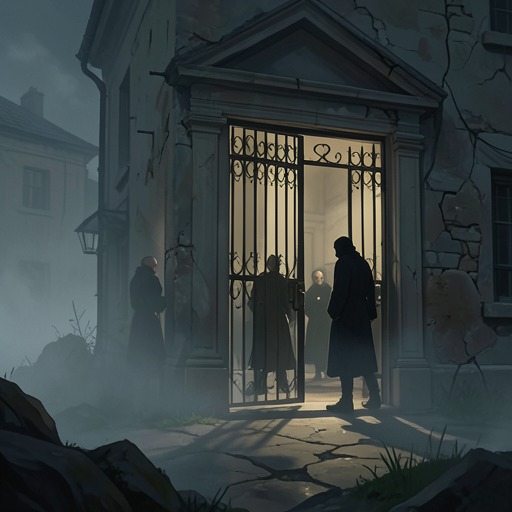
The colony’s central institutional fact is ownership. When Sophie asks why goblins are in the building, Mr Tanner explains that it belongs to them. The firm is therefore their tenant, not their landlord, and its low rent comes with a condition: when the doors are locked, the goblins must be allowed out of their tunnels to move about the building. The arrangement gives the colony a claim on the premises even when human staff regard the office as closed and exclusively theirs.
This tenancy also exposes a divide within the firm. Mr Tanner says some partners believe trainees should be told about the supernatural realities of the workplace at once, while others treat discovery as a test of intelligence or a rite of passage. The colony’s presence has not been hidden because the goblins lack a legitimate place there; rather, the humans’ internal disagreement has left newcomers uninformed. That decision turns an existing tenancy into the setting for a dangerous misunderstanding.
Underground life and work
Mr Tanner describes goblins as living beneath the earth in vast tunnels extending down toward the outer layer of the magma core. Their labor is mining, and their connection to minerals gives them practical importance to the firm’s business. He relates their work to bauxite in New South Wales, explaining that this was why Paul was hired: Paul is a natural scryer whose demonstrated success at sensing ore could be useful to the company. The colony is thus not merely the owner of office premises but part of a wider supernatural economy of mineral extraction and expertise.
The account of goblins digging ore with their fingernails makes their after-hours use of the office materially distinct from the human work conducted there. They are permitted to emerge for harmless recreation after a long day underground. The firm’s duty is consequently not an abstract courtesy: it protects a community’s access to common space after labor. The contrast between deep tunnels and an ordinary city office places an unseen working population directly beneath the routines of a modern business.
Encounter in the office
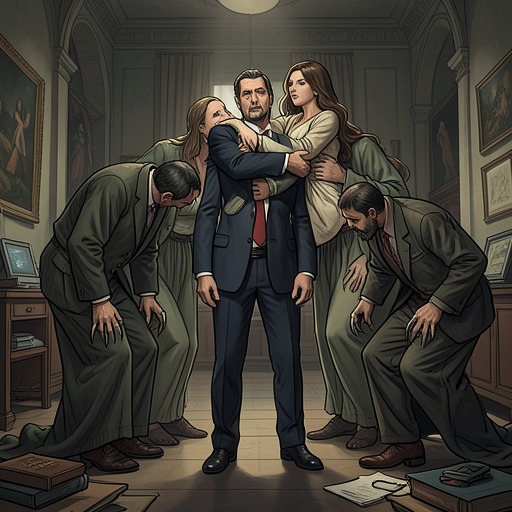
The colony becomes visible to Paul during the emergency after Sophie has been taken by a goblin. Paul heads through the building looking for goblins, aware that he is outmatched and that his plan to seize one and force the others to return Sophie is reckless. In the reception area he finds at least twenty of them apparently playing a form of rugby with the large metal waste-paper basket usually kept under the receptionist’s desk. The improvised game makes the room’s familiar office equipment part of their leisure, while their sudden stillness makes Paul appear, in their eyes, to be the intruder.
Paul shouts at them and brandishes a spear. The goblins flee, with one exception. The encounter is framed through mutual alarm rather than an organized attack by the colony: Paul has entered the room looking for a threat, but the goblins’ reaction is to run. His rescue attempt is understandable in the circumstances, yet the scene also demonstrates the danger created when humans and goblins meet without knowing the other’s place in the building. Mr Tanner later stresses that frightening goblins can make them panic and that people who leave them alone will not be bothered.
Family, rules, and significance
Mr Tanner’s explanation gives the tenancy a familial as well as commercial dimension. He identifies himself as a goblin and says he is a quarter human on his father’s side; he also calls the colony family. His appeal asks the trainees to imagine how they would feel if large, frightening creatures barged into their parents’ living room and shoved them around. The comparison reverses the newcomers’ assumption that the office is simply human territory: from the colony’s perspective, the humans are the intruders in a home and place of recreation they own.
The colony is therefore presented through a practical code of coexistence. The firm must allow access after closing, and its employees must avoid frightening residents or provoking them. Mr Tanner’s warning to Sophie is especially pointed because the trainees’ ignorance has already helped turn ordinary presence into confrontation. By joining supernatural tenancy to workplace etiquette, the colony makes the firm’s hidden world a matter of rights and responsibility as well as magic. Its ownership, labor, recreation, and kinship challenge the idea that the office belongs only to the people who work there during business hours.