Highgate Community Arts Centre
The Portable DoorHighgate Community Arts Centre is the setting for an improbable convergence: a notice for a Gilbert and Sullivan operetta draws Paul Carpenter to the venue, where he unexpectedly meets Sophie Pettingell. The building’s uninviting exterior and brightly lit entrance frame a scene in which a seemingly ordinary arts centre becomes the point where coincidence, compulsion, and a renewed personal connection meet.
Setting and advertised performance
A notice identifies Highgate Amateur Operatic Society as presenting The Sorcerer, by W.S. Gilbert & Sir Arthur Sullivan, at Highgate Community Arts Centre. It lists Saturday 17 December at 6.30 a.m. and an admission price of £5.00. The performance information reaches Paul through pink flyers pinned to a noticeboard outside the building; the door stands open, and yellow light spills from the entrance.
The centre itself is described through Paul’s first impression rather than through its activities or interior. It is a grey concrete building that looks to him like an abattoir. That bleak, functional appearance contrasts with the warmth of the light at its open door and the theatrical promise advertised on the noticeboard. The scene gives the venue a distinct visual role: it looks like a place Paul would avoid, yet its entrance is where he is drawn next.
Paul’s arrival
Paul recognizes that the advertised performance is happening now and that the centre is just down the road. He initially resists the apparent pull toward it. A five-pound note flutters from a passing Mercedes and settles at his feet, matching the notice’s admission price. The coincidence unsettles him; he imagines an inexorable force steering him toward the performance, as if the world will keep redirecting him until he goes inside.
His reluctance gives way to a practical calculation. He has no plans for the evening, and he reasons that attending could at least get him out of the situation in one piece. He walks slowly toward the building, comparing his unwilling progress to a schoolboy going to school. Although he is carrying a frozen pizza and regards it as part of the chain of misfortunes that brought him there, he cannot quite bring himself to abandon it. He tucks it under his coat and advances through the yellow light. The centre is therefore not merely a destination on his route: the approach stages his resistance before the encounter that makes the visit matter.
The encounter at the entrance
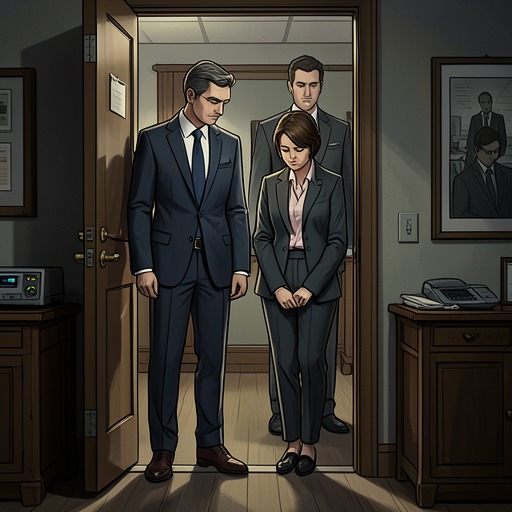
As Paul comes through the entrance, someone walks toward him. In the light from the doorway, he recognizes Sophie Pettingell. She sees him shortly afterward and quickens her pace, trying to get past before he notices her, but he catches sight of her and greets her. Their meeting takes place at the threshold, between the lit interior and the road outside, and begins with mutual recognition rather than an arranged appointment.
The pizza becomes a small obstacle to moving on together. Paul explains that it will become soggy if it defrosts, then decides he is not hungry after all. He stoops to prop its box carefully against the wall of Highgate Community Arts Centre, likening the gesture to a druid making an offering of mistletoe, and invites Sophie to come with him. She agrees. The choice to leave the pizza marks a modest but concrete change in his priorities: the object he had stubbornly carried through his reluctant approach is set aside so the two can leave together.
Narrative significance
The centre joins the operetta notice, the uncanny appearance of exactly five pounds, and the reunion with Sophie in one compact sequence. The posted admission price supplies the detail that turns Paul’s lack of money into apparent invitation, while the open door and its yellow light give his reluctant movement a visible destination. The narrative presents the coincidence as difficult for him to resist, but the encounter’s consequence is human and immediate: he and Sophie go together to find a pub.
The building’s significance lies less in any described performance than in the events at its edge. The evidence establishes the advertised production and the price of admission, but the scene focuses on Paul’s arrival and Sophie’s appearance, not on the operetta being performed. Highgate Community Arts Centre thus serves as the setting for a transition: Paul comes toward it under a pressure he cannot explain, meets someone who had tried to pass unnoticed, and leaves the frozen pizza behind as their conversation becomes a shared evening.