John Wellington Wells
The Portable DoorJohn Wellington Wells is the senior partner of J.W. Wells & Co., an old sorcerer whose disappearance is first explained away as the consequence of a disastrous magical job. The truth is more intimate and more consequential: his nephew Humphrey Wells has turned against him, and John’s survival depends on a small gold chain entrusted to two young clerks. For years, John remains hidden in the form of a long stapler, until Paul recognizes him and helps release him. His return ends Humphrey’s immediate advantage, but it also opens a wider inquiry into complicity within the firm.
Identity and Background
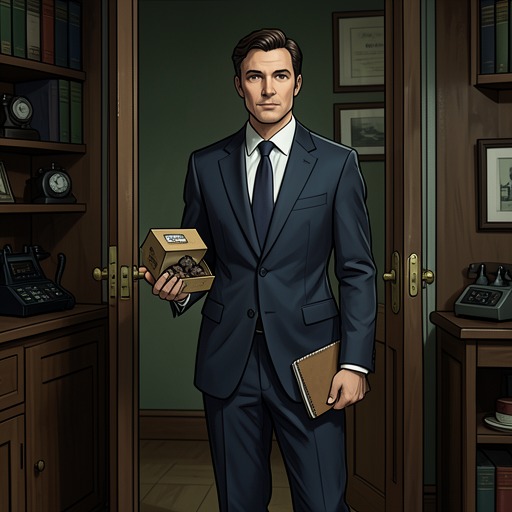
In the account Pip gives of the past, he and Arthur are young clerks who have recently completed their indentures at J.W. Wells & Co. By then they have spent two years at the firm and know enough of its secretive work not to be surprised when John summons them with a mysterious request. John is their senior partner, and, according to Pip, has been talking about retiring for two hundred years without ever doing so. That long-delayed retirement is not merely a workplace joke: Humphrey has grown impatient waiting for it, while John has no intention of handing the business to a nephew whose conduct he considers unethical and wicked.
John’s caution about Humphrey is grounded in an established conflict between them. He has watched his nephew’s methods and objects to the kind of business he pursues. Pip and Arthur share that judgment. The older partner’s refusal to retire therefore has both a personal and a professional dimension: he distrusts Humphrey’s character and fears what he would do with control of the firm.
The Talisman and Disappearance
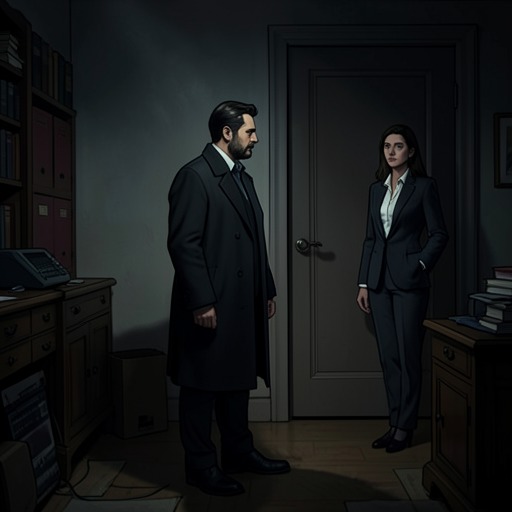
When John learns that Humphrey is plotting with other partners to get rid of him, he entrusts Pip and Arthur with a powerful magical object. It is small and light enough to fit in a waistcoat pocket or hang from a watch-chain, but John believes it is the only magic powerful enough to rescue and free him if Humphrey traps or transforms him. He orders the clerks to keep it safe at all costs. The chain’s modest size contrasts with the scale of the danger it is meant to answer: an unobtrusive object becomes the essential safeguard against the firm’s internal conspiracy.
Not long after the meeting, John disappears. The explanation given around the office is that a job involving a love philtre has gone disastrously wrong and that John had to be sacrificed to the Evil One. Pip and Arthur reject this account because John had already warned them of Humphrey’s plot. They conclude that Humphrey has done something terrible to their senior partner and that they must discover what happened and put it right.
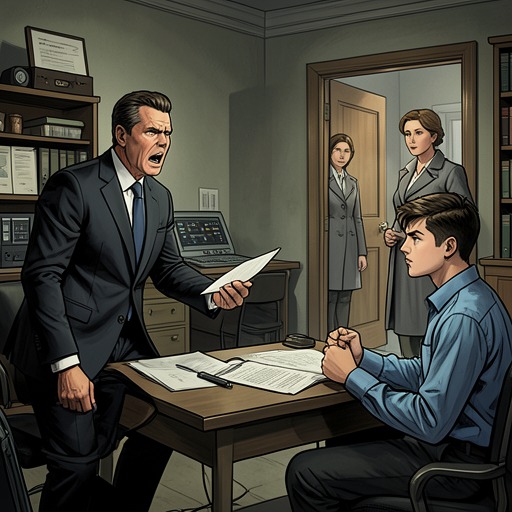
Humphrey soon summons the clerks and demands the talisman. He offers them money, promotion, and partnerships; when they refuse, he threatens them, but ultimately lets them leave without using the spells that could have forced their surrender. Later, during a clear-out of the strongroom, they find a cardboard tube containing a rubber mat shaped like a door. They test the magical door cautiously, directing it to their lodgings. Once inside, they discover that the real door out of the rooms is missing. Humphrey appears through the magical doorway, tells them they know too much and have refused to hand over the talisman, then shuts the door, leaving them trapped in a room with no exit. John’s disappearance and the clerks’ imprisonment are thus linked: the same scheme that isolates him also silences the people entrusted with the means to save him.
Hidden in the Long Stapler
Humphrey later admits that he has carried the gold chain for a hundred and thirty years without knowing what it was. That remark reveals the irony at the centre of John’s concealment: the object entrusted to protect him has remained close to his enemy, while its purpose and its owner have been forgotten. John, meanwhile, has been transformed into the long stapler that repeatedly appears and disappears around the office.
The transformation is not immediately legible. Paul sees the stapler’s ordinary reflection in the mirror-polished table, but the reflection also shows a tiny bald man in a black frock coat and grey striped trousers, crouched and waving. In the same reflective surface, a transformed being can be distinguished from the everyday object it seems to be. John then speaks faintly inside Paul’s head, directing him to lay the chain over the stapler when the spell breaks. The recognition and instruction turn the chain from an unexplained relic into an instrument of rescue.
As Paul falls from his chair, he flings the chain toward the stapler. It strikes and wraps around the object, producing a flash of blue light; Humphrey drops his sword, and John steps down from the table in human form. He thanks Paul and immediately acts. The release is not simply a return to his old appearance: it gives John the chance to reverse Humphrey’s control and take charge of the room again.
Return and Continuing Investigation
Paul later explains to Sophie that John had been the long stapler and that the reflective table had shown his real form. In Paul’s account, John frees himself, deals with Humphrey, and uses magic against him. The scene’s aftermath confirms John’s return to active power: Humphrey is restrained by a snake that appears in the room, while John has also restored other people and objects affected by the events. His rescue therefore changes the balance of power, but it does not make the firm’s problems disappear.
At a subsequent meeting, John says that his observations while he was a stapler, combined with what he has learned since returning, suggest Humphrey did not act entirely alone. Another partner may have joined the plot or known of it and done nothing. Rather than question the partners himself with Dragon-dropping beans—which reveal what people mean—John recognizes that his own involvement could make the inquiry look like a pretext for removing someone he dislikes. He instead asks Sophie and Paul, who have no such preference, to use the beans and tell the truth. His return thus leads from the recovery of one endangered senior partner to scrutiny of the firm’s wider loyalties. The evidence establishes that John begins this investigation; it does not disclose its final findings.