Paul Carpenter–Sophie Pettingell relationship
The Portable DoorPaul Carpenter–Sophie Pettingell relationship is the developing partnership between two colleagues whose shared danger, awkward silences, and entanglement with magic culminate in a love they affirm as their own rather than the product of a potion. Its decisive turn comes when Paul recognizes that his feeling is not his habitual wish to have a girlfriend, and Sophie later insists that she loved him before any philtre could influence her. The relationship thus becomes both an emotional resolution and a question the story takes seriously: how can love be trusted when magic can imitate it?
A partnership forged in danger
Paul and Sophie’s bond begins within a working relationship, but their experience of danger gives it an intimacy neither can treat as ordinary. On the night they were locked inside the building, Paul charged through it carrying a spear to try to save Sophie from Goblins holding knives at her throat. The ordeal brought them into the same crisis before they understood that magic was real or that they themselves had magical abilities. Their new employment also placed them inside a larger supernatural system: they believed they were caught up in its strangeness indefinitely, with the possibility of advancement if they worked hard and kept out of trouble.
That shared history makes their subsequent distance more than a passing workplace awkwardness. After the night of the attack, they did not speak properly. Paul has also discovered a powerful magical advantage of his own, which might help them escape their predicament or shift its balance in their favor. Yet instead of discussing that possibility together, they sit on opposite sides of a desk and labor over printouts. The contrast is telling: they have faced a physical threat side by side, but a personal disappointment leaves them unable to cross the much smaller distance between them.
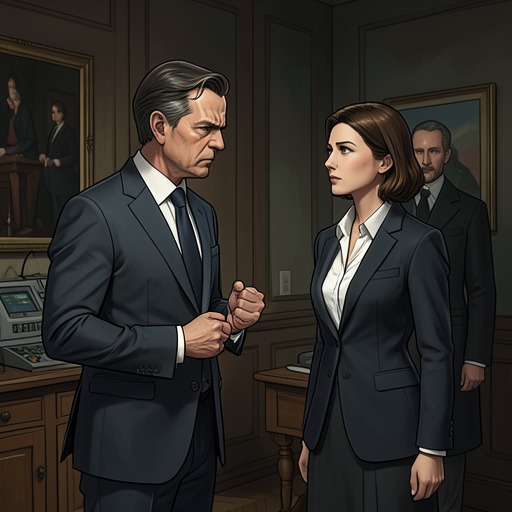
The immediate strain is Sophie’s interest in another man, Shaz. Paul sees her new attachment as the reason they have become so remote from each other, and his distress sits beside his awareness that their work and the company’s secrets are pressing in on them. Their situation is therefore not simply a choice between romance and work. The supernatural responsibilities they have acquired are already binding them together, even as their private feelings threaten to pull them apart.
The first steps back toward each other
When Paul and Sophie are again out together, Paul notices that people in the street are turning to look at her. He senses tension gathering and tries to defuse the moment with a clumsy question about how things are going. The exchange is small, but it marks a change from the frozen quiet of their desk work: he attempts to address the distance rather than leave it untouched.
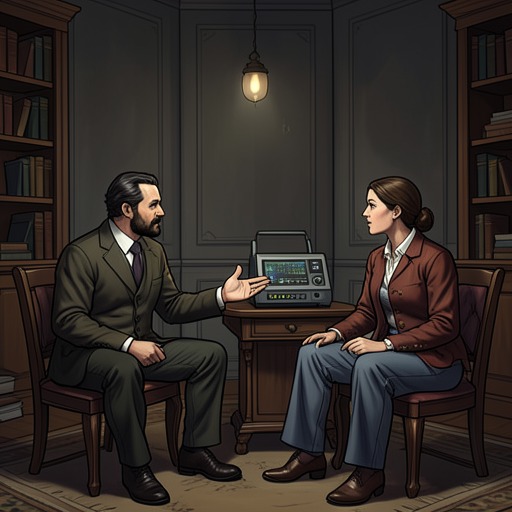
The more substantial opening comes when Sophie proposes that they stay where they are and have another drink. Paul experiences the suggestion as a sudden easing of pressure and accepts. Over a half of Guinness, the conversation expands beyond casual pleasantries. Sophie speaks critically of the men running their work, including Dennis Tanner, and admits that she and Paul have little power to change the situation. Paul tells her that he is unhappy with it too. Sorting the Mortensen printouts had been more bearable before they understood what the papers meant; knowledge has made their involvement harder to avoid, and he does not want to be drawn further in.
He also tells Sophie about his encounter with Dennis Tanner’s mother, but edits the account. He relocates the meeting from Ankara to a Starbucks in Camden Town and omits both the portable door and the unusual beans. This selective disclosure shows that the reconnection is real but not yet complete: Paul is willing to confide in Sophie, while withholding the very magical details that might most fully explain his experience. Their conversation does not resolve their circumstances, but it restores a form of candor between them and prepares the ground for a more personal recognition.
Recognition and the question of magic
Paul’s feelings become clear to him while he and Sophie consider the unhappy outcome facing a film star. Sophie says that the situation could have been worse for them. Paul imagines that, without Dietrich Wurmtoter’s timely intervention, he and Sophie might have been walking together as a couple. He immediately recognizes why that possibility troubles him: a relationship formed under those circumstances would not have been right if he truly loved her. He understands that this is no longer his familiar, indiscriminate longing to find someone simply because everyone else seems to have someone. Sophie, specifically, is the person he wants.
The recognition carries an uncomfortable complication. Paul remembers the Valentine Express bottle and the earlier scheme involving Ashford Clent. The presence of a love philtre means that an apparent attraction cannot automatically be taken as proof of authentic feeling. This doubt shadows the relationship even after Paul has named his own love. When Sophie acknowledges that she had put the philtre in his tea, he is so shaken that he grabs the back of his chair to steady himself and can manage only a startled response. He does not immediately offer the reassurance he later imagines he should have given her; Sophie, looking down at the rug, says that she ought to apologize.
The confession does not end in withdrawal. Sophie kisses Paul, and for him the moment is overwhelming. Yet the question of magical influence returns later, when he wonders aloud whether she could have drunk some of the potion accidentally before adding it to his tea on the train. He reconstructs the earlier circumstances: he had put the substance into one glass of champagne for the scheme involving Ashford Clent, and remembers Sophie asking for a drink, but cannot be certain that he warned her not to use the other glass. The uncertainty matters because it leaves room for doubt about the beginnings of their attraction without proving that the potion caused it.
Choosing each other beyond the philtre
When Paul considers whether events should be undone, Sophie rejects the idea that preventing their confinement would have been a simple correction. In her reasoning, without the strange room they would not have encountered the two clerks who needed rescue, and the Goblin woman would not have been reunited with her boyfriend. More personally, she tells Paul that she would still love him even if she had never put the philtre in his tea. Her claim separates the relationship from the magical scheme: she does not deny what she did, but insists that the potion is not the source of her love.
That distinction is tested again when Sophie comes under the philtre’s influence. Paul insists that what she feels in that state is what the potion makes her think, and says that he must act because otherwise she will remain under its control. Sophie answers that she loves him, then clarifies that she loved him before the philtre. Paul struggles to accept this, suggesting that what she felt earlier might have been temporary or affected by exposure to fumes. Sophie stops his evasions by asking him to say whether he loves her. He answers yes, and she kisses him. The exchange joins affection to a demand for clarity: Paul cannot dismiss her feelings as magic while avoiding an honest statement of his own.
Their relationship is not presented as free of hesitation after this affirmation. Four days later, on their first Saturday together, Paul still has something he needs to ask. He briefly considers using the portable door to go back a few seconds and avoid the question, but decides that doing so would be cheating and that he is finished with that kind of evasion. He asks whether Sophie drank any of the potion before putting it in his tea, recalling the uncertain champagne-glass episode. Sophie tells him the truth and asks whether he believes her. He thinks before answering yes. Her response—that he had not really wanted her to tell him—recognizes that trust can involve accepting an answer even when certainty is uncomfortable.
Fate, hindsight, and a shared future
The paired keys give Paul and Sophie a further reason to interpret their partnership as more than coincidence. When Sophie wonders how anyone could have known they would find the keys together, Paul suggests that the keys may have been hidden so Humphrey Wells could not reach them, and that this is why the two of them had to retrieve them. Sophie points out that they had possessed the sword-shaped objects for ages and had only realized their feelings that day. Dennis Tanner’s mother counters that their attraction had been obvious for weeks. Paul goes further, speculating that the arrangement reaches back much earlier and that they were somehow destined both to find the keys and to find each other.
The exchange leaves destiny in the realm of belief and interpretation, not settled explanation. Paul himself blushes and quickly downplays the personal significance of what he has said. Dennis Tanner’s mother treats the pair’s attachment as visible in their behavior, while Sophie is surprised that anyone could have anticipated it. Their competing accounts—an obvious romance, a sudden realization, or a long-laid magical design—preserve the story’s uncertainty about when their relationship truly began.
The relationship’s ending is nevertheless affirmative. Paul asks the difficult question about the potion rather than revising the past through magic; Sophie answers, and he chooses to believe her. Their shared life is not declared free of supernatural complications, nor does the evidence settle every ambiguity about the potion’s earlier effects. What changes is their willingness to face those ambiguities together. The keys, the earlier rescue, and the potion all make their intimacy part of the magical plot, but their final commitment rests on reciprocal recognition: Paul names his love, Sophie says hers preceded the philtre, and both remain present for the uncomfortable questions that follow.