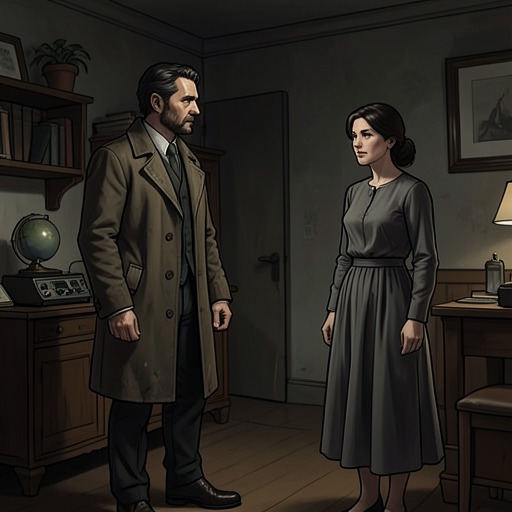
“The weak are destroyed by the strong”
The Power of the Dog (Thomas Savage Edition)“The weak are destroyed by the strong” is Johnny Gordon’s name for an inexorable naturalistic principle: vulnerability does not guarantee protection, and those with power can dispossess those without it. The phrase links a private response to death with a public scene of forced removal, making it a bleak measure of how suffering and power shape his view of the world.
The Principle in Johnny Gordon’s Thoughts
The phrase appears during a period of severe change for Johnny Gordon. In the year after Peter tells him, “You taught me,” Johnny does not drink or sing; he grows gaunt, withdraws from other people, and is no longer called by his familiar name. Late one fall afternoon, after returning from delivering a woman’s dead child, he thinks of the child as lucky: it will never fail or cower before the principle that the weak are destroyed by the strong. His formulation makes death seem like an escape from a life in which vulnerability invites defeat.
Dispossession as Evidence
That night, Johnny tells Rose Gordon Burbank that he saw Indigenous families driven from the last of their land in the valley. He had seen the dust raised by their buggies and thin saddle horses as thirty families were sent to the reservation, where they became wards of the government and objects of stingy charity. The scene gives the principle a concrete political form: the strong dispossess the weak, and some people are singled out for that treatment. Johnny’s observation joins the dead child’s imagined future to the families’ actual loss of home and land without suggesting that their circumstances are identical.
Meaning and Limits
Rose answers that perhaps, in some ways, the families will be better off. Her tentative response introduces a competing possibility, but it does not undo the dispossession Johnny has witnessed. The phrase therefore functions less as a detached maxim than as his grim interpretation of two encounters with vulnerability: a death in childbirth and the removal of thirty families. By placing these reflections close together, the narrative shows how Johnny reads personal grief and collective injustice through the same stark relation of strength to weakness.