Alcoholism and Its Destructive Effects
The Power of the Dog (Thomas Savage Edition)Alcoholism and Its Destructive Effects is a recurring force in the novel’s family histories and present conflicts. Johnny Gordon’s drinking is associated with public humiliation and a death by suicide; Rose Gordon Burbank’s dependence develops amid isolation and Phil Burbank’s sustained pressure; and Phil, who drinks sparingly, turns his awareness of Rose’s drinking into a means of influencing Peter Gordon. The pattern connects private suffering to a wider contest over who can define and control another person’s weakness.
A Pattern Across Two Generations
Alcoholism enters the story through Johnny Gordon, a doctor who cannot resist liquor, and later becomes part of the history Peter carries into the Burbank household. Peter tells Phil that his father drank heavily toward the end of his life and then died by suicide. The disclosure gives the father’s drinking a painful place in the son’s family memory: Peter knows both that his father drank and that this was not how he had always been. He says his mother did not use to drink, marking Rose’s later dependence as a change rather than a fixed trait.
The novel does not make the two drinking histories identical. Johnny’s drinking is presented alongside his humiliation and eventual death, while Rose’s drinking grows within a household where she feels watched, exposed, and increasingly unable to rely on her own footing. In both cases, alcohol is bound up with relationships and social vulnerability; it does not operate as an isolated habit detached from the surrounding pressures.
Johnny Gordon: Drinking, Humiliation, and Loss
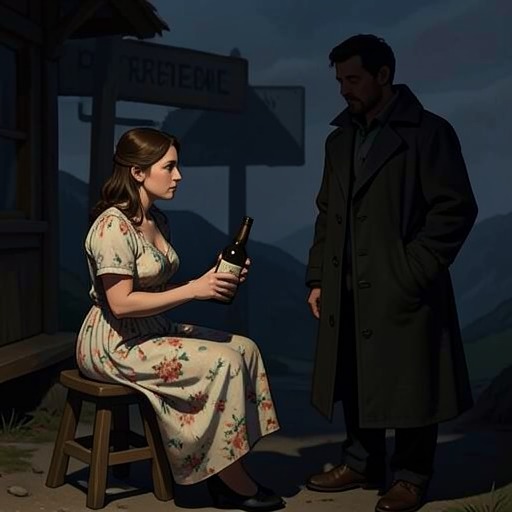
Johnny’s ability as a doctor makes his decline especially stark. He has an exceptional gift for diagnosis, visible in his capacity to recognize what is wrong with a patient, and the narrative suggests that he passes this faculty to Peter. Yet professional insight does not protect Johnny from his own vulnerability to liquor. Phil humiliates and abuses him in a barroom, where Johnny is drunk and unable to resist drinking. The account links that encounter to a longer aftermath: Johnny dies by suicide a year later, described as corroded by the humiliation.
The connection is significant without reducing Johnny’s death to alcohol alone. His drinking places him in a vulnerable position in the barroom, while Phil’s cruelty supplies a further injury that the narrative associates with the eventual tragedy. Alcohol thus intensifies exposure and consequence, but the account also assigns weight to how others treat the person who drinks. Phil’s own conduct matters: he is not merely observing a weakness but actively humiliating a man he knows cannot resist liquor.
Johnny’s relationship with Peter preserves a different part of his legacy. In the shed attached to the inn, Peter studies his father’s medical books and makes a slide of a bacillus that kills rodents. Johnny recognizes the boy’s work and, in an unusually direct exchange, tells Peter that he loves him; Peter returns the declaration. The scene places medical knowledge and affection beside the family history of drinking. Peter inherits neither an uncomplicated idealization of his father nor only the knowledge of his final years: the books, diagnostic curiosity, and remembered bond remain part of what Johnny passes on.
Rose Gordon Burbank: Dependence and Isolation
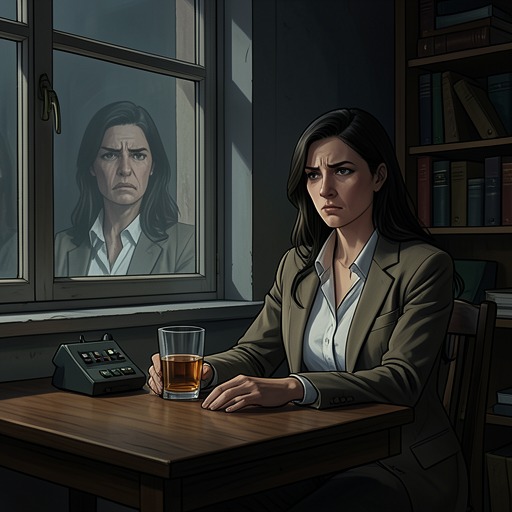
Rose’s drinking develops after she marries George Burbank and moves into the Burbank household, where Phil makes her life miserable through repeated, often concealed acts of mockery. She fears that he may expose her drinking to George, but comes to suspect that his silence is itself part of the pressure. She thinks he understands that what remains unsaid can weigh more heavily than an explicit accusation, and she recalls his watchful patience. Her drinking takes place in private, especially in the pink room, as she tries to keep her vulnerability from becoming a public confrontation.
Her dependence worsens over the summer. She has not been entirely sober for weeks, and George’s kindness has kept him from speaking about it. Rose imagines that he may eventually divorce her, and fears that discovery of her petty theft of thirty dollars will become a final breach. The prospect of losing her marriage compounds the drinking’s effects: she sees herself as dishonest and diminished, while the home that might offer stability has become a place where she anticipates judgment and tries to conceal what is happening.
The contrast with Johnny’s story is important. Rose’s drinking is not introduced as a longstanding trait; Peter explicitly remembers that she did not drink before. Her change unfolds after the marriage and amid Phil’s harassment, while George’s kindness offers some restraint against open conflict but does not remove her fear. The narrative therefore traces dependence through a sequence of isolation, concealment, and worsening insecurity rather than presenting it as a sudden or self-explanatory failing.
Phil Burbank’s Use of Rose’s Drinking
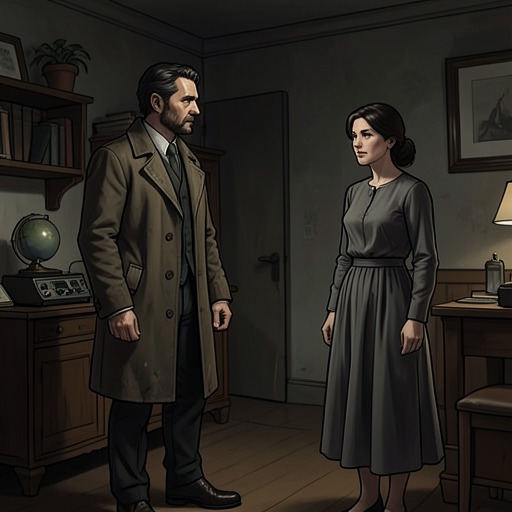
Phil does more than notice Rose’s condition. When he tells Peter that his mother has been drinking, he watches for the boy’s reaction and interprets Peter’s brief wince as evidence that he can safely continue. Peter confirms that he knows his mother has been drinking through the summer, but also says she never used to drink. Phil then turns the exchange toward Johnny, asking about Peter’s father and learning that Johnny drank heavily before his suicide. Peter answers without disguising the fact, and Phil briefly softens, offering sympathy and reassurance.
The exchange carries a double meaning. Phil’s expressions of understanding may sound sympathetic, yet the surrounding account makes clear that he is testing Peter’s response and calculating how much to say. The afterword describes Phil’s broader design: he hopes to draw Peter away from his mother so that Rose, feeling deserted, will rely more heavily on alcohol, and George will eventually cast her off. Phil’s effort to befriend Peter is therefore entangled with a plan that treats Rose’s dependence as a pressure point. His awareness of her drinking becomes a tool for separating mother and son, not an attempt to help her.
This strategy also reveals a contrast between Phil’s own relation to alcohol and his treatment of others. He drinks very sparingly because he fears what he might disclose if he spoke freely under its influence. He nevertheless uses his restraint and observation to probe other people’s vulnerabilities. The novel presents him as someone who knows that intoxication can loosen control, yet directs his attention toward the damage other people’s drinking makes possible.
Consequences and Narrative Significance
Alcoholism links the Gordon family’s past to the conflict at the ranch without making Peter simply repeat his parents’ history. He has witnessed the consequences of his father’s drinking and recognizes the change in his mother, but he is also a careful observer who acts with knowledge inherited from Johnny’s medical books. In the closing pages, Peter recalls learning from those books how an animal disease could enter a person’s bloodstream through a break in the skin when handling an infected hide. That knowledge belongs to a separate chain of events from alcoholism, but it sharpens the contrast between a harmful legacy and a usable one: Peter inherits both painful family knowledge and the means to act.
The novel’s treatment of drinking is consequently relational and consequential. Johnny’s alcohol use accompanies vulnerability to Phil’s humiliation; Rose’s developing dependence becomes more dangerous under the pressures of concealment and deliberate manipulation; and Peter’s understanding of both histories shapes what he sees at home. Alcohol does not explain every action or determine every outcome. Rather, the recurring condition exposes how humiliation, isolation, kindness, and calculated cruelty can alter the lives of those who drink and of the people around them.