Book of Common Prayer
The Power of the Dog (Thomas Savage Edition)The Book of Common Prayer enters Peter Gordon’s hands during the day of Phil Burbank’s funeral and gives him a text through which to measure the deaths and altered lives around him. He first consults it as a practical guide to burial rites; later, a Psalm’s words return in the moonlit scene of his mother and George Burbank together. Peter then imagines taking the verse from the book and pasting it into his scrapbook. The object’s significance lies in this passage from public ritual to private interpretation: its printed prayers help Peter frame both his father’s sacrifice and Phil’s death as part of his mother’s deliverance.
Discovery and Reading
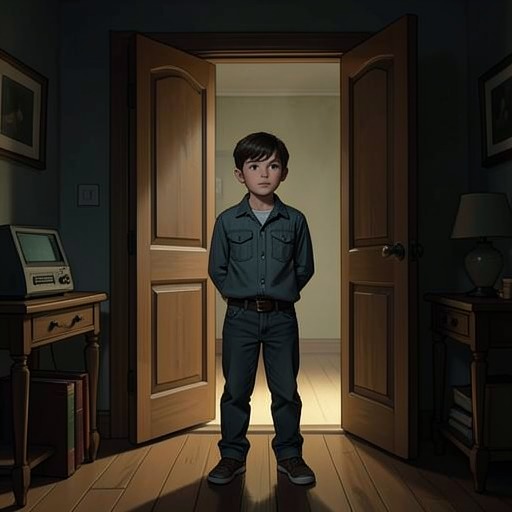
While waiting at the ranch during the funeral, Peter browses the living-room bookcase as the light fades. Its shelves place books of dreams beside books of facts: the memoirs of a Russian grand duchess stand next to a study of Western grasses, with a modern edition of Hoyle’s card games nearby. The Book of Common Prayer is among them. This mixed collection gives the prayer book no special display; Peter notices it while searching through an ordinary household shelf, then draws it out because he supposes it will be used at the funeral in Herndon.
The book falls open to Psalms, Day 6. Peter sees that the date is September 4 and turns back, then reads the Psalms of Evening Prayer. A verse catches his attention as strangely appropriate. He continues into The Order for the Burial of the Dead, also finding it appropriate, and is struck by how brief it is. The printed service is not simply a text to be read aloud: Peter tests its duration against the practical demands of a funeral, imagining the pauses, the coffin, and the time required to carry it in and out.
A Funeral Measured in Time
Peter estimates that reading the burial service slowly, as the old priest might, would take fifteen minutes by the big clock. With the coffin’s arrival and departure, he thinks the service could occupy about half an hour. He compares this imagined rite with funerals he had watched from the windows of his room in Herndon: processions traveling the mile to the cemetery on the hill, the sun flashing on bottles and mason jars holding the rotting stems of flowers, and a hearse moving so slowly that the journey itself took roughly half an hour. In winter, he remembers, they hurried it somewhat; this day, however, is warm.
The phrase “appointed to be read at the grave” leads him to calculate another fifteen minutes for the graveside words and then the return trip in the empty hearse. He recalls the blue Buick hearse, new that year, and the newspaper account of Baker the undertaker and his family driving the old hearse to Chicago to collect it, picnicking along the way and returning with small adventures for the Herndon Recorder to describe. Peter extends his calculation beyond the liturgy to the coffee, sandwiches, greetings, and good-byes that would follow. By his estimate, the whole funeral day would end after five, at dark. The prayer book thus anchors his attempt to make a solemn occasion legible through its sequence and duration, even as the ceremonies exceed the words printed on its pages.
The Psalm in the Moonlight
That night, after Rose Gordon Burbank and George return long after supper, Peter prepares for them to come in. When the dogs bark, he combs his hair again, opens the window, and watches from upstairs. At first, his mother and George are hidden in the hill’s shadow; then they move into the moonlight. Peter sees George stand still, take Rose, and kiss her. He understands the scene as the true beginning of his mother’s life, and sets that beginning against the fact that his father, Johnny Gordon, lies beneath another hill in Beech, under paper flowers.
The dogs remain in the shadows, whining softly before becoming still. In that quiet, Peter whispers the Psalm verse that had moved him earlier: “Deliver my soul from the sword,” followed by “My darling from the power of the dog.” The wording has changed function. Earlier, Peter encountered it on the page while reading in preparation for a funeral; now he speaks it into a scene of new intimacy and thinks of his mother as delivered. The prayer’s movement from danger toward protection gives Peter a language for joining the funeral behind him to the future he sees opening before Rose and George.
Scrapbook and Final Meaning
Peter wonders whether the Prayer Book is often used and whether he might cut out the verse and paste it into his scrapbook. He imagines it as a better final entry than the rose leaves already there: the leaves are still red but have lost their scent. The contrast is between a keepsake whose beauty has faded and a printed passage that Peter believes can hold the meaning of what has happened. He does not actually remove the verse; the book remains the source from which he reads and speaks it, while the scrapbook is the place where he considers preserving it.
Peter understands Rose’s deliverance as owing both to his father’s sacrifice and to the sacrifice he himself has found possible through knowledge gained from his father’s large black medical books. That knowledge explains the otherwise veiled conclusion: Peter had learned that anthrax, called blackleg locally, can pass from an infected animal hide into a person’s bloodstream through cuts or breaks in the skin. Phil is dead. The prayer book does not reveal the means of his death, but its verse supplies Peter with a final language for the result. As an object, it connects funeral observance, remembered scripture, and Peter’s private account of protection and loss without making those meanings identical: the public burial service marks death, while the Psalm becomes, for Peter, a declaration that the threat to his mother has ended.