Edward Nappo
The Power of the Dog (Thomas Savage Edition)Edward Nappo is an Indigenous father and the son of a chief whose family was driven from its land and confined to a reservation. He tries to pass on memories of the northern homeland to his son, then takes the boy on a difficult journey to see it. Their return is turned back at a gate by Phil Burbank, making Edward’s story a direct encounter between ancestral memory and the restrictions that remain in force after forced removal.
Identity and Family
Edward’s father was chief before the family was sent to the reservation. Edward believes that, had the removal not taken place, he himself would have been chief. In his dreams he sometimes thinks of himself in that role, and his stories to his son preserve the family’s connection to a country the boy has never seen. His wife, Jennie, had been pregnant in the buggy as the family was driven south, so their son was born away from the land Edward describes.
Edward keeps a small .22 rifle that belonged to his father. It is the last thing of his father’s that was not burned at his death, and Edward values it as both a useful possession and a family inheritance. The reservation forbids firearms, however, and meat is distributed at the government store. The rifle’s presence in the shed where the family’s cow lives quietly records the distance between the rules imposed on the family and the objects through which Edward maintains a personal tie to his father.
Jennie earns a living tanning deer hides left at the store by white hunters and making gloves and moccasins. She is practical about the family’s circumstances. When Edward tells their son about the northern land, she sometimes leaves, objecting to stories that could make the boy sad. Her caution is sharpened when the cow becomes sick: the animal needs care, and a journey with it cannot be undertaken quickly or easily. Edward nonetheless continues to describe the country to his son, including its summer fields, wildlife, and mountains.
Dispossession and the Reservation
The family’s confinement follows the removal of the last Indigenous people from the valley. They travel south in worn vehicles and on old horses toward the arid flats of southern Idaho, where the soil is poor and water from shallow wells smells of sulfur. Edward’s family history is therefore joined to a physical displacement from a more northerly homeland, rather than to a voluntary move.
On the reservation, restrictions govern movement and everyday life. Leaving requires a permit, granted only for a pressing reason; the authorities assume that residents have nowhere else to go and no one to shelter them. The rules also prohibit liquor and firearms. Edward’s later attempt to travel north takes place within this system of controlled mobility, while the private boundary he encounters on the way shows that official confinement is not the only barrier between his family and its former land.
The Journey North
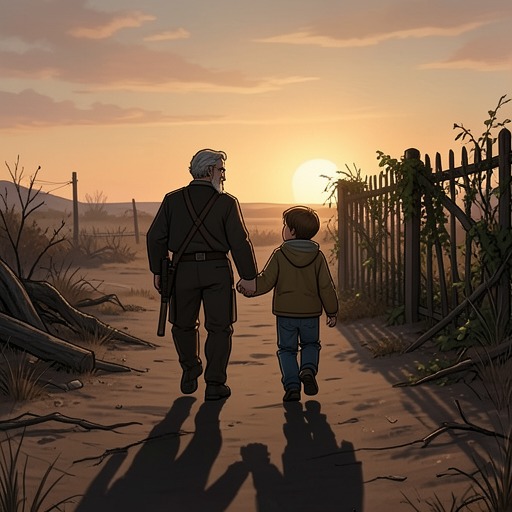
During the cow’s illness, Edward and his son wait with the animal while tending a fire in the shed. Edward uses that time to tell more stories of the land to the north. His son rubs a magic ring made from a horseshoe nail that Edward has given him and suggests that they run away. Edward knows that Jennie would point out the practical obstacle: with a sick cow, they could not travel far or fast. Still, he entertains the boy’s hope that they might at least look at the country, and that people there might welcome the son of a chief.
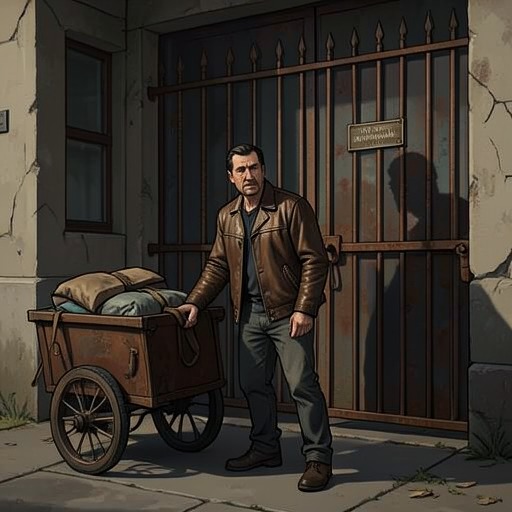
Edward sets out with his son in a cart drawn by an old horse. As they approach a gate he does not remember, the boy sits upright while Edward straightens his own posture and brushes the dust from his black hat with his palm. Their preparation gives the meeting a formality: Edward presents himself and his son with the composure he associates with their family standing. They have been walking before they see a man near the large gate, and then sit in the cart under his watch for about twenty minutes.
The Gate and the Return
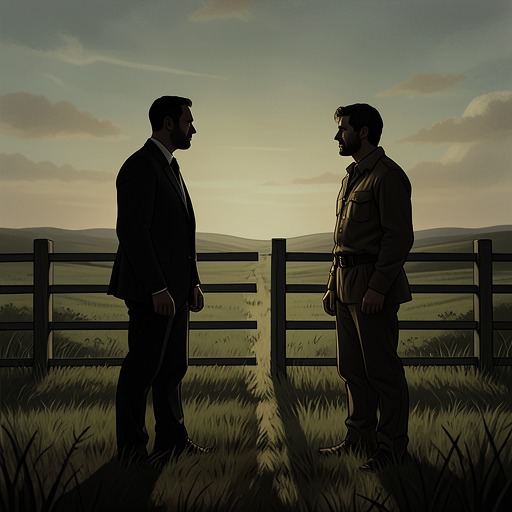
The man at the gate is Phil Burbank. Edward explains that his father was chief, but Phil rejects the importance of that history and orders Edward and the boy to leave. Edward asks only to stay for a couple of days, long enough for the horse to rest. He also offers a box of gloves, worth five dollars, but Phil refuses both the offer and the request. Edward turns the horse and cart back toward the reservation, two hundred miles away, uncertain whether the old horse can make the return journey.
On the way back, Edward tells his son that at least they have seen the mountains, his father’s mountains. The boy’s cap has slipped over his forehead, and Edward admits that he could do nothing. The episode leaves Edward with the knowledge that the journey has reached its limit at a gate controlled by someone who dismisses his ancestry as irrelevant. His effort has not secured a stay or restored access, but it has allowed his son to see the landscape Edward had described.
Rose’s Invitation and Narrative Significance
Later, Rose sees Edward and his son again on the road. She recognizes their cart and runs out to stop them, explaining that she had seen them earlier but had not known Edward was the son of the chief. Her husband had known Edward’s father, and she tells Edward that they would be proud to have the family camp with them. The invitation contrasts with Phil’s refusal, but the scene establishes the offer rather than its outcome; the evidence does not show whether Edward accepts.
Edward’s part in the story connects private family memory with the larger history of Indigenous dispossession. His son’s ring, his inherited rifle, the stories of the northern land, and the distant mountains each carry a different strand of inheritance: objects and memory survive, while access to the homeland remains restricted. The contrast between Phil’s dismissal and Rose’s invitation also shows that white responses are not uniform, without undoing the power imbalance that has shaped Edward’s journey.