George Burbank
The Power of the Dog (Thomas Savage Edition)George Burbank is the steady, taciturn brother who helps run the Burbank Ranch alongside Phil Burbank. In a household and workplace shaped by Phil’s forceful personality, George’s decency, practical competence, and willingness to try to understand other people offer a quieter form of authority. His story is not one of dramatic self-assertion: it emerges through the work he takes responsibility for, the silences others notice, and the careful gestures by which he tries to make a family with Rose Gordon and Peter Gordon.
Identity and Family
When the story opens in 1924, George is thirty-eight and Phil is forty. Their parents, the Old Gentleman Burbank and the Old Lady Burbank, have retired to a hotel suite in Salt Lake City after an unspecified conflict with Phil. The brothers now run the family’s important ranch in southwestern Montana, near Beech. They still share a bedroom, as they have since childhood, a sign of how thoroughly their adult lives remain joined by habit and family history.
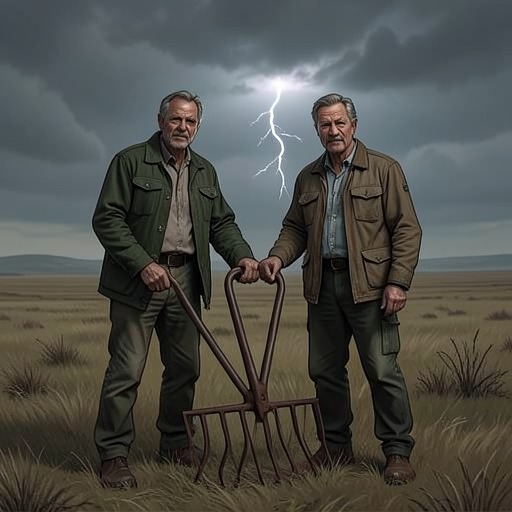
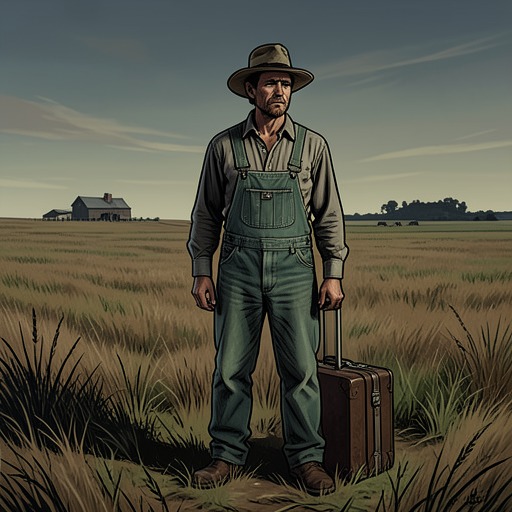
George is stocky and, in Phil’s deliberately irritating nickname for him, a target for teasing. He is also described as slow to learn but with a good memory, sympathetic toward people, and reluctant to blame anyone. Against Phil’s mercurial energy and cruelty, George is phlegmatic and kind. That contrast can make the brothers look like simple opposites—weak and strong, good and evil—but the novel’s account of their shared past makes their bond and their differences more complicated than such a division suggests.
At school, Phil was the bright one and George the plodder; George failed out of a California university the same year Phil graduated. Yet the brothers remember their younger years together, including high-school companions and Phil’s tricks on other students. During roundup, they ride together and talk as if renewing an acquaintance, revisiting old days even while their adult responsibilities keep them in close partnership. Their relationship contains affection and familiarity as well as an unequal balance: Phil likes provoking George, and George’s public embarrassment can become part of Phil’s entertainment.
Work and Authority at the Ranch
The brothers divide the ranch’s labor by function. George sits at the head of the table, keeps the books, negotiates with buyers, writes letters, answers the telephone, and keeps the Reo running. Phil, by contrast, oversees haying, equipment, irrigation, and the practical preparations for the seasonal work. George’s contribution is less visible in the fields, but it is essential to the operation: his work connects the ranch’s production to its records, communications, transport, and business dealings.
The seasonal rhythm makes that division consequential. Phil schedules haying to begin as soon as possible after U.S. Independence Day (July 4), and the work then occupies the men for ninety days. The mowing crews operate dangerous equipment: the seven-foot cutter bars can cause severe accidents, and the men who drive the machines sharpen them after work. Their risk and skill bring them extra pay and privileges, including newer tents and first choice of the meat. These details place George’s managerial and bookkeeping responsibilities within a labor system whose seasonal intensity depends on specialized, hazardous field work.
George’s authority is not expressed through constant orders or expansive speech. On Sundays, when the hired men have finished feeding cattle and are free to wash, write letters, or read, they are still uneasy when he is around. His quiet presence can prompt them to look inward and reckon with their own sense of guilt. The effect is striking precisely because George seldom speaks: his silence has a social force of its own, although the account does not make him a deliberate disciplinarian.
The contrast between his work and Phil’s also reflects two different ways of inhabiting the ranch. The cowboys wear horsehide gloves to protect their hands while roping, fencing, branding, haying, and riding; Phil refuses them and scorns the protection. George, meanwhile, blushes when Phil teases him about roping in front of the hired men. The episode shows how Phil’s preference for toughness can turn even ordinary work into a public test, while George’s embarrassment does not erase his role in the ranch partnership.
Phil Burbank and the Brothers’ Shared Life
Phil’s teasing is a persistent pressure in George’s life. He needles his brother, including over their differences in temperament, and George is sometimes irritated by Phil’s habits. George is a heavy sleeper who, even in earlier years, often appears after the others have sat down to eat. His quietness can shape the room as strongly as Phil’s morning energy, though in a different way. The brothers’ intimacy is therefore neither simple ease nor open estrangement: they share work, rooms, memories, and routines, while Phil’s provocations repeatedly expose their imbalance.
George’s concern for Phil is clearest in small acts of attention. At a dinner, Rose finds herself looking toward the place Phil was meant to occupy; George meets her eyes, looking miserable, then gets up to check on his brother. Later, after Phil walks back to the house and shuts himself in his bedroom, George does something unprecedented: he opens the door without waiting for an invitation and offers to drive him to Herndon. The gestures do not explain what Phil is thinking or what the brothers say privately. They do show George crossing the usual boundary of their silence to make contact.
George also watches Phil looking across the flats toward the mountains through binoculars and notices enough to ask what is troubling him. The exchange establishes that George is attentive to his brother even when Phil’s thoughts remain inaccessible. His care does not remove the friction between them, but it prevents their relationship from being reduced to Phil’s bullying and George’s passivity.
Marriage, Rose, and Peter
George approaches Rose Gordon with a seriousness that appears in both his words and his conduct. Before proposing, he tells her that his mother would understand her as one Mrs Burbank understanding another. On a later Sunday, he asks Rose to marry him. The proposal brings Rose into the Burbank family and makes George’s wish for companionship part of the story’s central domestic change.
His account of the family’s Cabbage Dinner also reveals his awkwardness about entertaining. He suggests that dinner should be limited to Rose, himself, and Phil, rather than inviting a crowd, and recalls that his mother had been upset by the earlier occasion and needed years before she could laugh about it. George’s solution is modest and shaped by family memory: he would rather avoid repeating an uncomfortable social performance than make a grand gathering succeed. At another meal, the empty place intended for Phil troubles Rose, and George responds by going to look for him, caught between his new marriage and his enduring concern for his brother.
George recognizes that becoming Peter Gordon’s stepfather requires effort. He reasons that a boy has no automatic reason to like a stepfather, so the adult must try harder than a father might; he measures the situation by imagining how he himself would feel. This is a notably self-questioning approach to the relationship. Rather than claim affection or authority as his due, George acknowledges the distance built into the role and the work required to overcome it.
That intention does not mean he is always present. During haying, he and Peter ride off in different directions to fence haystacks, while Phil and Peter ride together in the fields. Rose wonders why it could not be George and the boy riding together, and she is left with long, apparently purposeless days while household work is handled by others. The passage sets George’s good intentions beside the practical separation imposed by ranch work. His wish to make the stepfather relationship work is real, but it does not by itself resolve Rose’s isolation or bring him and Peter into the shared time she hopes for.
Kindness and Public Conduct
George’s response to Edward Nappo and his son brings his decency into a broader social context. The valley’s Indigenous people have been forced from their land and sent to a reservation; leaving requires a permit, and permission is granted only for pressing reasons. Against that history of dispossession and restriction, George tells Rose that he has allowed the Nappos to camp on the ranch for a few days. When Phil reacts by ordering them to leave, George quietly asks him to ease up and maintains that he invited them.
The exchange shows George’s hospitality as a practical decision, not an abstract sentiment. He uses the authority available to him at the ranch to offer temporary shelter, even when Phil objects. The evidence does not establish that this act changes the larger system governing the Nappos’ movement, but it does distinguish George’s response from the hostility directed at them and connects his habitual sympathy for individuals to a concrete choice.
George is consequently more than a mild foil to Phil. His management keeps the ranch functioning, his silence can unsettle the men around him, and his efforts toward Rose and Peter reveal an understanding that affection and family authority must be earned. Yet his quietness and the routines of ranch life also limit what he can repair: he remains closely bound to Phil, frequently absent from Rose, and still learning how to reach Peter. The character’s significance lies in that tension between decency and limitation. George tries to make room for other people, but care must contend with work, habit, and the powerful family bond that has shaped his life since childhood.