Johnny Gordon
The Power of the Dog (Thomas Savage Edition)Johnny Gordon is the doctor of Beech, a conscientious physician whose kindness shapes his care for the town’s poorest patients but does not protect him from loneliness, alcoholism, or public humiliation. His life links the novel’s intimate family history to the harsher social world surrounding the ranch: after Phil Burbank humiliates him, Johnny dies by suicide, and his son, Peter Gordon, discovers his body. The medical books Johnny leaves behind become one tangible part of the connection between father and son that survives his death.
Identity and Background
Before settling in Beech, Johnny completed a medical internship in Chicago at a small hospital serving largely poor and Black patients. He was disappointed when the hospital did not ask him to stay, though he had expected that outcome. He imagined that meeting Rose earlier might have changed how he applied himself and how the hospital judged him. The director, however, regarded him as naturally kind, a quality Johnny himself had not recognized. That gap between his own uncertain view of himself and other people’s experience of his generosity recurs in his medical work.
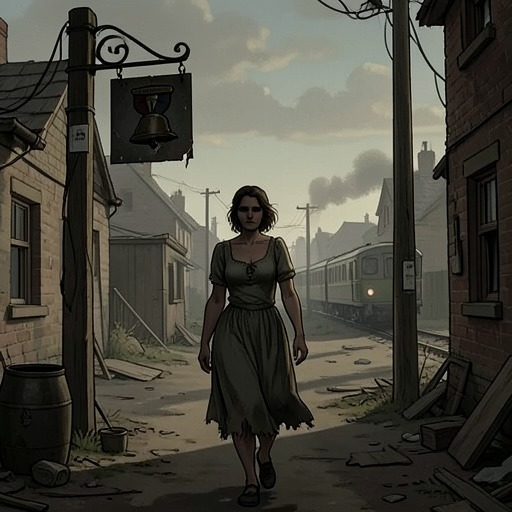
Johnny had hoped for a tender domestic life. His ideal of Rose drew partly on the warmth and fortitude he associated with the screen star Mary Pickford; as his dream developed, it took the form of a vine-covered cottage and a white picket fence. In Beech, however, he often regretted moving there. The town’s windmill behind The Inn / Red Mill had a broken mechanism and turned uselessly in every season, its squeaking disturbing the sleep of occasional travelers. After a complaint, Johnny climbed a shaky ladder to investigate it. A sudden shift of wind turned the blades toward him and damaged his coat and shoulder, after which he left the mill alone. The episode gives physical form to the futility and frustration of the life he had come to regret.
Medical Practice and Character
Johnny practices medicine among dryland farmers whose prospects have been worsened by inadequate rainfall. Unlike the large ranchers who control the creeks and river, these farmers struggle on land promoted to settlers through railroad advertising. Johnny remains faithful to the Hippocratic Oath and answers calls for help whether or not a patient can pay. He treats injuries caused by farm work and animals, attends births, and accepts that payment may come later. His visits are not only clinical: he jokes with families, celebrates the arrival of babies, and tries to ease the strain around childbirth.
The contrast between Johnny’s patients and the ranching class is social as well as economic. Ranchers travel to Herndon for medical care, combining it with shopping, restaurants, hotel comforts, and an evening at the movies. Beech offers none of that leisure or luxury. Johnny’s own practice instead takes him into the scrubbed kitchens of farmers who, despite hardship, maintain clean homes. His work is a form of service that crosses class boundaries, but it does not bring him the status or security enjoyed by the ranching families.
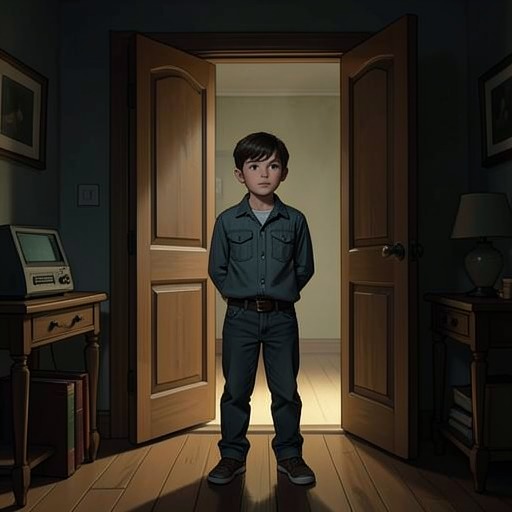
His compassion also appears in his relationship with Peter. Johnny notices his son’s interest in scientific slides and praises both his drawing and his hands. He struggles to put affection into words, reflecting that fathers may find it difficult to speak openly. He nevertheless tells Peter that he loves him. Peter answers that he loves his father too. The exchange briefly makes explicit a bond that their silences might otherwise obscure; Johnny takes comfort in his son’s response and begins to offer further advice.
Marriage, Family, and Belonging
Johnny’s marriage to Rose is marked by an unspoken strain. When he says they should never have moved to Beech, Rose looks at him pleadingly but does not answer aloud. Her silence suggests the pressure his repeated regret places on her, even as she remains part of the life they built together. His original hope for a loving home persists beside his growing sense that the town and his circumstances have failed him.
Johnny’s connection to Peter is loving but not effortless. He recognizes his difficulty speaking as something that may have been inherited from his own father, who had also been unable to express himself. The scene in which he finally tells Peter that he loves him is therefore more than a tender exchange: it is a small break in a family pattern of emotional reticence. Peter’s reciprocal declaration gives Johnny a moment of mutual understanding that is notably absent from his wider life.
Johnny’s later place in Rose’s memories is made concrete through ordinary objects and moments. When she hears the name Dr. John Gordon, she recognizes it as her first husband’s name. Recalling their early days in the country, she remembers a patient paying Johnny with two silver dollars and his delight in their sound. The memory preserves a version of him capable of taking pleasure in a modest payment, even as Rose’s later circumstances are shaped by loss and financial vulnerability.
Humiliation and Death
Johnny’s vulnerability to alcohol becomes increasingly consequential. Phil Burbank humiliates him in a barroom, and Johnny is unable to resist liquor. When Phil insults Peter, Johnny lunges to defend his son, insisting that Peter cannot be called a sissy. Phil overpowers and throws him aside. Johnny returns across the road to The Inn / Red Mill with his shirt torn, telling Rose only that he has been in a fight. The encounter turns a private family devotion into a public humiliation: Johnny acts to protect Peter, but the confrontation leaves him physically and emotionally diminished.
The novel’s retrospective account connects that humiliation to Johnny’s suicide a year later. It describes him as corroded by the episode, while also identifying alcohol as a weakness he could not master. These circumstances illuminate his decline without reducing it to a single cause. He had already felt disappointed in his professional prospects and alienated from the life he had hoped to make; Phil’s cruelty intensifies rather than creates those vulnerabilities.
Peter finds his father’s body after Johnny has taken his own life. Unable, at first, to explain what he has discovered, Peter stands silently, turning a comb over and over in his hand while Rose waits for him to speak. The aftermath extends beyond the family: neighbors and tourists come to regard The Inn / Red Mill as the place where the suicide occurred, and curiosity about the tragedy diminishes its business. Rose continues running the establishment, but the building’s reputation makes the family’s private loss part of the town’s public spectacle.
Legacy and Narrative Role
Johnny’s legacy persists most clearly through Peter. Peter inherits his father’s medical library, while his own curiosity about medicine and wild plants develops into close study and detailed drawing. The books are not a simple guarantee that Peter will repeat Johnny’s career, but they carry knowledge from father to son and connect Peter’s scientific attention to the work Johnny practiced among the farmers.
Johnny also remains present in Peter’s later dealings with Phil. When Phil asks about Peter’s father and learns that Johnny drank heavily and died by suicide, he responds with sympathy. Peter confirms the death, then accepts Phil’s expression of concern. This exchange establishes a fragile point of contact between them, even though Phil had earlier helped bring about the humiliation that shadowed Johnny’s final year. The contrast gives Johnny’s absence continuing force: his history influences how Peter is understood, how Phil approaches him, and what Peter chooses to reveal.
As a character, Johnny is defined not by social authority but by repeated acts of care: answering calls without guaranteed payment, attending births, and making an effort to tell his son he loves him. The novel places those acts beside the consequences of his drinking, his disappointment, and his exposure to cruelty. His death is both a family catastrophe and a lasting narrative inheritance, leaving Rose with the burden of memory and Peter with medical books, grief, and a father’s final declaration of love.