Mr. Burbank
The Power of the Dog (Thomas Savage Edition)Mr. Burbank is the father of Phil Burbank and George Burbank and the husband of the woman referred to as the Old Lady. A gentleman rancher rather than a working rancher or hunter, he belongs to an older generation whose habits once ordered the family home. His move with his wife to Salt Lake City marks both a withdrawal from the sons’ household and the quiet transfer of its remaining responsibilities to the next generation.
Identity and Place in the Family
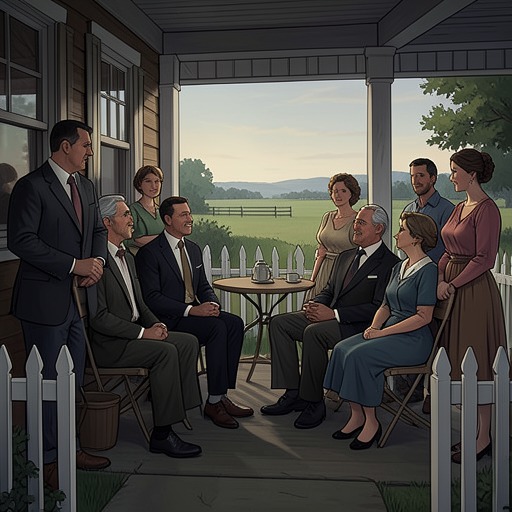
Mr. Burbank is presented through domestic habits and family exchanges more than through direct action. He and his wife leave the ranch house for a suite in Salt Lake City, where he dabbles in the stock market while she plays mah-jongg and dresses for dinner as she always had. Their rooms at the hotel preserve something of their former life: they have the hotel furniture removed and install their own, and they make friends among retired ranchers, lumber people, and mining people. The move is not simply a change of address; it places the couple among people whose experience, like theirs, reaches beyond the valley.
The family’s departure follows a history of friction with Phil. The older couple had found that they could not please him, and after unpleasant episodes, including a confrontation with him, they left the ranch. In the hotel, the two share long silences, occasionally interrupted by a brief, mutually acknowledged smile. That small exchange suggests a marriage sustained by familiarity and private understanding rather than by much spoken explanation. Their quiet companionship contrasts with the strain Phil brings into the household.
The Family Home and Its Routines
Before leaving, Mr. Burbank had always wound the large clock in the living room. His departure therefore unsettles a domestic ritual that had seemed dependable simply because he had kept it. Phil watches for the approaching hour, reading in the living room while trying not to reveal that he is waiting to see what will happen. He wonders whether George will take over, whether he should prompt him, or whether he might have to wind the clock himself; the last possibility feels like a responsibility he neither wants nor considers his to assume. The chimes eventually sound, but the episode’s emphasis is on the uncertainty created by Mr. Burbank’s absence, not on a clearly stated new keeper of the clock.
The clock gives Mr. Burbank’s former place in the house a concrete shape. Winding it was a repeated act that helped the household continue as it had before. Once he is gone, Phil’s attention to the hour makes visible how much routine had depended on the older man—and how reluctant Phil is to inherit even this modest obligation. Mr. Burbank’s role in the family is thus registered not only through conflict or conversation, but through a task whose absence makes the house feel less settled.
He was not a hunter, and Phil distinguishes him from the men who killed the other animals in the family collection. Phil assumes that somebody must have given the antelope to Mr. Burbank in an effort to curry favor. That is Phil’s suspicion, not a confirmed account of who gave it or why. The distinction nonetheless captures the gap between father and son: Mr. Burbank is associated with the standing of a gentleman rancher, while Phil measures people by practical familiarity with ranch work and hunting.
George’s Marriage and Mr. Burbank’s Response
When George’s possible marriage becomes a family question, Mr. Burbank offers a revealing defense of his son’s independence. His wife worries about the appearance of being absent from the wedding and asks George to think the matter over. Mr. Burbank replies that George has never done anything that looked funny before, so the possibility that one decision might look unusual should not determine it. He adds that Phil cares about appearances. The remark distinguishes the brothers without turning George’s choice into a family performance: Mr. Burbank does not treat social propriety as a reason to overrule him.
The exchange also shows that he is alert to the tension between what George wants and what Phil might think. His observation that Phil cares is concise, but it points to the influence Phil exerts even when he is not the person making the decision. Mr. Burbank’s response, by contrast, leaves room for George to act in a way that differs from the family’s accustomed pattern. His concern that his wife’s appeal might sound like criticism of her is also part of the scene’s restraint: important questions have circulated between them without being spoken, until the wife gives voice to what they have both been considering.
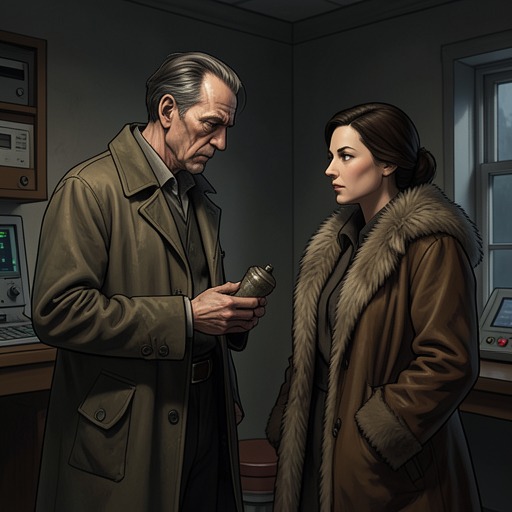
The couple’s discussion turns to George’s prospective wife and her child. Mr. Burbank says that he feels sorry for her. The remark offers a glimpse of sympathy amid the family’s reservations, without establishing that he knows her well or endorses every concern raised around the marriage. His response is notable for its difference from the more judgmental appraisal associated with Phil’s account of her: Mr. Burbank’s attention shifts toward the woman’s situation rather than toward whether the marriage will look proper.
Character and Narrative Significance
Mr. Burbank is a limited but consequential presence: the narrative does not give him an extended independent plot, yet his absence exposes the household’s structure. He had maintained the clock’s ritual, occupied the family home, and represented an older standard of domestic continuity. Once he and his wife have withdrawn to the city, Phil is left confronting routines he did not choose, while George’s decisions become more plainly his own.
His characterization also complicates the family’s hierarchy. Although he leaves after conflict with Phil, he is not portrayed solely through opposition to his son. He recognizes Phil’s concern with appearances, refuses to let that concern dictate George’s marriage, and expresses pity for George’s prospective wife. These gestures remain restrained, like the brief smiles he and his wife exchange in their hotel suite. Mr. Burbank’s significance lies in that quiet contrast: he belongs to the old household order, but his final glimpses show a father capable of stepping aside rather than insisting that his sons preserve it.